

The ‘authentic self’ - what is it, and does it help to try to find the elusive ‘real me’?
We live in a moment where the concept of ‘authenticity’ shows up just about everywhere. We might debate and denigrate the lack of real, raw and unfiltered versions of people showing up on social media platforms. We might see wall art and online posts (which may or may not be AI generated) encouraging us to just be ourselves. We might offer coaching and facilitation that, in part, is about supporting people to show up or communicate authentically – okay, that last one might only be applicable to a few of us, but it’s what led me to being curious about the concept of being our authentic selves and what that might mean.
We live in a moment where the concept of ‘authenticity’ shows up just about everywhere. We might debate and denigrate the lack of real, raw and unfiltered versions of people showing up on social media platforms. We might see wall art and online posts (which may or may not be AI generated) encouraging us to just be ourselves. We might offer coaching and facilitation that, in part, is about supporting people to show up or communicate authentically – okay, that last one might only be applicable to a few of us, but it’s what led me to being curious about the concept of being our authentic selves and what that might mean. There’s potential for this thought thread to unravel to an existential level, so please consider this a disclaimer in case it leads you into vaguely cosmic territory.
I started engaging with a question around what our most authentic selves might be when I described a programme I was delivering to a wonderfully analytical friend. I used a phrase along the lines of ‘supporting people to show up as their authentic selves’, and we debated the meaning and usefulness of the term for a while. I felt sure that there was something meaningful and relatable in the idea of feeling safe and welcome enough in a shared space to be able to communicate openly and honestly, let go of excessive self-monitoring and masking, and feel valued for the unique combination of traits, skills, ideas and experiences we bring to the table. There’s something in this that, for me, is about being able to let go and just be. I’m both lucky enough to know what it feels like to experience this, and unlucky enough to have experienced dangerous environments where it was necessary to adapt, hide or try to proverbially puff myself up to seem intimidating in hopes of staying safe. So, on some level, it’s a question of safety and belonging – who are we when we don’t have to look over our shoulder, or squeeze our square peg self into a round hole in order to be accepted?
My friend agreed about the importance of developing spaces and communities where everyone can experience this feeling of letting go and being themselves. But digging into the concept of what ‘being yourself’ actually means, things got a little more complicated. We’re probably all aware of the ways that we adapt our language, speech patterns, tone, clothing, body language etc. to fit the culture and expectations of the different places and groups we find ourselves in. We might be aware of our brains’ use of specific neurons to subconsciously mirror others’ movements and expressions as a way to fast-track relationship building. That is to say, as humans, we’re interdependent animals who are profoundly influenced by each other. There’s a philosophical question here about whether one of the ways we present is the one that truly represents who we are, with others being adaptations that we’ve developed as a strategy for social cohesion. Is the ‘authentic’ self the one that shows up when nobody’s watching? This seems like an over-simplification - we are continuously changing as we learn from experience, adapt to environment and experience our bodies first growing and then ageing. And even if the unfiltered ‘self’ is the most authentic one, is there value to bringing that part to the front in any given situation? Like so many of the themes I’ve been reflecting on lately, this speaks to a dance between individualist and collectivist approaches – in other words, do the needs of the individual or the needs of the group take precedence here? I have spent many years supporting clients to advocate for themselves, speak up about their needs, be unapologetic about who they are, and (when safe to do so) share how they really feel. These are skills that I believe are essential for everyone, and doubly so for those whose voices and needs have been sidelined, dismissed or weaponised by people and systems driven by a need to keep a tight grip on power and resources. And yet, if we all focus primarily on ensuring our own needs are met and our own authentic responses are honoured in every situation, the balance of considering self and considering others is likely to be skewed. Sometimes, our most authentic response or way of showing up might be unhelpful – perhaps we need a little time to process and make sense of our feelings before sharing them. Or maybe something that would bring comfort, joy or a little more ease to our day is conflicting with someone else’s needs. This seems to suggest a dichotomy between self-interested authenticity and inauthenticity in the name of compromise. I don’t believe that it’s necessary to be less of ourselves in order to consider the needs of others, especially since many of the people I work with tend to have gone in the other direction and developed people pleasing tendencies as a strategy for maintaining belonging. What I am considering is the problem with an individualist construction of the ‘authentic self’ (you know, the one that all of those Instagram ads tell you that you can express more fully if you buy one more supplement). Going to the opposite end of the individual-collective scale, family, community, duty and tradition may be significantly more important than the needs, desires and idIosyncracies of any individual. In this context, the focus on interdependence is clear, but the potential pressure to suppress any aspects of self that don’t fit with cultural expectations can tip over into causing harm. This pressure to suppress aspects of ourselves is something I’m acutely aware of as a queer person. I’m tempted to wander down the rabbit hole of exploration about whether queer identity is a fundamental and fixed aspect of the ‘authentic self’, but perhaps the philosophy is less important than the ways that we make space for, celebrate and create safety for the different aspects of each other’s identities (especially when those identities and experience have been met with oppression). And we might extend this idea to the concept of the ‘authentic self’ in general. We might theorise that each human has an eternal, unchanging soul; that we are the products of a combination of environment and genetic inheritance; that there is no true ‘self’; or that our sense of reality and self is essentially a hallucination. It’s a fascinating and potentially destabilising thread to pull a little, and it’s quite possible that our beliefs and assumptions on this existential level have an influence on how we think and behave. But when it comes to allowing people to show up authentically, what seems more important is the intention and action required to create spaces that feel safe and welcoming enough for people to let their guard down and just be.
What might that look like in practice?
Some examples…
-Providing accessible spaces that offer accommodations and, where possible, pay attention to the sensory environment (can background noise be minimised, can lighting be adjusted, is there a quiet breakout space?)
-Getting into a practice of checking in and finding out how people really are (the boundaries and appropriate level of depth with this is context dependent)
-Developing a practice of encouraging compassionate and appropriate challenge
-Inclusive, diverse and non-tokenistic representations and celebrations of different identities in a space
-Challenging assumptions and thinking critically about how we police and restrict language, appearance/style, body language etc., especially in work contexts – consider who decides which dialects, clothing choices etc. are deemed the most professional
-Explicitly and equally valuing different forms of intelligence and skill sets
-Providing gender neutral spaces, not making assumptions about people’s gender or orientation
-Staying curious and developing awareness of assumptions about others’ experiences (e.g. asking questions that assume a particular family structure, experience of a cultural celebration or identity)
-Developing good negotiation and compromising skills to manage competing needs
-Valuing rapport building, while understanding that different people have different ways of making connections

In praise of discomfort (unlearning white politeness, masking and conflict avoidance)
I’ve spent a lot of time in the five years since being diagnosed with ADHD thinking about masking, and how I might consciously or unconsciously choose to modify my behaviour in order to be more socially acceptable. Lately, I’ve noticed a desire and a tendency to put less effort into this, though it feels risky and exposing to do so. At a certain point in the life of many neurodivergent people, especially those diagnosed later in life, the mask begins to slip, perhaps because we no longer have the capacity to spend energy on maintaining it, or because we choose to take it off. It’s interesting to look at how this is received in different contexts – the world is changing, and our understanding of different neurotypes is developing quickly, even though this feels like something that’s still in its infancy. In some situations, people are accepting of, and accustomed to unusual communication styles, movements, ways of thinking and requests for adjustments. In others, we might be judged more harshly (like the time someone on a training course told me that nobody will ever take me seriously if I continue to move my hands like that when I talk). Masking, or toning ourselves down in order to fit in or be ‘taken seriously’ is more about others’ comfort than the needs of the person wearing the mask. Sure, it might stem from a deep seated need to belong (or a less deep but equally crucial need to be employable). But holding back our need to manage our nervous systems and energy levels, admit that we’ve forgotten someone’s name, bow out of small talk, zone out or follow a mental tangent is largely about managing others’ comfort…
There are many ways in which neurotypical people might experience pressure to mask, adapt and suppress instinctive behaviours or needs in order to maintain a sense of social cohesion or ‘civility’.
During these last few years, I’ve also become increasingly aware of a link between this phenomenon and the idea of ‘white politeness’. Being ‘civilised’ was (and in so many ways, continues to be) a concept weaponised in colonialism, positioning white European societies as morally, intellectually and culturally superior to the global majority.
I’ve spent a lot of time in the five years since being diagnosed with ADHD thinking about masking, and how I might consciously or unconsciously choose to modify my behaviour in order to be more socially acceptable. Lately, I’ve noticed a desire and a tendency to put less effort into this, though it feels risky and exposing to do so. At a certain point in the life of many neurodivergent people, especially those diagnosed later in life, the mask begins to slip, perhaps because we no longer have the capacity to spend energy on maintaining it, or because we choose to take it off. It’s interesting to look at how this is received in different contexts – the world is changing, and our understanding of different neurotypes is developing quickly, even though this feels like something that’s still in its infancy. In some situations, people are accepting of, and accustomed to unusual communication styles, movements, ways of thinking and requests for adjustments. In others, we might be judged more harshly (like the time someone on a training course told me that nobody will ever take me seriously if I continue to move my hands like that when I talk). Masking, or toning ourselves down in order to fit in or be ‘taken seriously’ is more about others’ comfort than the needs of the person wearing the mask. Sure, it might stem from a deep seated need to belong (or a less deep but equally crucial need to be employable). But holding back our need to manage our nervous systems and energy levels, admit that we’ve forgotten someone’s name, bow out of small talk, zone out or follow a mental tangent is largely about managing others’ comfort. We might try not to do something because we’ve learned that it’s received as impolite or thoughtless – a classic example of this being the tendency to relate to others by sharing our own equivalent story when someone shares an experience. It might be read as one-upmanship or self-centredness, rather than a genuine attempt to connect. This is an example of what has been referred to in recent years as the ‘double empathy problem’. Essentially, the neurodivergent and neurotypical person in this scenario might be trying to connect with each other in different ways, but we’ve tended to locate the ‘problem’ within the neurodivergent person. It might be assumed that an Autistic person is less capable of empathy, while in fact a lack of understanding exists between people who have different ways of mentalising and communicating. Since neurodivergence is generally a pathologised and ‘othered’ identity, there is often pressure to conform to social conventions that might serve to make others more comfortable. There are many ways in which neurotypical people might experience pressure to mask, adapt and suppress instinctive behaviours or needs in order to maintain a sense of social cohesion or ‘civility’.
During these last few years, I’ve also become increasingly aware of a link between this phenomenon and the idea of ‘white politeness’. Being ‘civilised’ was (and in so many ways, continues to be) a concept weaponised in colonialism, positioning white European societies as morally, intellectually and culturally superior to the global majority. This offered apparent justification for the violent and dehumanising practices carried out by colonisers, and assumed anything outside of the cultural mores of Britain and other northern European countries at the time to be ‘barbaric’ and in need of control and assimilation. Civility during the heyday of the British Empire was inextricably linked with a hierarchical, monarchist social structure in which those with inherited wealth and power separated themselves from the lower classes in part via a system of ‘good manners’ that involved indirect communication, repressing emotions and bodily sensations, presenting ‘modestly’ and avoidance of conflict. We can still see the legacy of this in the ways in which politeness is sometimes weaponised and used as a way to wield power – for example, the continuing positioning of Black women who are communicating directly or expressing an emotion as ‘aggressive’. This form of bias and prejudice is something I’ve been aware of for a long time, but I was less aware of how a culture of ‘white politeness’ was shaping some of the spaces I inhabit until it was pointed out to me. That’s not unusual - it’s so often the case that we can’t see what we’re in while we’re in it, and also a feature of privilege to not have to notice something if it’s not obviously disadvantaging us. Even in some spaces where care and communication skills are highly valued, I started to notice the slightly awkward ways that we unconsciously attempt to avoid discomfort. We might start to put masks on if things are getting a little emotional, heated or weird. We’ll often use small talk, humour or subject changes to take the edge off when things threaten to get a little uncomfortable. Even those of us who are well versed in therapy speak and big fans of emotional literacy will lean on our learned social crutches when something threatens the relative politeness of the space sometimes. And there’s nothing inherently wrong with this, if it’s a conscious choice that fits with the social contract of the space – maybe we’re in this space together as a way to have some respite from big feelings, or maybe it’s a workplace and there are limited opportunities to fully unmask, process our emotions and process what’s unsaid in the space. But what I’m finding less helpful is the unconscious post-colonial hangover that has us subtly policing our own and others’ behaviours, bodies and words in order to maintain a sense of decorum. There may be a time and a place for showing up in all of our flawed, messy, noisy glory, but if we haven’t found enough of these times and places, it’s likely that our repressed emotions, sensations, movements etc. will cause us harm in some way, whether we realise it or not.
There’s also the impact of all of this on our ability to communicate with courage and integrity. Growing up in cultures (whether family, community, country or all of the above) that prioritise immediate comfort over voicing dissent, setting boundaries and sitting with difficult feelings has the potential to push us towards avoidant, people pleasing and incongruent behaviours and communication styles. Avoiding conversations and situations that might involve challenge, conflicting needs, awkwardness or inconvenience is only likely to bring short term gain, while problems go unaddressed and unmet needs grow into resentments over time. It feels very familiar to me to provide facilitation in workplaces that prioritise a veneer of ‘niceness’ over tackling the far less pleasant challenges that are festering beneath the surface because it’s so difficult and not in keeping with a ‘nice’ working culture to address them. Employees who were grappling with how to raise their concerns and struggles in these situations have told me how scary it can be to consider speaking up in an environment that has become profoundly silencing. This is a direct example of a culture of politeness and ‘civility’ preventing issues from being addressed and upholding a hierarchical structure where people who aren’t in charge may not feel safe to share feedback, challenge, concerns or even ideas that deviate from the norm. This is something I find concerning when I see signs of it, and I’m always keen to unpack the assumptions, beliefs and fears that contribute to this culture. And in the spirit of honest communication, I’ll level with you… I’m not here to criticise or shame anyone who has (intentionally or otherwise) contributed to a culture like this, partly because I don’t think that would be particularly useful, and partly because my own tendency is towards conflict avoidance and over-adapting in order to maintain a sense of belonging. This is something that I’ve spent years working on, and will likely continue to work on for the rest of my life – I don’t have it all figured out by any means. I notice at times an inner conflict between my learned defence mechanisms (‘avoid conflict, rejection and upsetting others at all costs’) and the communication style that I value and need (direct, open, congruent, assumes a healthy balance of care for self and care for others). I believe that moving beyond repressive cultures of ‘politeness’ and towards deeper connections and more equitable communities starts with curiosity and critical thinking. Maybe it’s a feature of my particular type of neurodivergence, but I’m grateful to have never lost the instinct to ask ‘but why?’ that we tend to associate with exhaustingly inquisitive toddlers. I find social conventions and unspoken rules fascinating. I can’t help pondering where they came from, what purpose they serve, whether we’re finding them helpful, and what else might be possible if we’re not. Taking space to examine the cultural norms, communication preferences and expectations within a community might yield some rich insights and opportunities about how different people are supported, excluded, silenced or relatively unaffected by them. And the prospect of examining this might in itself provoke anxiety – there’s a distinct possibility that, in spite of our best efforts to prevent conflict and offence, we will discover ways in which avoiding discomfort is inadvertently causing harm. It seems important here to both take our capacity to cause harm seriously, and at the same time, hold it lightly. If we find out that we have contributed to someone else’s pain or exclusion, we can take the gift of that learning and apply it in future, rather than entering a shame spiral that seems to threaten our sense of identity and values. Sometimes that’s easier said than done - I’m sure most of us have been horrified at some point to discover that our well intentioned words, actions or contribution to a wider culture have been harmful. But getting comfortable with the short term discomfort that might arise from sharing or receiving challenges, needs, boundaries, concerns and emotions is likely to offer longer term gains. And a culture of compassionate honesty, valuing each other’s contributions and welcoming an array of different feelings and perspectives seems to me to be a great hangover cure for the last vestiges of Empire and its restrictive grip on the human experience.
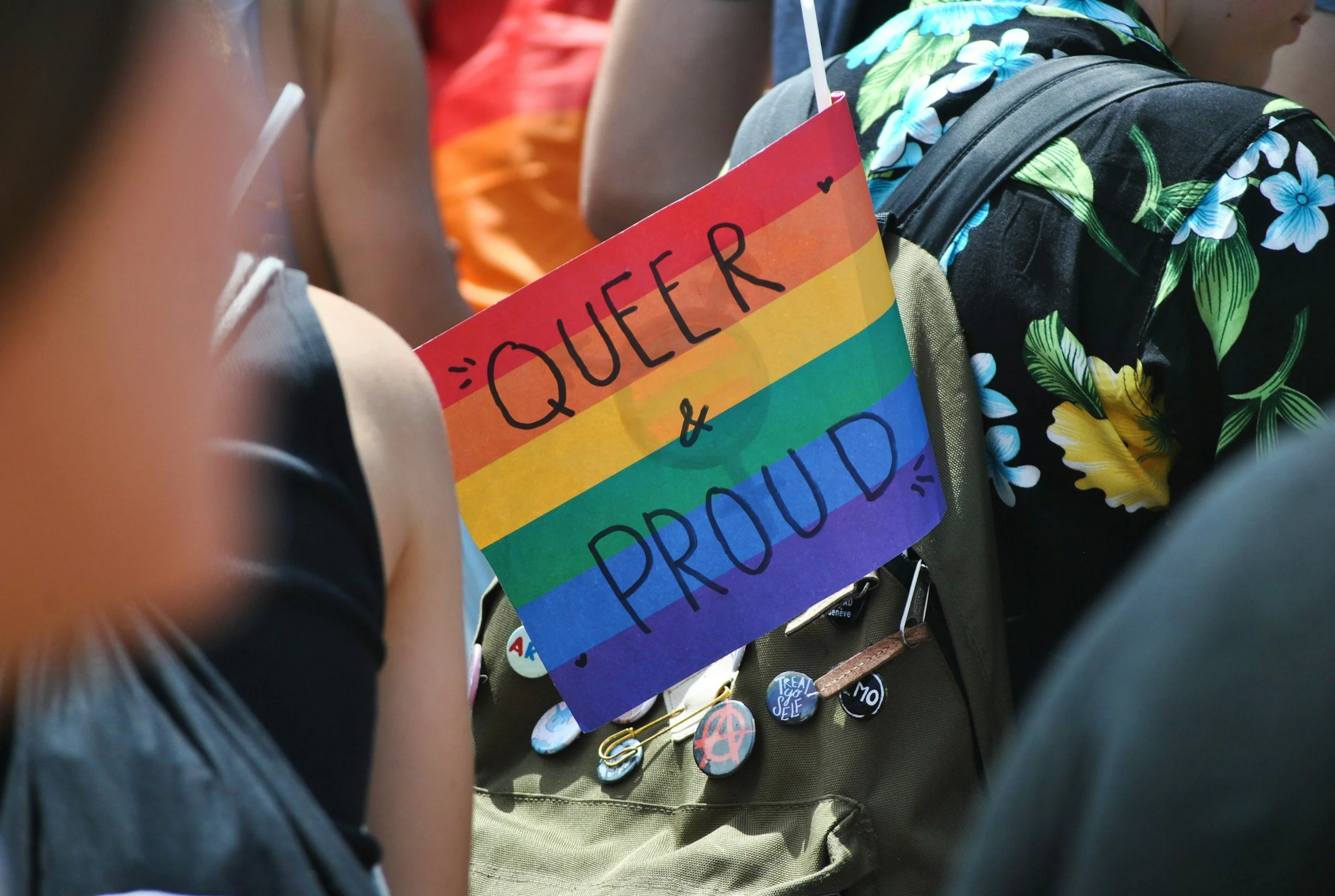
LGBTQIA Pride – Authentic Expression and Being Seen, Heard and Valued All Year Round
As we reach the end of Pride month, I want to reflect on what the concept means to me, the importance of being able to show up authentically, and the need to create spaces where people feel seen, heard and valued to continue all year round. Like many in the LGBTQIA community, I’ve developed a level of cynicism about the corporate pinkwashing that characterises parades and parties that have their origins in civil disobedience and resistance to oppressive laws and discrimination. It’s a complicated picture, because on one hand, I feel extreme discomfort about marching alongside corporations involved in the arms trade, institutions that are being investigated for horrific abuses of power, and more run-of-the-mill big businesses that will drop the concern for their queer and trans colleagues the moment they change their social media banners from rainbow flags back to ‘normal’. But on the other hand, I’m well aware of the need for visibility, for antidotes to shame and stigma, and for spaces where we can show up authentically and unapologetically.
(Content warning – hate crime, discrimination, homophobia, transphobia, serious violence)
As we reach the end of Pride month, I want to reflect on what the concept means to me, the importance of being able to show up authentically, and the need to create spaces where people feel seen, heard and valued to continue all year round.
Like many in the LGBTQIA community, I’ve developed a level of cynicism about the corporate pinkwashing that characterises parades and parties that have their origins in civil disobedience and resistance to oppressive laws and discrimination. It’s a complicated picture, because on one hand, I feel extreme discomfort about marching alongside corporations involved in the arms trade, institutions that are being investigated for horrific abuses of power, and more run-of-the-mill big businesses that will drop the concern for their queer and trans colleagues the moment they change their social media banners from rainbow flags back to ‘normal’. But on the other hand, I’m well aware of the need for visibility, for antidotes to shame and stigma, and for spaces where we can show up authentically and unapologetically. And some might argue that pinkwashing is preferable to the alarming experience of seeing companies retract their public support for the LGBTQIA community through fear of upsetting powerful bigots.
Recently, working with people whose experiences of being LGBTQIA in their home countries were shockingly full of trauma and danger reminded me of how important it is to have public, joyfully resistant declarations of welcome and inclusion. And seeing queer or questioning kids attend their first Pride is always a humbling and beautiful experience that makes me so happy that they’re not growing up in times like so many of us did (Section 28 – the UK law that banned public sector bodies from discussing or ‘promoting’ LGBTQIA identities – lasted for my entire school career).
So I begin this reflection with a word of caution that’s repeated by tired members of the community every year. Performative allyship, and enjoying the glitter without engaging with the struggle that necessitated marching through cities, yelling ‘we’re here, we’re queer, we’re not going anywhere!’, isn’t helping. It’s great to show solidarity and be visibly supportive, but stigma, lack of access to healthcare, transphobic public policy, homophobic hate crime and poorer mental health outcomes (to name but a few) don’t go away when the flags are packed away for another year and the queens get out of drag.
I’m not advocating for getting rid of marches and celebrations altogether, but I’m more interested in grassroots, community level organising and thinking about how we can create spaces all year round that are based on a real desire to support people to show up authentically and know that they are safe, welcomed and valued. An intersectional approach is crucial, so it feels important to say that I’m not imagining these spaces with only the LGBTQIA community in mind. Apart from anything else, we contain multitudes and might have several minoritised identities that mean facing very specific barriers to access and forms of discrimination. I’d like to take some space to think about what those spaces might look like – what values, action and principles might be involved, and how it feels to be part of them.
When I think about what stands out to me as the important elements of Pride month that I’d like to see honoured throughout the year, the first words that come to mind are resistance, representation, rememberance and reimagining. Some of this might be at odds with the shiny, corporate approach to celebrating Pride, though I’m curious about how the idea of disrupting or ‘queering’ these spaces, at least as a first step towards deeper change.
Resistance
I had a great time at last week’s Dyke March in London, with ‘The First Pride Was A Riot’ scrawled in sharpie across the back of my jacket. This was an event that did a great job of showing joyful resistance – a combination of power, playfulness, euphoria and outrage. It encouraged us to stay connected to the origins of the Pride movement, and what we’re marching for. Maybe some of the people who show up to wave at the floats and watch the performances in their home town each summer would be horrified to think of trans people throwing bricks during the Stonewall riots, but that was the origin of today’s movement in all its shiny, corporate glory. And I hope they would also be horrified by the police brutality and human rights abuses that led to that riot in the first place. If this all seems like something that happened in a bygone era, and perhaps not so relevant today, I’d suggest that we’ve come a long way with so many rights and freedoms, and that the backlash against that progress is very real and very frightening. Keir Starmer, likely the next UK Prime Minister, has recently stated that he is against the teaching of ‘gender ideology’ in schools, effectively signalling a return to something akin to Section 28. And looking at equivalent developments in the USA and in European countries (such as restrictions on lesbians’ right to adopt in Italy) shows how easily things can change for the worse. It’s therefore essential that we protect our ability to speak truth to power, to show up in public as our authentic selves, and to protest injustice. Beyond LGBTQIA issues, there are threats to our civil liberties and freedoms creeping into our societies, and we must be able to find strength in numbers and resist. There are related ideas that we can extrapolate from this in terms of community building and organisational development too – essentially that it’s dangerous to hold too tightly to rigid and traditional hierarchies where people are afraid to speak up.
Representation
To return to the subject of Section 28, I often think about the impact of having little to no meaningful representation of people whose sexual orientation and gender identity I could relate to throughout my childhood. I didn’t understand my own identity for a long time, having had my formative years influenced by enforced silence on the subject of LGBTQIA identities, bodies and reelationships. I realise that there were many people in my generation who were joyfully, defiantly queer in the face of all of this, and who couldn’t deny who they were if they tried. But no doubt, there were at least as many of us who were confused, ill-informed and dealing with a nagging suspicion that something was ‘wrong’ about us and that it wasn’t a good idea to talk to anyone about it.
It's perhaps a cliché to say that representation matters and that ‘if you can see it, you can be it’. But there’s also a lot of value in considering who is visible in a space, a role, a community, or a position of power, and what that might do to welcome or discourage people from attempts to be part of the community, or pursue a role. It’s also worth pointing out that people who may have had to develop hypervigilant levels of sensitivity to signs of safety/danger tend to be pretty good at seeing through tokenistic attempts to ‘tick the diversity box’. Again, going through the motions from a place of compliance isn’t going to contribute much to meaningful change. But for young people, and former young people who didn’t see themselves represented in the past, seeing positive examples of people like themselves in spaces and communities can have a genuinely positive impact.
Remembrance
Pride is, in part, a celebration. But it’s also an opportunity for us to commemorate those we have lost, to remember where we’ve been and how far we’ve come, and to use this to inform ongoing action towards further change. I’d suggest that this approach, which locates us in time and place, and offers opportunities to learn from our mistakes, is a crucial part of any social movement or community. Some of the injustices and tragedies that have taken place, and continue to take place, within the LGBTQIA community are almost too overwhelming to comprehend. Losing so much of an entire generation during the AIDS crisis in the 1980s seems to have had a fairly significant impact on intergenerational learning and younger people’s engagement with their community’s history. Part of me is relieved for queer kids growing up in more recent years, perhaps being able to take many of their rights for granted, or to be unable to imagine what it might have been like not to have them. But there’s a risk of not learning from the past, not honouring those who fought for human rights and those who lost their lives, and becoming complacent. We don’t have to look very far to see how quickly and easily hard-won rights, laws and policies can be revoked, and how successfully minority groups can be made into scapegoats to distract from abuses of power. And we don’t have to look far to find very recent examples of the loss of lives as a result of violence and discrimination – I’ll be remembering young people like Brianna Ghey as I march tomorrow. These are difficult and sobering thoughts, though remembering those lost and those who came before is the least I can do in a bid to connect with our shared history.
Reimagining
It’s often the case that ideas and ways of being move from the margins to the centre, only for something new to appear outside of the norm and eventually influence mainstream culture (and/or perhaps be assimilated into it – though assimilation is a topic in and of itself). I believe that the world has a lot to learn from queer culture, and pushing the boundaries of ‘respectability’ is potentially helpful for everyone. Similarly, the stigmatising of certain bodies and what people do with them has done, and continues to do, serious harm – pushing back against this with radical inclusion is necessary and important as part of a move away from categorising some bodies as inherently better than others. Equally, we can all learn from the freedom that comes from ways of relating to each other without there being a script or template that we’ve been primed for throughout our lives. For example, how do we work out the division of labour in households where the usual gendered expectations don’t apply? Well, generally we might work it out according to ability, preference, need and so on, as opposed to social expectations based on chromosomes. I’m being a little flippant, and I realise that many people of all genders and orientations are entirely capable of non-stereotypical negotiations, but the point is that there’s freedom and a chance for Adult-Adult communication when we don’t have so much baggage from social pressures and norms. And I’d like that to be extended in so many ways beyond the LGBTQIA community – for us to reimagine what spaces and communities free from inherited and restrictive notions of gender, relationships and identity might look like. What would it be like if we all had the resources that helped us to develop the skills to work out exactly who are and what we need, and if we all felt safe enough to show up courageously and authentically everywhere we went? I hope these are questions to reflect on as we imagine what’s possible going forward, and I want to offer my gratitude to the LGBTQIA community for offering me welcoming spaces to work out who I am and show up as myself.