

‘So what is it that you actually do?’ – Stories from a coach and facilitator with a niche job title (Part 2)
I offer coaching, facilitation and consultancy in a wide range of contexts with people in very different situations. But there are some common themes that arise for many clients – these include:
*Burnout and compassion fatigue
*Finding it difficult to express themselves or state their needs
*Feeling stuck in a ‘freeze’ response
*Working out ‘who am I now, and where next?’
*Creating community and finding places where they feel a sense of belonging
These challenges can show up in different ways and different situations, and it’s not always obvious at the outset that these are things that might need some attention. Sometimes, the reason a person comes to coaching is that they’re stuck with a specific issue in the workplace, difficulty communicating with someone in their life, needing support to make life decisions, or because they feel that they need some space to focus on improving their wellbeing.
But when we get below the surface, a lot of the themes that come up for people are human experiences that so many of us share in common. As a species, we’ve evolved to survive and thrive through cooperation, and we can be motivated by a need for belonging. That’s part of the reason that the relational aspect of any good coaching can be so transformative, and it’s also why I often find myself focusing on relationships, communication and what’s going on psychologically, emotionally and somatically in relation to them, regardless of what specific issues a client has come in with. Underneath a fear of speaking up and asking for a specific need (or want) to be met is often a belief such as ‘I’m too much’, ‘I’m not enough’ or ‘I mustn’t risk rejection’, which was likely a result of interactions with significant people earlier in life.
I offer coaching, facilitation and consultancy in a wide range of contexts with people in very different situations. But there are some common themes that arise for many clients – these include:
*Burnout and compassion fatigue
*Finding it difficult to express themselves or state their needs
*Feeling stuck in a ‘freeze’ response
*Working out ‘who am I now, and where next?’
*Creating community and finding places where they feel a sense of belonging
These challenges can show up in different ways and different situations, and it’s not always obvious at the outset that these are things that might need some attention. Sometimes, the reason a person comes to coaching is that they’re stuck with a specific issue in the workplace, difficulty communicating with someone in their life, needing support to make life decisions, or because they feel that they need some space to focus on improving their wellbeing.
But when we get below the surface, a lot of the themes that come up for people are human experiences that so many of us share in common. As a species, we’ve evolved to survive and thrive through cooperation, and we can be motivated by a need for belonging. That’s part of the reason that the relational aspect of any good coaching can be so transformative, and it’s also why I often find myself focusing on relationships, communication and what’s going on psychologically, emotionally and somatically in relation to them, regardless of what specific issues a client has come in with. Underneath a fear of speaking up and asking for a specific need (or want) to be met is often a belief such as ‘I’m too much’, ‘I’m not enough’ or ‘I mustn’t risk rejection’, which was likely a result of interactions with significant people earlier in life. Although coaching differs from therapy by being predominantly present and future focused, rather than spending a lot of time reflecting on the past, understanding why we’re carrying around self-limiting beliefs or struggling with a particular aspect of communication, self-care or decision making can be powerful in terms of breaking cycles and creating meaningful change.
So, what do I find useful in addressing these big topics?
The Coaching Relationship
A major foundation of any effective therapeutic or personal development focused relationship is building rapport, trust and enough safety to allow clients to express how they really feel and know that this will be met positively. That in itself, along with any interactions that lead to feeling seen and heard can be a powerful intervention for someone who is working with internalised beliefs about being ‘too much’, ‘not enough’ or ‘taking up too much space’. This might look like – for example - explicitly stating that emotions are welcome in the coaching space, responding calmly and warmly to what a client has shared, demonstrating reliability and showing that I’ve heard and understood, and offering permission to clients to be in the space, in their body and in the coaching relationship in whatever way they need to.
Beyond this, I might offer an experimental, sometimes slightly playful approach to collaboratively working with clients to discover what tools, resources and communication styles work best for them. I may use gentle challenge and checking out assumptions to support them to move past self-limiting beliefs. We may explore models, frameworks and metaphors or stories to make more sense of something a client is stuck with. These are tried and tested aspects of coaching work, and I’m always delighted when they result in a new insight that leads to meaningful change – like when one client realised that there was a pattern of discounting her own needs when communicating with others in her personal and professional life, and began working on a strategy to address this that led to huge improvements in her work and relationship with her partner.
An Embodied Approach
I also find an embodied approach to addressing some of these big themes is really effective. We’re finally starting to move away from approaches to personal development that seem to view us as floating heads with clear distinctions between the cognitive, emotional, physical and behavioural aspects of ourselves. It’s becoming clear to more and more people that we can’t really separate our thoughts, emotions, experiences, body sensations and physical/mental health. I got into embodiment work because I was in a wellbeing and communication crisis of my own, and because most of my coaching work, at least in the early days, focused on performance and presentation, which have embodied aspects to them. We communicate using our bodies, and when this is in the context of verbal communication or vocal performance, our body is our instrument. There’s a feedback loop between the physical sensations we feel, whether we’re holding tension in our bodies, how we’re taking up space, how we feel emotionally, and what we communicate. On a societal level, we’re learning more and more about the ways in which we can re-regulate an over or under-stimulated nervous system in order to get back to a place of calm, clear thinking and here-and-now presence. That’s really helpful in situations where we might feel stressed, anxious, angry or overwhelmed. So there’s always an element of embodied practice in my coaching, even if that ‘only’ involves encouraging clients to notice physical responses and offering sugggested ways to ground themselves when things get challenging. We might also play with embodying a particular thought, feeling or experience, and seeing what happens to the client’s communication, emotions or thought processes when they try different ways of breathing, taking up space, engaging muscles or letting go of tension.
Connecting with Intuition
Offering tools that support deep relaxation, connection with our most intuitive, Adult selves and space to meaningfully reflect can also be transformative when someone is stuck in a place of feeling ‘frozen’, unable to work out what to do next, or afraid to set courageous goals that will bring them what they need in order to feel as healthy and fulfilled as possible. Using breathwork, guided visualisations and other tools that can help clients to enter this deeply reflective space can be a great jumping off point for identifying values, working out what they would ideally like their life to look like, connecting with what they feel passionate about, and moving on to take steps towards the goals they have set from a place of calm, curiosity and intuition. Sometimes, we can surprise ourselves when we tap into feelings, ideas and dreams that we’re less aware of on a conscious level, and that can lead to powerful insights and ability to get ‘unstuck’ in decision making processes. One client came to coaching because of burnout and a need to address work-life balance. They hadn’t had the time or space to reflect on what they wanted to do next in life or how to achieve a more sustainable pace while satisfying their career goals until they found a way to protect some time for coaching sessions in which to slow down and consider this. We used visualisation exercises to connect with the client’s values, needs and passions. This was the first step in a change of career that they later fed back brought them joy and helped them to feel more like their authentic self than they had in a long time.
Self-Expression Work
I also support clients to express themselves with courage, authenticity and clarity. That might be in the context of speaking up about their own needs and views, performance and presentation, addressing a fear of being seen and heard or all of the above. It can be so helpful to have a practice space in which making mistakes, ‘saying the unsayable’, being vulnerable and making noise are explicitly welcomed and encouraged. Again, the working relationship makes a huge difference here, as it’s far easier to take risks when we trust the person who is supporting us to do so. It’s important to go at the pace that works best for each person, and for them to be reminded that they are in control of the situation. Permission to stop, say no and ask for a specific need to be met are important in letting a client know this – especially if they have a history of needing to over-adapt in order to please others and stay safe. Beyond this, there are lots of ways that I might support someone to express themselves more freely. Inviting a playful approach can be helpful in some situations (and absolutely the wrong thing to do in others – tailoring support to individual need is so important here). Distraction can help in cases where someone is caught in a feedback loop of self-criticism and stifled expression/communication. I enjoy seeing the difference it can make when I support people to connect with their emotions and speak, sing or present as themselves (rather than emulating someone else or trying to be who they think others might want to hear). The changes can be subtle or hard to pin down, but the difference is in the emotional connection – it’s so exciting when someone expresses something in a way that sparks a real human to human connection and helps me tap into my own emotional world for a moment. That’s an example of courageous, authentic communication, which can be so transformative in contexts from moving past conflict, to advocating for our needs, to being able to move and inspire an audience.
If you’d like to find out more and discuss how I might be able to support you with any of the challenges described here, I’d love to hear from you – you can contact me here.
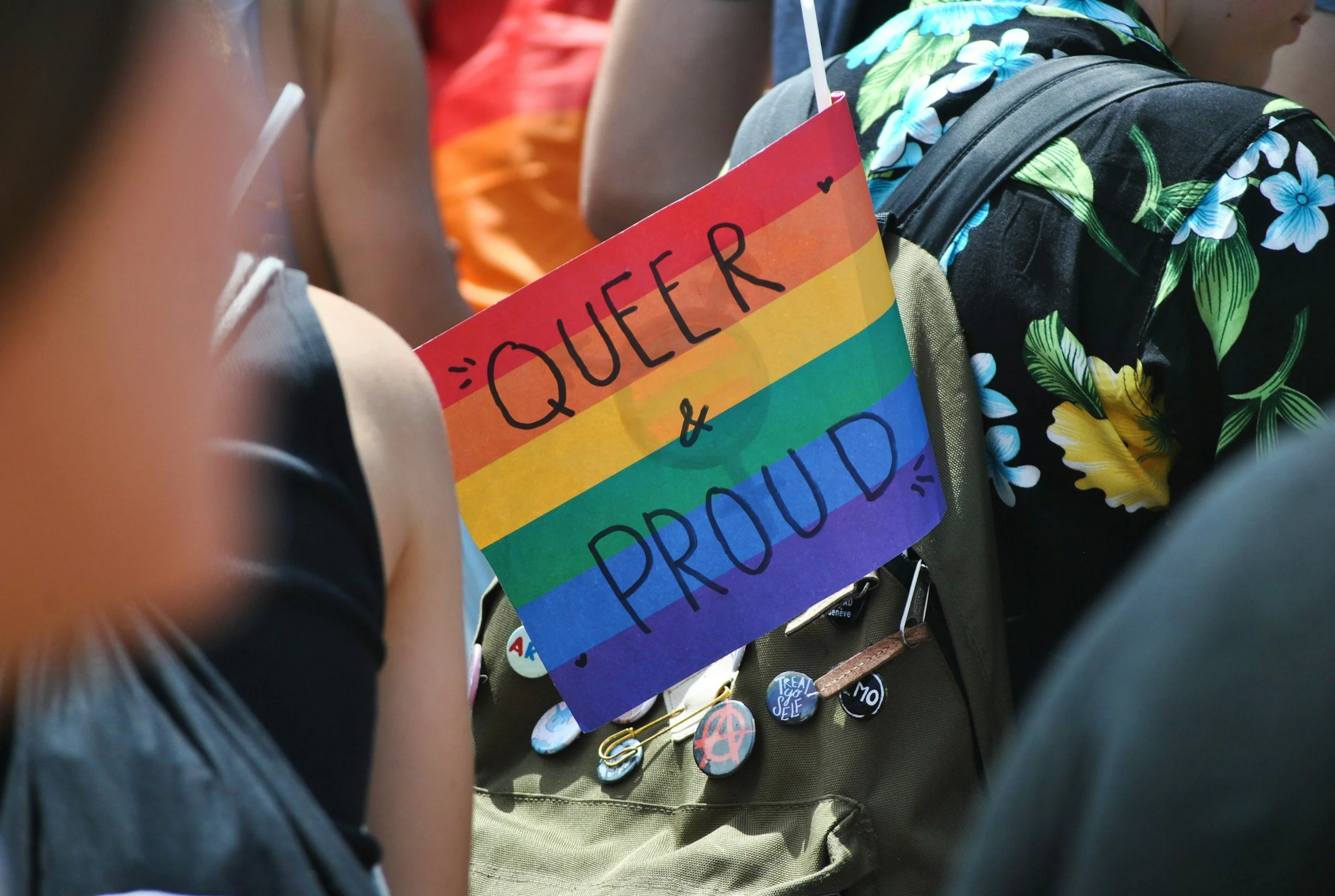
LGBTQIA Pride – Authentic Expression and Being Seen, Heard and Valued All Year Round
As we reach the end of Pride month, I want to reflect on what the concept means to me, the importance of being able to show up authentically, and the need to create spaces where people feel seen, heard and valued to continue all year round. Like many in the LGBTQIA community, I’ve developed a level of cynicism about the corporate pinkwashing that characterises parades and parties that have their origins in civil disobedience and resistance to oppressive laws and discrimination. It’s a complicated picture, because on one hand, I feel extreme discomfort about marching alongside corporations involved in the arms trade, institutions that are being investigated for horrific abuses of power, and more run-of-the-mill big businesses that will drop the concern for their queer and trans colleagues the moment they change their social media banners from rainbow flags back to ‘normal’. But on the other hand, I’m well aware of the need for visibility, for antidotes to shame and stigma, and for spaces where we can show up authentically and unapologetically.
(Content warning – hate crime, discrimination, homophobia, transphobia, serious violence)
As we reach the end of Pride month, I want to reflect on what the concept means to me, the importance of being able to show up authentically, and the need to create spaces where people feel seen, heard and valued to continue all year round.
Like many in the LGBTQIA community, I’ve developed a level of cynicism about the corporate pinkwashing that characterises parades and parties that have their origins in civil disobedience and resistance to oppressive laws and discrimination. It’s a complicated picture, because on one hand, I feel extreme discomfort about marching alongside corporations involved in the arms trade, institutions that are being investigated for horrific abuses of power, and more run-of-the-mill big businesses that will drop the concern for their queer and trans colleagues the moment they change their social media banners from rainbow flags back to ‘normal’. But on the other hand, I’m well aware of the need for visibility, for antidotes to shame and stigma, and for spaces where we can show up authentically and unapologetically. And some might argue that pinkwashing is preferable to the alarming experience of seeing companies retract their public support for the LGBTQIA community through fear of upsetting powerful bigots.
Recently, working with people whose experiences of being LGBTQIA in their home countries were shockingly full of trauma and danger reminded me of how important it is to have public, joyfully resistant declarations of welcome and inclusion. And seeing queer or questioning kids attend their first Pride is always a humbling and beautiful experience that makes me so happy that they’re not growing up in times like so many of us did (Section 28 – the UK law that banned public sector bodies from discussing or ‘promoting’ LGBTQIA identities – lasted for my entire school career).
So I begin this reflection with a word of caution that’s repeated by tired members of the community every year. Performative allyship, and enjoying the glitter without engaging with the struggle that necessitated marching through cities, yelling ‘we’re here, we’re queer, we’re not going anywhere!’, isn’t helping. It’s great to show solidarity and be visibly supportive, but stigma, lack of access to healthcare, transphobic public policy, homophobic hate crime and poorer mental health outcomes (to name but a few) don’t go away when the flags are packed away for another year and the queens get out of drag.
I’m not advocating for getting rid of marches and celebrations altogether, but I’m more interested in grassroots, community level organising and thinking about how we can create spaces all year round that are based on a real desire to support people to show up authentically and know that they are safe, welcomed and valued. An intersectional approach is crucial, so it feels important to say that I’m not imagining these spaces with only the LGBTQIA community in mind. Apart from anything else, we contain multitudes and might have several minoritised identities that mean facing very specific barriers to access and forms of discrimination. I’d like to take some space to think about what those spaces might look like – what values, action and principles might be involved, and how it feels to be part of them.
When I think about what stands out to me as the important elements of Pride month that I’d like to see honoured throughout the year, the first words that come to mind are resistance, representation, rememberance and reimagining. Some of this might be at odds with the shiny, corporate approach to celebrating Pride, though I’m curious about how the idea of disrupting or ‘queering’ these spaces, at least as a first step towards deeper change.
Resistance
I had a great time at last week’s Dyke March in London, with ‘The First Pride Was A Riot’ scrawled in sharpie across the back of my jacket. This was an event that did a great job of showing joyful resistance – a combination of power, playfulness, euphoria and outrage. It encouraged us to stay connected to the origins of the Pride movement, and what we’re marching for. Maybe some of the people who show up to wave at the floats and watch the performances in their home town each summer would be horrified to think of trans people throwing bricks during the Stonewall riots, but that was the origin of today’s movement in all its shiny, corporate glory. And I hope they would also be horrified by the police brutality and human rights abuses that led to that riot in the first place. If this all seems like something that happened in a bygone era, and perhaps not so relevant today, I’d suggest that we’ve come a long way with so many rights and freedoms, and that the backlash against that progress is very real and very frightening. Keir Starmer, likely the next UK Prime Minister, has recently stated that he is against the teaching of ‘gender ideology’ in schools, effectively signalling a return to something akin to Section 28. And looking at equivalent developments in the USA and in European countries (such as restrictions on lesbians’ right to adopt in Italy) shows how easily things can change for the worse. It’s therefore essential that we protect our ability to speak truth to power, to show up in public as our authentic selves, and to protest injustice. Beyond LGBTQIA issues, there are threats to our civil liberties and freedoms creeping into our societies, and we must be able to find strength in numbers and resist. There are related ideas that we can extrapolate from this in terms of community building and organisational development too – essentially that it’s dangerous to hold too tightly to rigid and traditional hierarchies where people are afraid to speak up.
Representation
To return to the subject of Section 28, I often think about the impact of having little to no meaningful representation of people whose sexual orientation and gender identity I could relate to throughout my childhood. I didn’t understand my own identity for a long time, having had my formative years influenced by enforced silence on the subject of LGBTQIA identities, bodies and reelationships. I realise that there were many people in my generation who were joyfully, defiantly queer in the face of all of this, and who couldn’t deny who they were if they tried. But no doubt, there were at least as many of us who were confused, ill-informed and dealing with a nagging suspicion that something was ‘wrong’ about us and that it wasn’t a good idea to talk to anyone about it.
It's perhaps a cliché to say that representation matters and that ‘if you can see it, you can be it’. But there’s also a lot of value in considering who is visible in a space, a role, a community, or a position of power, and what that might do to welcome or discourage people from attempts to be part of the community, or pursue a role. It’s also worth pointing out that people who may have had to develop hypervigilant levels of sensitivity to signs of safety/danger tend to be pretty good at seeing through tokenistic attempts to ‘tick the diversity box’. Again, going through the motions from a place of compliance isn’t going to contribute much to meaningful change. But for young people, and former young people who didn’t see themselves represented in the past, seeing positive examples of people like themselves in spaces and communities can have a genuinely positive impact.
Remembrance
Pride is, in part, a celebration. But it’s also an opportunity for us to commemorate those we have lost, to remember where we’ve been and how far we’ve come, and to use this to inform ongoing action towards further change. I’d suggest that this approach, which locates us in time and place, and offers opportunities to learn from our mistakes, is a crucial part of any social movement or community. Some of the injustices and tragedies that have taken place, and continue to take place, within the LGBTQIA community are almost too overwhelming to comprehend. Losing so much of an entire generation during the AIDS crisis in the 1980s seems to have had a fairly significant impact on intergenerational learning and younger people’s engagement with their community’s history. Part of me is relieved for queer kids growing up in more recent years, perhaps being able to take many of their rights for granted, or to be unable to imagine what it might have been like not to have them. But there’s a risk of not learning from the past, not honouring those who fought for human rights and those who lost their lives, and becoming complacent. We don’t have to look very far to see how quickly and easily hard-won rights, laws and policies can be revoked, and how successfully minority groups can be made into scapegoats to distract from abuses of power. And we don’t have to look far to find very recent examples of the loss of lives as a result of violence and discrimination – I’ll be remembering young people like Brianna Ghey as I march tomorrow. These are difficult and sobering thoughts, though remembering those lost and those who came before is the least I can do in a bid to connect with our shared history.
Reimagining
It’s often the case that ideas and ways of being move from the margins to the centre, only for something new to appear outside of the norm and eventually influence mainstream culture (and/or perhaps be assimilated into it – though assimilation is a topic in and of itself). I believe that the world has a lot to learn from queer culture, and pushing the boundaries of ‘respectability’ is potentially helpful for everyone. Similarly, the stigmatising of certain bodies and what people do with them has done, and continues to do, serious harm – pushing back against this with radical inclusion is necessary and important as part of a move away from categorising some bodies as inherently better than others. Equally, we can all learn from the freedom that comes from ways of relating to each other without there being a script or template that we’ve been primed for throughout our lives. For example, how do we work out the division of labour in households where the usual gendered expectations don’t apply? Well, generally we might work it out according to ability, preference, need and so on, as opposed to social expectations based on chromosomes. I’m being a little flippant, and I realise that many people of all genders and orientations are entirely capable of non-stereotypical negotiations, but the point is that there’s freedom and a chance for Adult-Adult communication when we don’t have so much baggage from social pressures and norms. And I’d like that to be extended in so many ways beyond the LGBTQIA community – for us to reimagine what spaces and communities free from inherited and restrictive notions of gender, relationships and identity might look like. What would it be like if we all had the resources that helped us to develop the skills to work out exactly who are and what we need, and if we all felt safe enough to show up courageously and authentically everywhere we went? I hope these are questions to reflect on as we imagine what’s possible going forward, and I want to offer my gratitude to the LGBTQIA community for offering me welcoming spaces to work out who I am and show up as myself.

If you can talk, you can sing!
I’m in the process of planning a new community singing group, with a focus on wellbeing. I’m well versed in the many health benefits of singing and when I work with groups, I aim to create an accessible, supportive environment in which people can explore and experience them. Some of the responses I tend to hear when I describe my work include “oh, I can’t sing!”, or “I love singing but I’m tone deaf”, or “I wish I could sing but I can’t!” I’m always reminded of Dweck’s growth mindset vs. fixed mindset model when I hear this – believing that we lack potential to grow in a specific area is a great example of a fixed mindset. We accept that playing an instrument like the guitar, piano or violin will require hundreds of hours of practice to master, even though some people seem to have more of a natural affinity for it than others. But because our voices are an inherent part of us, a part of our anatomy, we may be tempted to think that only some, special people have the ability to use them to express ourselves tunefully. I disagree with this idea – sure, there are born singers, including a few people with vocal apparatus and lung capacity so extraordinary that they seem destined for a successful career in music (although the ratio of talented singers to career opportunities is quite daunting). Equally, there exists a small number of people who are truly ‘tone deaf’ – up to 4% of people have Congenital Amusia, which is tone deafness that cannot be explained by factors such as hearing loss, brain injury or other cognitive/environmental factors. In spite of that fairly low prevalence, I’m sure I hear far more than 4% of people I encounter claiming to be completely, permanently unable to ‘carry a tune’. This always makes me a little sad because, although not everyone is quite as invested in singing as I am, I hate the idea of self-limiting beliefs preventing people from enjoying this particular form of self-expression.
Because our voices convey our emotions, our thoughts and identity, using them (whether for singing or speaking) can make us feel vulnerable at times. We’re putting ourselves out into the world, asking to be heard and dealing with whatever response is received. Singing is a super-charged form of vocal expression, because it combines the evocative nature of music with whatever emotions and stories are conveyed by lyrics, and because each of us has a unique sound that lets the world know something about who we are. It requires physical/muscular support and is more of a workout than it’s often given credit for. It becomes obvious to the listener if, when we sing, we feel so unsafe and uncertain that we lose control of our breath and our ability to find the right pitch or remember the words. So, I understand (from both professional and personal experience) some of the reasons that people might be a little shy about singing, particularly if they know that someone might be listening. And the less often we do something, the less naturally it seems to come – we don’t develop muscle memory or confidence, and we solidify our belief that ‘this is just something I can’t do’ – it can be a vicious cycle. There’s also the huge and debilitating issue of shame. So many of us have had experiences, in childhood and beyond, that shamed us into making ourselves smaller, quieter and not expressing who we really are. Many of us have had humiliating and even traumatising experiences of being heard by others and judged harshly, of being paralysed by stage-fright or of being laughed at when we dared to raise our voices and express ourselves. This really contributes to a sense of feeling that it’s not safe to be heard or that we ‘can’t sing. But that needn’t be the end of the story… discovering safer, more supportive places and people to sing with, exploring and challenging the critical voices we use to talk to ourselves (voices that likely once belonged to someone with an influence in our lives), and taking small steps to increase our vocal confidence can all help to turn things around.
Regardless of whether you claim you can’t sing but are happy to joyfully belt out a tune in the shower, or you refuse to let a melody pass your lips at all, there are various ways to get some of the wellbeing benefits of using your voice. For example, humming or chanting can be part of a mindfulness or meditation practice. Taking full, diaphragmatic breaths to prepare for vocalising, and extending the exhale (humming until you run out of breath) kicks in a physical process that brings your Parasympathetic Nervous System into play, promoting rest, calm and recovery. It also helps to bring your attention to the body and provides a focus point for those who find it hard to sit quietly with their thoughts. It’s still early days in terms of the science of this, but there are some studies looking at whether meditation with vocalising has increased therapeutic potential (for example, due to vagus nerve stimulation). But whatever the science says, I know from experience that singing and humming can be fantastic ways to get grounded, move past ‘stuck’ emotions, connect with the body and self-soothe.
I’m curious about how my thoughts will land with those who say they can’t sing. If that’s you, I’d invite you to be curious about it too. What emotions, thoughts or memories come up for you as you read this? What might that mean? Are you willing to challenge any of your assumptions about this? Does it matter to you? If the answer to some of these questions is a resounding ‘no’, that’s ok. Not everyone feels the need to use their voices in this way. Though to me, it seems that singing is an inherently human and beautiful thing to do. So go ahead and sing like nobody’s listening – the good news is that you don’t need to be ‘good’ at it in order to reap the benefits to your wellbeing.
Looking for support with being heard, using your voice to improve your wellbeing or learning to sing? Contact me!