
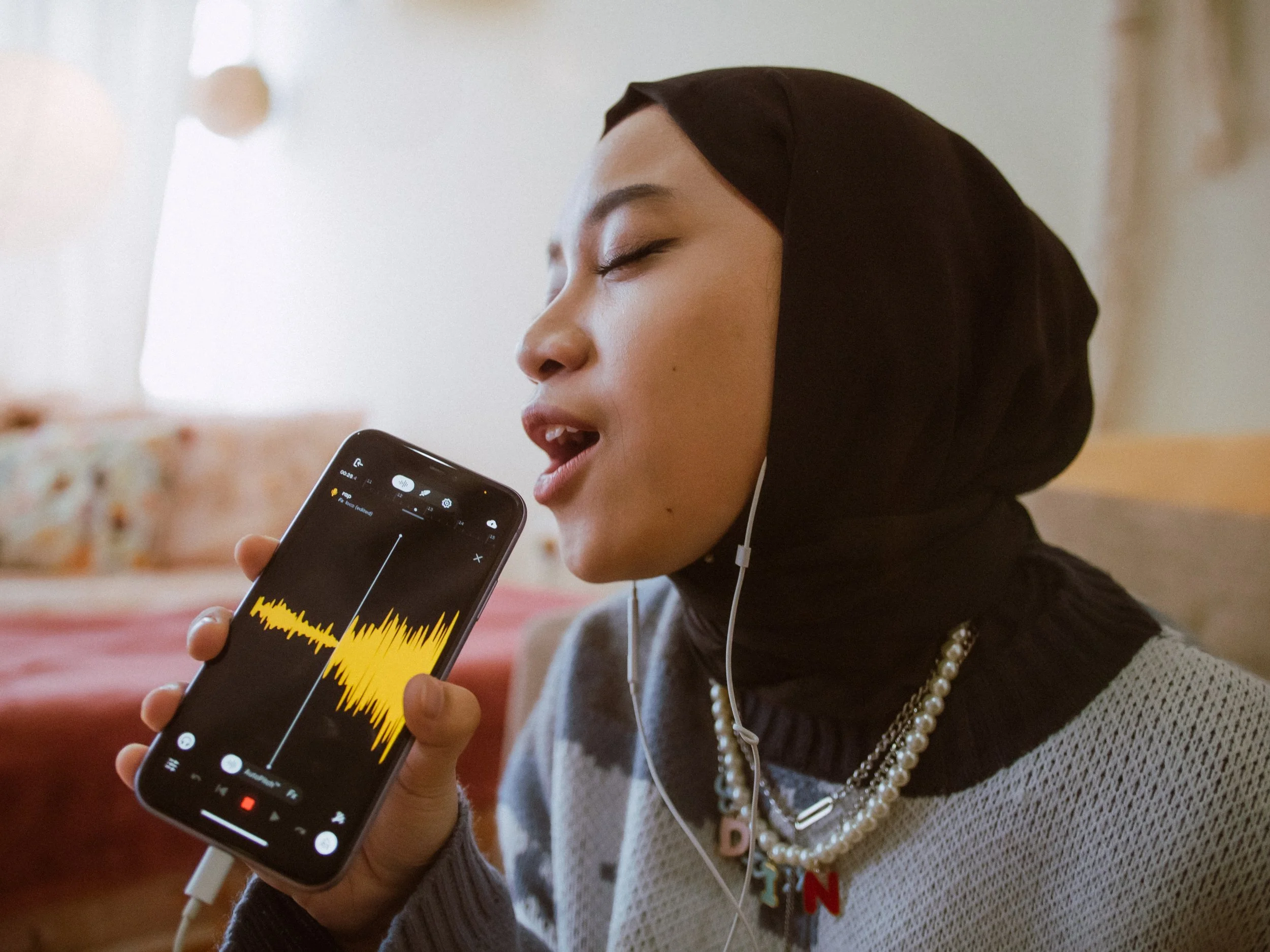
The Therapeutic Power of Singing
There’s something fundamentally human about singing. I’m not aware of any cultures in the world that don’t have music/singing (regimes that forbid music as a form of religious or political control notwithstanding). The variations in pitch and different voice qualities involved in singing tend to offer an opportunity to feel and express emotion more acutely than we might when we speak. The long, controlled exhale we tend to use when singing helps to re-regulate and soothe an over- or under-stimulated Autonomic Nervous System. And something in the predictability of melody helps to convey a message to our pattern-seeking brains in a way that’s especially memorable. The beauty of all of this is that it can work whether or not the singer is trained, can stay on pitch or feels confident in their abilities. In fact, a psychologically safe enough environment and an embodied approach to singing can support someone who is experiencing a ‘freeze’ response or veering wildly off pitch to make progress with these issues.
Lately, I’ve been reconnecting with the many reasons that singing is one of the most powerful resources in my toolkit. I’d like to share these reasons with you, in the hope of inspiring motivation, or at least curiosity about the power of song and voice.
I’m one of those stereotypical multi-hyphenates – an ‘elder millenial’ with a list of freelance job titles. As I’ve developed my business, I’ve sometimes found myself sidelining the voice related aspects of my work in favour of what seem like the more ‘serious’ things that I offer (consultancy and facilitation, executive coaching). It seems that there’s been a stubborn kernel of unconscious bias hanging around in my psyche. Perhaps at some point, I’ve swallowed a bit of someone else’s belief that singing is a nice, but frivolous thing to do. “It’s all very well holding hands and singing Kum Ba Yah, but now let’s get on with the real work…”
But I know that this view is completely at odds with my experience. I’ve been singing since I was a small child – many years of choirs, vocal coaching, competitions, recitals, song circles, pub gigs, festival gigs, protest blocs, tours, voice retreats, vocal rehab and the rest. Most of these experiences have helped me to express and process emotion, connect with myself and others and get calm and grounded. And knowing that these positive impacts are available to just about anyone motivates me to share them.
There’s something fundamentally human about singing. I’m not aware of any cultures in the world that don’t have music/singing (regimes that forbid music as a form of religious or political control notwithstanding). The variations in pitch and different voice qualities involved in singing tend to offer an opportunity to feel and express emotion more acutely than we might when we speak. The long, controlled exhale we tend to use when singing helps to re-regulate and soothe an over- or under-stimulated Autonomic Nervous System. And something in the predictability of melody helps to convey a message to our pattern-seeking brains in a way that’s especially memorable. The beauty of all of this is that it can work whether or not the singer is trained, can stay on pitch or feels confident in their abilities. In fact, a psychologically safe enough environment and an embodied approach to singing can support someone who is experiencing a ‘freeze’ response or veering wildly off pitch to make progress with these issues.
If that’s not enough to convince you to seek out your nearest community choir (or attend one of my workshops), here’s a breakdown of some of the specific ways that singing can be transformative.
1. Singing to express, process or shift emotions:
One of my supervisors wrote a PhD thesis on singers’ psychology, having noticed that her voice students would often sing what they couldn’t find a way to say. Many vocal coaches keep a box of tissues in their teaching room, ready to dry tears. In vulnerable, emotionally connected performances, we ideally want the singer to have shed any tears in advance and retained enough emotion on-stage to help the audience to connect to their own feelings. But of course, that’s not to say that singing is always heavy or painful. We might sing to express joy, love, anger, power or just about any other emotion imaginable. And we might use music to shift our mood or lift the energy in a space. Singing is a physical activity that requires muscular support, full diaphragmatic breathing and the release of unnecessary tension. This, combined with our connection to lyrics and certain voice qualities (such as the ‘sob’ sound) can help us to ‘shake loose’ emotions that might feel stuck or overwhelming.
2. Singing as a grounding or meditative practice:
Singing is a form of bodywork in itself. There are so many physical processes at play when we sing, and noticing what we’re feeling in our bodies can offer a sense of grounding in the here and now, as well as helping to train the voice. Noticing where we can feel the sound vibrating in the body can feel particularly soothing for many people – I like to imagine that it’s similar to cats purring to heal themselves (though I don’t intend for this to be read as scientific fact!) Something that does have a basis in scientific research, however, is the established impact of chanting as part of meditation practice. Using repetitive, sung words/phrases or humming as part of meditation has been shown to reduce stress, anxiety and hypertension. I am a big fan of using humming as a vocal warmup and grounding exercise ahead of potentially challenging meetings and presentations.
3. Singing as protest/political voice:
Like many others, I’ve often felt overwhelmed and powerless in the face of world events (most recently, the horrific situation in Gaza). But I’ve found it cathartic and powerful getting together with others at protests, rallies and private gatherings to sing songs that remind us of our common humanity and call for peace. I’m certain that, for as long as we’ve had language, people have sung songs to tell the stories of those who have been silenced, to express collective traumas and to call others to action. At a recent gathering, a contemplative song sung by a small group in a large crowd drew in a lot of attention and helped people to express their feelings. Meanwhile, world famous artists can use their platform to raise awareness and solidarity for the causes that matter to them.
4. Singing to connect with others:
When we sing, we’re potentially making ourselves vulnerable – it’s exposing. This is a large factor in many people’s horror at the idea of anyone hearing them sing. But it’s also part of the reason that it’s such a powerful way to connect with people and build community. When we sing together, we can share an experience of collectively creating a sound, potentially synchronising our breathing and tuning into each other. It’s a real bonding experience, and -as with the concept of singing as protest above – it can remind us of our collective power. I’ve often run ‘singing for wellbeing’ programmes for people who have found themselves in the most challenging situations (homelessness, seeking asylum, serious illness). And much of the feedback from participants has focused on the importance of the collective experience of singing – being witnessed as they took up space, made noise and expressed emotion. A 2013 study showed that choir members’ heartbeats could synchronise with each other as they sang (with more structured music showing more significant evidence of synchronisation). The feeling of being part of a huge wall of sound while singing in a large choir, and the feeling of instinctively harmonising in a small group are some of my favourite experiences – I can’t quite find a way to describe or compare them to anything else.
So, with all that in mind, I’m ready to throw out the last vestiges of discounting the importance of singing. And if you’re ready to find out more, drop me a message or check out my next embodied voice and breath workshop here.

If you can talk, you can sing!
I’m in the process of planning a new community singing group, with a focus on wellbeing. I’m well versed in the many health benefits of singing and when I work with groups, I aim to create an accessible, supportive environment in which people can explore and experience them. Some of the responses I tend to hear when I describe my work include “oh, I can’t sing!”, or “I love singing but I’m tone deaf”, or “I wish I could sing but I can’t!” I’m always reminded of Dweck’s growth mindset vs. fixed mindset model when I hear this – believing that we lack potential to grow in a specific area is a great example of a fixed mindset. We accept that playing an instrument like the guitar, piano or violin will require hundreds of hours of practice to master, even though some people seem to have more of a natural affinity for it than others. But because our voices are an inherent part of us, a part of our anatomy, we may be tempted to think that only some, special people have the ability to use them to express ourselves tunefully. I disagree with this idea – sure, there are born singers, including a few people with vocal apparatus and lung capacity so extraordinary that they seem destined for a successful career in music (although the ratio of talented singers to career opportunities is quite daunting). Equally, there exists a small number of people who are truly ‘tone deaf’ – up to 4% of people have Congenital Amusia, which is tone deafness that cannot be explained by factors such as hearing loss, brain injury or other cognitive/environmental factors. In spite of that fairly low prevalence, I’m sure I hear far more than 4% of people I encounter claiming to be completely, permanently unable to ‘carry a tune’. This always makes me a little sad because, although not everyone is quite as invested in singing as I am, I hate the idea of self-limiting beliefs preventing people from enjoying this particular form of self-expression.
Because our voices convey our emotions, our thoughts and identity, using them (whether for singing or speaking) can make us feel vulnerable at times. We’re putting ourselves out into the world, asking to be heard and dealing with whatever response is received. Singing is a super-charged form of vocal expression, because it combines the evocative nature of music with whatever emotions and stories are conveyed by lyrics, and because each of us has a unique sound that lets the world know something about who we are. It requires physical/muscular support and is more of a workout than it’s often given credit for. It becomes obvious to the listener if, when we sing, we feel so unsafe and uncertain that we lose control of our breath and our ability to find the right pitch or remember the words. So, I understand (from both professional and personal experience) some of the reasons that people might be a little shy about singing, particularly if they know that someone might be listening. And the less often we do something, the less naturally it seems to come – we don’t develop muscle memory or confidence, and we solidify our belief that ‘this is just something I can’t do’ – it can be a vicious cycle. There’s also the huge and debilitating issue of shame. So many of us have had experiences, in childhood and beyond, that shamed us into making ourselves smaller, quieter and not expressing who we really are. Many of us have had humiliating and even traumatising experiences of being heard by others and judged harshly, of being paralysed by stage-fright or of being laughed at when we dared to raise our voices and express ourselves. This really contributes to a sense of feeling that it’s not safe to be heard or that we ‘can’t sing. But that needn’t be the end of the story… discovering safer, more supportive places and people to sing with, exploring and challenging the critical voices we use to talk to ourselves (voices that likely once belonged to someone with an influence in our lives), and taking small steps to increase our vocal confidence can all help to turn things around.
Regardless of whether you claim you can’t sing but are happy to joyfully belt out a tune in the shower, or you refuse to let a melody pass your lips at all, there are various ways to get some of the wellbeing benefits of using your voice. For example, humming or chanting can be part of a mindfulness or meditation practice. Taking full, diaphragmatic breaths to prepare for vocalising, and extending the exhale (humming until you run out of breath) kicks in a physical process that brings your Parasympathetic Nervous System into play, promoting rest, calm and recovery. It also helps to bring your attention to the body and provides a focus point for those who find it hard to sit quietly with their thoughts. It’s still early days in terms of the science of this, but there are some studies looking at whether meditation with vocalising has increased therapeutic potential (for example, due to vagus nerve stimulation). But whatever the science says, I know from experience that singing and humming can be fantastic ways to get grounded, move past ‘stuck’ emotions, connect with the body and self-soothe.
I’m curious about how my thoughts will land with those who say they can’t sing. If that’s you, I’d invite you to be curious about it too. What emotions, thoughts or memories come up for you as you read this? What might that mean? Are you willing to challenge any of your assumptions about this? Does it matter to you? If the answer to some of these questions is a resounding ‘no’, that’s ok. Not everyone feels the need to use their voices in this way. Though to me, it seems that singing is an inherently human and beautiful thing to do. So go ahead and sing like nobody’s listening – the good news is that you don’t need to be ‘good’ at it in order to reap the benefits to your wellbeing.
Looking for support with being heard, using your voice to improve your wellbeing or learning to sing? Contact me!

The Psychology of Voice
When I think of ‘voice’, I think about being heard, speaking out against things we find unacceptable, advocating for ourselves or others, performing or presenting in front of an audience, and vocal technique (be it for speaking or singing). Things that can get in the way of any and all of these include the stories we tell ourselves about who we are, the messages we received from our parents or caregivers, how we are feeling physically and how safe we feel in the environment in which we are attempting to be heard.
Or ‘The Courage to be Heard and Understood’.
When I talk about ‘the psychology of voice’, people may hope or expect to learn tactics for being heard, understood and ‘taken seriously’, based on studies that show which pitch, accent, body language or tone audiences best respond to. I believe there may be value in taking time to consider how we may be coming across when we communicate, but I do not offer tips and tools that promise to endow you with an air of authority, confidence or persuasiveness. My passion lies in wholehearted, authentic communication. I’m a Performance Psychology practitioner – I specialise in voice and communication, trauma recovery, relationship and a body psychology approach to wellbeing.
When I think of ‘voice’, I think about being heard, speaking out against things we find unacceptable, advocating for ourselves or others, performing or presenting in front of an audience, and vocal technique (be it for speaking or singing). Things that can get in the way of any and all of these include the stories we tell ourselves about who we are, the messages we received from our parents or caregivers, how we are feeling physically and how safe we feel in the environment in which we are attempting to be heard. It’s impossible to truly separate the mental, emotional and physical aspects of voice. This is one of the reasons I’m so fascinated by it. The voice is the interface between the internal and external worlds*. A thought is an internal process, but when we decide to speak that thought, express that emotion, it exists outside of our body. Can you think of a time when you wanted to cry but made the decision to try fighting back the tears? Felt that ‘lump in the throat’ feeling as you attempted to swallow your feelings because it didn’t feel safe or socially acceptable to let them out? This is an example of how our emotions, vocal apparatus and communication interact with each other.
How safe we feel and our self-talk has an impact on what comes out of our mouth and how. Before I understood the ‘how’ and ‘why’ of this, I experienced it first-hand. As a teenager, I was training in classical singing. Though I was a born performer with a flair for the dramatic, I suffered terribly with performance anxiety (a term I was not familiar with at the time – back then, we just called it ‘nerves’ and were encouraged to ‘toughen up’). The more formal the environment, the more nervous I became. My breathing became erratic and my voice shook fearfully. On a number of occasions, I auditioned for roles that allowed me to show a more playful, exuberant side. I remember Directors expressing shock at the sudden transformation – meanwhile, I thought ‘this is how I really sound!’
Years later, disaster struck. A perfect vocal storm, involving a bad bout of bronchitis, a load of unprocessed trauma and a lack of rest, led to me completely losing my voice. A combination of surgery, vocal rehabilitation, breath work and Performance Psychology support helped me to find it again. A key aspect of this was the building of solid therapeutic relationships. I had to trust the people coaching me through this recovery with some of the things most precious to me: my emotions, stories and voice. This is something I hold in mind as a coach – I remember how vulnerable I felt and how important it was to be treated with care.
As I learned about what was stopping me from expressing myself fully, the first lesson was about ‘body armour’. We tense and brace our bodies when we feel threatened, and often, we don’t let that tension go. Fear had me tied in knots, so tense that I struggled to express myself. To use our voices clearly, we need the support of our diaphragm and core muscles, and a steady flow of breath. The tension we carry in our neck, jaw, throat, chest and shoulders when we are stressed, anxious, scared or under pressure can seriously inhibit this.
I went on to explore the ‘unsaid’. What were the things I did not feel safe enough to say? What messages had I received as I grew up about the acceptability of particular emotions? What did I tell myself when I felt those emotions and how did my body respond? Making sense of what was going on under the surface yielded surprising results, and the improvements in my communication were tangible.
I re-built my performing experience from scratch – starting with audiences of people with whom I had built relationships of trust and moving on from there. Vocally, I am still more sensitive than I once was to physical, emotional or environmental changes, but this is often as much of a gift as it is a curse. My voice lets me know what I need, and perfectly communicates how I am feeling.
What I experienced, and what I went on to learn in years of training is that being heard and understood requires the courage to be vulnerable. This courage can come partly from trust – both in yourself and the people around you. But sometimes, there won’t be a ‘safe person’ in the room with you at a time when you need to use your voice to speak up. There are ways to boost feelings of internal safety – though the specifics are different for everyone, I suggest starting with breathing ‘in your belly’ (i.e. using your diaphragm), grounding your feet and consciously releasing tension from your shoulders, neck and jaw. Communicating wholeheartedly, honestly and boldly is a skill you can keep developing: ‘speak your truth, even if your voice shakes’.
For support with any of the issues mentioned here, please contact me. If you have concerns about your vocal health, talk to your GP first.
*See ‘The Singer’s Psyche’ - research by Dr. Denise Borland for more on the psychology of voice.

"Speak the truth, even if your voice shakes"
So much of my work is about voice, from singing and performing, to having the confidence to speak up for self and others, and speaking your truth to power. This is a moment in time when the power of collective voice is being felt around the world.
So much of my work is about voice, from singing and performing, to having the confidence to speak up for self and others, and speaking your truth to power. This is a moment in time when the power of collective voice is being felt around the world.
It has been a momentous and traumatic few weeks. At a time when so many people continue to deal with the effects of a pandemic, it seems that each passing hour now brings news of more racism, police brutality and denial of human rights. These are by no means new issues, but we are living through a historic moment of heightening tension and resistance that I hope will be the catalyst for lasting change.
I hold the privilege of living a life free from fear of racist violence, abuse and discrimination. I am acutely aware of how the pain and anger I experience as I watch from a distance is a fraction of what I’d be feeling if the violence and oppression being brought sharply into focus was being aimed at ‘people like me’. I can choose to switch off, step back and spend time considering how to be a good ally. When there are structures in place that have systematically oppressed a group that you are part of, switching off may not seem like a possibility.
Being in some version of lockdown at a significant political moment like this gives those of us with white privilege the gift of time to learn, think, support and recharge. The ‘recharge’ element of supporting social change is important because we are in this for the long haul. There will be backlash. There will be steps forward and back. It will require courage to keep pressing forward, raising our voices and demanding change. It will take an enormous amount of energy, though the more we share the load, the less draining it stands to be. Those of us who are not directly affected by a particular form of inequality can help by taking some of the load of challenging, sharing/amplifying and putting pressure on those in power, in order to let the people who are directly dealing with this trauma rest. I feel it’s crucial that we don’t turn away from the discomfort... even though growing can really hurt and so much of what we’re seeing is horrific to watch, it must be acknowledged. But to keep that stamina up and look after our mental health, we all need to take time to recharge. We all deserve support and good health. And the struggle needs us to be in good health and good voice. For me, recharging means taking breaks from social media, news, protests and petitions to do things that energise or soothe me - from singing or breathing to taking baths and watching escapist series. It also means connecting with like-minded people, in order to feel sane, seen and heard. It involves being gentle with myself if I’ve ‘got it wrong’, while still committing to do better.
I’d also like to acknowledge that it’s Pride month. The struggles against racism and homophobia/biphobia/transphobia are inextricably linked. In the U.K, transgender people are facing very vocal discrimination, and their existence is being denied by those with positions of huge power. Again, I have privilege here as a cisgender, queer woman. I believe it was a cynical move for JK Rowling to take space away from the demands for an end to oppression by speaking out against another marginalised group (many of whom are doubly discriminated against due to ethnicity and trans identity). Much of my work over the years has been about supporting transgender young people to feel accepted, able to speak up and be seen. These are basic human needs and I will stand up against anything that threatens them in any way I can.
I am aware of how many words I have used here – partly as a way to process my own feelings and partly because there is so much to discuss. I want to avoid taking any more space away from people whose voices need to be amplified louder than mine. In the end, it comes down to a plea for us to educate ourselves, be courageous enough to speak out against injustice even if our voices shake, and to stay safe and well.
Resources and ways to support:
Ways to support BLM https://blacklivesmatters.carrd.co/
Ways to support BLM UK https://blmuk.carrd.co/
Free therapy for Black people https://www.blackmindsmatteruk.com/
Opinion piece on black trans rights https://www.nbcnews.com/think/opinion/when-black-lives-matter-black-trans-people-must-be-freed-ncna1228316
Round up of BLM reading, resources & Black owned businesses https://thefword.org.uk/2020/06/the-f-words-suggested-list-of-blm-reading-and-resources/
Charity for trans children & young people https://mermaidsuk.org.uk/
LGBT campaigning charity https://www.stonewall.org.uk/

Collective Psyche, Myth and Ritual
Exploring national myth making, rituals and our collective psyche. Might we have an opportunity to re-think these?
(Content warning: suicide, Holocaust)
It’s a well-rehearsed argument that humans are hard wired for connection. Ultimately, we are pack animals who historically relied upon safety in numbers. Much has been made already of the possible mental and emotional impacts of existing in a state of relative social isolation during this pandemic. And while it can sometimes be weird, frustrating and exhausting to engage in a barrage of video calls and online chats, those of us who have the luxury of being able to do so may manage to stave off the worst effects of being locked down away from our social networks. As well as being pack animals, we’re meaning-making beings, and when things don’t make sense, it impacts us. So, what sense can we collectively make of who we feel we are in the midst of a crisis?
I’ve alluded before to the collectivism that there can be in a global situation like Covid-19, even in our separateness and our different levels of comfort and privilege. Around the UK, there have been acts of kindness and solidarity springing up to replace (for now) the old norms of politely ignoring each other. Rainbows on windows and ‘low skilled workers’ becoming ‘key workers’: symbols and narratives agreed upon collectively. Throughout human history, stories around the campfire, told to warn of the consequences of actions, to create and stay connected to a shared identity and to honour ancestors, grew into religion and ideology. Our unique human ability to think conceptually helped us to collectively imagine – to strengthen our safety in numbers by imagining stories, symbols, tribal identities and rules. This would establish an insider/outsider structure – once myths, symbols and rules were in place, there were consequences for stepping outside of them. Being ousted from your group would, at one time, have meant certain death – this is not necessarily true in the modern world, though the deaths of those who have taken their own lives after being shamed on social media platforms might suggest otherwise.
We have come a long way in material terms since all our stories were told around campfires (I’m still very partial to a campfire story). And yet, we still participate in collective meaning making as we yell into a curated online bubble and pin our colours to the mast, be they rainbow flag, Union Jack, stars and stripes, Saltire, anarchy symbol... I shout loudly about the causes I care about, and while I do my best to build bridges and find our common humanity, I admit that it’s tough at times. Especially when those I disagree with appear to be invested in stripping people unlike themselves of their rights and their humanity. I’m sure they feel the same way about me. Each of us has decided that the other is on the wrong side of the tribal rules.
What scares me right now is the use of myths, symbols and stories intended to create a collective narrative for the personal gain of those who are promoting them. This is propaganda. The Nazis used an incredibly slick, powerful campaign of oratory and visuals to convince the poor and disillusioned that putting and keeping them in power, and scapegoating Jews (along with Romany people, LGBT people and other groups) would be in their best interests. Referencing the Holocaust as a warning about sleepwalking into dangerous political action is nothing new. Yet, the VE Day celebrations that took place recently on the streets of England didn’t speak to me of quietly contemplating how the world became so broken that millions of lives were lost to a fight against fascism, or of considering how we can make the ‘never again’ story a reality. Instead, it spoke to me of a need for togetherness, shared identity and hope gone wrong. An attempt to celebrate the myth of a nation, built on empire, priding itself on stoicism, stiff upper lip and standing up to the ‘bad guys’. But when we break out the bunting to celebrate those purported shared values and do the conga while thousands die alone, and carers are sent into perilous situations, I feel we may have lost sight of this national concern for social justice and speaking truth to power, if indeed we ever had it.
What I take from all of this is that it is time to start creating new narratives. These stories need not be dictated by those who have power and guard it jealously. This requires some form of coming together to ask what kind of society we want to be. What are the needs of our collective psyche? When it comes down to it, we all need the same fundamentals. Belonging is a significant part of that picture, though belonging that exists at the expense of the rights of an ‘other’ cannot be healthy for the psyche of either the ‘in’ our ‘out’ group. We all need those bottom lines of food and shelter, safety and security (a la Maslow’s Hierarchy of Needs). Needing to protect our own resources can lead us to believe that the existence and behaviour of others is a threat to our safety, especially in times of scarcity. I suppose that’s the next building block for ‘othering’ and drawing lines in the sand. But assuming that there’s enough food, shelter and security to go round (which there is, it’s just that some people have a lot more of it than others), our next needs in line are social. Some of the powerful people who would have us believe that a national myth of heroic stoicism is more important than our common humanity or safety seem to be abundant in resources and pretty starved of real love and belonging. So, while they may (rightly or wrongly) have been given the job of steering this ship through a storm and ensuring our survival, I hope that we don’t also let them steer us into believing jingoistic national myths. Or, if I’m now dealing in lost causes, that the rest of us will find our collective voice and use it powerfully.
I’m curious about what rituals may be created and what will endure beyond this crisis. I’ve spoken with people a lot recently about the importance of ritual, be it the first coffee of the morning, the lighting of commemorative candles, the lunch time jog, daily meditation or coming together with friends (virtually or otherwise) to connect and blow off some steam. The rituals we choose both demonstrate and shape the stories we tell ourselves. They say things like ‘it’s important to remember those gone before us’, ‘mental and physical health are important’ or ‘in this time of chaos, there are some things I can predict and control, and that makes me feel safe’. For me, intention is important here. It doesn’t really matter whether the ritual is a prayer or a double shot espresso – it’s the meaning that we ascribe to it that gives it significance. So, if we’re up for the challenge of creating new shared stories and rituals, how might that look? Could the VE Day conga lines be replaced with action that really stands up for the little guy? Don’t get me wrong, one of my favourite things is coming together with people to celebrate – to dance up a storm, to sing together, to let go, be silly and be human. This is a bit like my annual pilgrimage and I’m missing this summer’s cancelled festival season already. But much like the importance of the meaning we ascribe to rituals, context is key too. Coming together in defiance of something scary and unjust is a remarkable human trait... though a virus isn’t to be stood up to as if it were some kind of terrorist, so in this case, best to stay at home. It’s hard not to be able to gather in the way we’ve evolved to, but it will happen again before too long. I look forward to being able to come together to connect, analyse, plan and celebrate. In the meantime, we’ve been offered a chance to reflect on who and how we collectively want to be.
For support around self-care and building helpful rituals during a chaotic time, contact me. If you’re experiencing mental health crisis, contact The Samaritans or your GP.

Finding my voice
This is a cliché like the ones you hear on those ubiquitous TV talent shows, but I can’t remember a time when singing wasn’t part of my life. Although for me, that’s not strictly true – while I’ve been singing since I was quite wee, there were a few years of vocal wilderness around a decade ago. It started with a bad bout of bronchitis and progressed to surgery and vocal rehab. A combination of bad luck, stuck emotions and a lack of rest resulted in temporary disaster but would ultimately have a happy ending.
Singing and speaking are the main things I’ve always instinctively turned to in order to process my emotions and express who I am (not to mention how I made my money – supporting people mainly through talking). Being unable to really use these resources was both devastating and shame inducing. Who was I if not a singer and professional voice user, and what was I supposed to do with all these inconvenient feelings that had nowhere to go?
This is where I may get a little evangelical about the tools that helped me get back on track and that I now have a passion for sharing with others. The NHS took care of the physical aspect of repairing my vocal apparatus but I needed to address other factors and this is where I first encountered a psychological and body work approach to vocal coaching. At Noble House, I learned about vocal rehab, an understanding of trauma and conscious breath work. I knew it was the right place for me, and still my carefully crafted defence system fought this recovery process every step of the way… until it all started to fall into place. I made leaps and bounds as a singer and a human. I belted out impossibly cheesy songs in my bedroom until my flatmate and I had fits of emotional giggles about this new development. I talked about things I’d never talked about before and felt the improvements come thick and fast.
The obvious next step in this adventure was to start training as a practitioner. It’s been a long process and an eye opening one too. While this has been going on, I’ve continued with my job supporting young people through various challenges in their lives and later, managing a small team of wonderful people who do likewise. I’ve been, and continue to be involved in various bands and music projects. I believe that none of this would have happened if I hadn’t been encouraged by a friend to sort out my vocal problems. For most of us, our voices are one of the most important aspects of our identity and ability to participate in communities, to stand up to injustice and to express our feelings. I may be a little biased under the circumstances but I’d say that taking care of this aspect of self and being aware of how closely it’s connected to our emotional world and our health is of vital importance.
‘Tell your truth, find your voice, sing your song’ (Anon).