
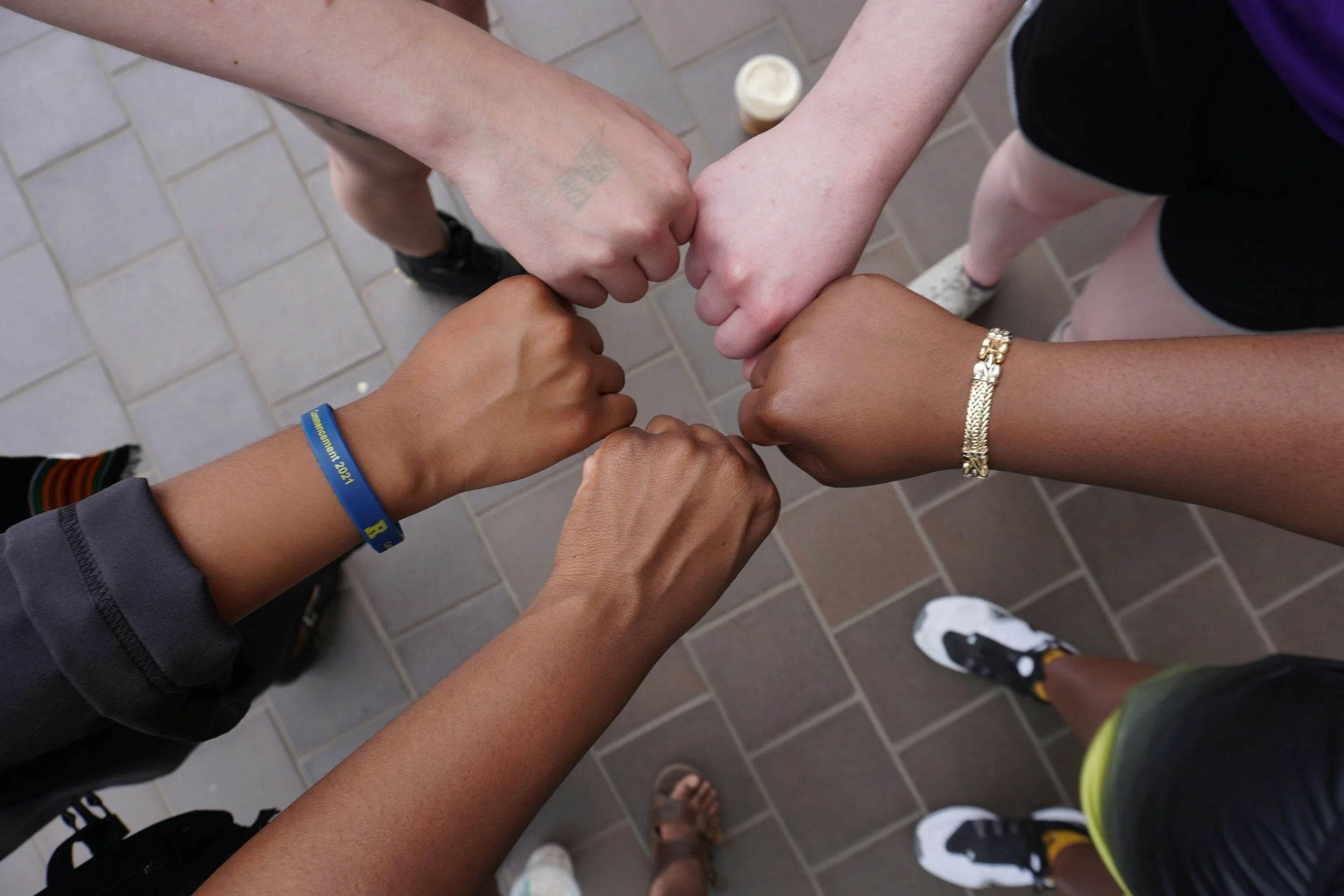
Reclaiming wellbeing – from ‘nice to haves’ and magic wands to essential tools for surviving and thriving
In recent years, the concept of wellbeing has become ubiquitous and yet undervalued. For professionals and leaders in socially conscious organisations, the stakes are especially high. As financial pressures mount and crises become more frequent, funders and decision makers are increasingly cutting wellbeing related programmes, viewing them as expendable luxuries rather than essential investments. This trend is potentially damaging to organisations and communities, especially at a time when living and working conditions, and over-exposure to distressing information, are adversely affecting so many of us.
The false economy of cutting wellbeing
When budgets tighten, wellbeing initiatives are often the first to go. The rationale is straightforward enough - in times of crisis, only the “essentials” survive. But what if we’ve misunderstood what is truly essential? Workforce wellbeing is not a peripheral concern – done well, it is foundational and preventative. Contributing to positive wellbeing is the bedrock upon which sustainable, effective, and compassionate organisations are built.
In recent years, the concept of wellbeing has become ubiquitous and yet undervalued. For professionals and leaders in socially conscious organisations, the stakes are especially high. As financial pressures mount and crises become more frequent, funders and decision makers are increasingly cutting wellbeing related programmes, viewing them as expendable luxuries rather than essential investments. This trend is potentially damaging to organisations and communities, especially at a time when living and working conditions, and over-exposure to distressing information, are adversely affecting so many of us.
The false economy of cutting wellbeing
When budgets tighten, wellbeing initiatives are often the first to go. The rationale is straightforward enough - in times of crisis, only the “essentials” survive. But what if we’ve misunderstood what is truly essential? Workforce wellbeing is not a peripheral concern – done well, it is foundational and preventative. Contributing to positive wellbeing is the bedrock upon which sustainable, effective, and compassionate organisations are built.
Neglecting or cutting corners with wellbeing is a false economy. The costs of burnout, absenteeism, turnover, and diminished performance far outweigh the investment required to support staff meaningfully. In sectors where professionals routinely support people through distressing or traumatic experiences (often while being underpaid and overworked), the risks of neglect are even greater. In this case, wellbeing isn’t a “nice to have” – it’s a matter of survival. I’ve seen too many examples of organisations in crisis because of a lack of effective support for their teams. This often comes as a shock when fed back by disillusioned staff at exit interviews, because the people at the top are working hard to protect and support their workforce, but they may have failed to join the dots between working conditions, structural issues in the organisation, meaningful opportunities for people to be heard, and workplace wellbeing.
Beyond sticking plasters: the limits of superficial solutions
Too often, wellbeing programmes are reduced to a handful of token gestures: morning meditation sessions, discounted gym memberships, or access to mindfulness apps. While these can be helpful, they are not solutions to complex, systemic issues. Our wellbeing cannot be separated from our living and working conditions, and the impact of events in the wider world. What each of us needs to thrive will be different, and meaningful support requires careful thought, genuine investment, and a willingness to address root causes. It’s understandable that capacity for all of this may be limited in times of crisis, but it may be a case of allocating time and resources now to prevent disaster further down the line.
A “sticking plaster” approach risks trivialising wellbeing, offering temporary relief without addressing underlying problems. It’s not enough to encourage self-care in isolation; we must also create environments where people are safe, valued, and empowered. There is a shift in many sectors and communities from a focus on self-care to self and collective care. This, too, needs to be backed up with investment and resources.
Reclaiming the language of wellbeing
Part of the challenge lies in the language we use. “Wellbeing” has become associated with the sprawling, unregulated “wellness” industry—heavily filtered influencer videos, expensive retreats, and miracle solutions promised by social media ads. For many, the term now evokes images of hyper-individualist self-improvement, rather than a more nuanced, systemic approach.
Perhaps it’s time to reclaim the concept of wellbeing, or even to find new language that better reflects its true meaning. Wellbeing should not be about chasing perfection or subscribing to the latest trend. It should be about placing humans in all their complex, imperfect glory at the centre of our organisations, communities, and societies. It should evoke a vision of shared effort, learning, and mutual support - tools that are essential for surviving and thriving, not “fluffy” extras.
Wellbeing as a community effort
A meaningful approach to wellbeing recognises that no single solution fits all. There is room in the world for whatever form of support works for each of us - no one approach is inherently better than another. But when late-stage capitalism co-opts the concept of health and wellbeing, we are bombarded with an overwhelming array of simple, siloed solutions to complex, structural problems. This might lead some of us to feel dismissive of the whole field, undermining genuine efforts to support people.
Instead, we need to foster a culture of shared responsibility for wellbeing, which means investing in environments where people can learn from one another, share tools and strategies, and build resilience together. This might involve a slow burn and a non-linear process, which is perhaps a less exciting prospect for those who want to see the results of their investment as soon and as clearly as possible. But the likelihood of this leading to real, sustainable change seems to me to be worth it.
The risks of deprioritising wellbeing
When those holding the purse strings deprioritise wellbeing, the consequences can be far-reaching. Staff morale declines, turnover increases, and the quality of support offered to those in need suffers. In the long term, organisations risk losing their most dedicated and compassionate people—those who are drawn to socially conscious work precisely because they care deeply.
Moreover, the ripple effects extend beyond the workforce. When professionals are supported to thrive, they are better equipped to help others do the same. In sectors where the work is emotionally demanding, this is essential.
Investing in meaningful wellbeing
Meaningful investment in wellbeing starts with listening. Leaders actively listening to their teams to understand their needs, challenges, and aspirations. A commitment to addressing structural issues such as workload, pay, job security, and organisational culture, rather than relying solely on individual interventions.
It also means recognising the diversity of needs within any workforce. Some may benefit from flexible working arrangements, others from peer support networks, and others from opportunities for professional development. The key is to offer a range of options, grounded in empathy and respect. The best approaches to this I’ve seen and experienced involved trusting individuals to know what will work best for them and to find ways to accommodate them where possible (or support them to work out what will help if they’re not sure).
A call to action
For decision makers with responsibility for workplace and community wellbeing, there is a strong, evidence based case to be made: effective wellbeing support is not a luxury, a magic wand, or a a sticking plaster. It is a set of essential tools for surviving and thriving, both individually and collectively. By reclaiming the concept from the clutches of the wellness industry and investing in meaningful, systemic support, we can build organisations that are resilient, compassionate, and successful.
The benefits of doing so are clear, and so are the risks of failing to act. In times of crisis and scarcity, it is more important than ever to prioritise the wellbeing of those who do the vital work of supporting others.

‘Nothing about us without us’ – addressing tokenism, conflict and exploitative practice in work with experts by experience
Involving the people closest to a social issue in the design, delivery, evaluation and investigation of services that address the issue is a well-established and important concept. Across different social services, government initiatives, research bodies and charities, we hear an array of terms such as ‘experts by experience’, ‘co-production’ and ‘lived experience practitioners’ to describe and highlight the importance of collaborating with service users or people affected by a specific challenge. And yet, the same pitfalls I’ve seen in the field of participatory work over the last twenty years keep tripping us up in both new and familiar ways. That’s not to say we haven’t made progress – I’ve seen some incredible examples of meaningful co-production. But there are sticky challenges to address in the planning and delivery of participatory services, and it feels important to talk about and address them.
The recent news story about conflict within the survivors involved in the Rotherham grooming gangs investigation was one of the things that got me thinking about this (the other is being in the process of designing new services for young adults, but more on that later). One of the elements that seems to have led to chaos and conflict in this investigation is a lack of clarity around scope, boundaries and purpose. Concerns about transparency were shared as part of the reasoning behind the resignation of two panel members last month. This raises the issue of clear communication, expectation setting and support at the outset of a piece of work (as well as throughout). There are potentially significant consequences, both positive and negative, for people taking part in processes like this, and it’s essential that they know what they are getting involved with, what is expected of them and what the project hopes or may be able to achieve.
Involving the people closest to a social issue in the design, delivery, evaluation and investigation of services that address the issue is a well-established and important concept. Across different social services, government initiatives, research bodies and charities, we hear an array of terms such as ‘experts by experience’, ‘co-production’ and ‘lived experience practitioners’ to describe and highlight the importance of collaborating with service users or people affected by a specific challenge. And yet, the same pitfalls I’ve seen in the field of participatory work over the last twenty years keep tripping us up in both new and familiar ways. That’s not to say we haven’t made progress – I’ve seen some incredible examples of meaningful co-production. But there are sticky challenges to address in the planning and delivery of participatory services, and it feels important to talk about and address them.
The recent news story about conflict within the survivors involved in the Rotherham grooming gangs investigation was one of the things that got me thinking about this (the other is being in the process of designing new services for young adults, but more on that later). One of the elements that seems to have led to chaos and conflict in this investigation is a lack of clarity around scope, boundaries and purpose. Concerns about transparency were shared as part of the reasoning behind the resignation of two panel members last month. This raises the issue of clear communication, expectation setting and support at the outset of a piece of work (as well as throughout). There are potentially significant consequences, both positive and negative, for people taking part in processes like this, and it’s essential that they know what they are getting involved with, what is expected of them and what the project hopes or may be able to achieve.
Disagreements between survivors on the panel also highlight the fact that people with lived experience each bring their own views, needs and challenges to a process of addressing the issues they have faced, and that it’s likely that they will have a significant emotional investment in seeing them addressed in a specific way. Group decision making processes in this context are reasonably likely to yield disagreements, and this may look and feel different for people whose lives are being examined and affected by the subject at hand than for the professionals who will likely do their best to ‘unplug’ from it all at the end of the working day. Particularly when the service, research project or investigation involves discussions of traumatic and distressing experiences, every aspect of the planning process needs to be considered with harm minimisation and ethical practice in mind. It seems so obvious to say that working with survivors or experts by experience needs to be handled with a careful, compassionate and trauma informed approach. And yet, there are clearly still barriers to this approach being consistently carried out. Let’s consider some of the challenges, and how we might begin to address them.
‘Performers to the stage’
I’m working with young adults to develop some new services that seek to address gaps in their support provision. At one of the projects I’m involved with, I recently heard someone referring to being asked to ‘put on the show’, in reference to the request to share personal stories, talk about the impact of the support they’re receiving, or offer helpful insights to decision makers. Many of the people who have both lived experience and the time, motivation and confidence to do so are asked to share their stories and ideas over and over again. We’ll come back to the potential psychological impact of this, but for now, there’s something to consider about what it means to push the most confident people to the front in participatory processes. There will always be barriers to access to overcome, especially when working with populations who face complex challenges and disadvantages. Often, the people we most need to hear from are those who are most excluded from participation for many reasons, including some that are outside of our sphere of influence. But it’s important to consider ways to address barriers where possible, and to support those with less confidence and fewer resources to be heard.
What might help?
-Pay/reimburse people for their participation
-Provide tailored support and training to help experts by experience feel ready to take part in project planning, public speaking etc.
-Ensure access needs are responded to and spaces are as accessible as possible (this includes asking people to say what they need in order to participate)
-Structure group discussions, meetings etc. in ways that offer everyone a chance to share their views (using a range of methods to capture opinions, ideas and stories)
-Consider how you will assess a participant’s readiness for a specific role and how you will safeguard them
The Trauma Industrial Complex
This is a reference to the recent book of the same name by Darren McGarvey. He explores the ways in which the proliferation of traumatic stories shared in popular culture is driven by a cynical industry capitalising on distress regardless of the consequences, and may play a role in preventing people from recovering from traumatic experiences. There’s a lot of nuance to be explored in this discussion (I recommend reading the book for a deep dive into it), but the key question in this context is about balancing the potential harms and benefits if we are asking people to discuss traumatic experiences. In order to prevent exploitation or retraumatising, there needs to be sufficient support in place, alongside high levels of control and choice for those with lived experience.
What might help?
-Consider potential harms and how to reduce them in the planning and risk assessment process
-Offer access or signposting to appropriate support services
-Ensure informed consent by offering clear, comprehensive and transparent information ahead of sign up
-Build in choice points and explicit permission to decide how much to share, withdraw consent to take part, take breaks, say no etc.
The funding game – tokenism and competing for resources
Co-produced work can sometimes look great on paper but lack the necessary support structures to be successful and ethical. When charities, social enterprises and public sector bodies are competing for limited resources by demonstrating an approach aligned with funders’ priorities, we risk unintentional tokenism. There is an element of ‘saying the magic words’ in order to be in the running for any given funding pot, with trends and priority areas coming around in cycles. Participatory work is almost always a useful addition to a bid for resources, though some decision makers are more strict than others in requiring evidence that this is a meaningful aspect of the work, rather than an additional box to tick in order to stay afloat.
Sometimes, service user involvement is a great idea, but needs more resourcing to support key people to be ready to step into, and feel clear about their roles, and to protect enough capacity for successful delivery. This is a potential vicious cycle in circumstances where a participatory approach is needed in order to access enough funding and resources to sustain the work, but the resources required to carry this out well are lacking.
What might help?
-Realistic budgeting and setting aside enough resources for meaningful participation work
-Working with funders to share challenges and feed back what’s realistic in terms of resources required
-Be honest about the level of participation that’s required/being carried out
Space to slow down and reflect
Over-stretched services might find that the first things to be sacrificed in survival mode are those that are considered to be add-ons and ‘nice to have’, rather than foundational. The danger here is what I would consider to be a misunderstanding of the importance of what might traditionally be considered ‘soft skills’, ‘wellbeing activities’ and the like. I know from experience that building in space and time for reflective practice can make – it allows us to learn from experience and mistakes, to check for signs of bias and tokenism, to prevent burnout and to carry out good safeguarding practice. This may not always feel like a priority when services are stretched to breaking point, but they are likely to be much more brittle without the support of well held reflective practice spaces.
What might help?
-Create or use a framework for reflective practice sessions
-Protect weekly or monthly time for reflective practice groups
-Offer/access relevant training and CPD that incorporates reflective space
Transparency and trust building
Open and transparent communication is a key aspect of building the trust necessary for good collaboration and transformative work. It may be the case that key decisions and information have yet to emerge, but keeping communication channels open at each stage can help to prevent confusion about what’s possible and what’s expected of everyone. I’ve recently encountered a situation where the nature of professional, peer support and participant roles in a project I joined were unclear, leading to confusion, disappointment, and long delays to project delivery. There were potential reputational damage issues to address as a result of the lack of clarity at the outset. This was preventable, and in this case, a result of decisions being made by people who lacked connection with the project and the context it operated in – this, in itself, offers an argument in favour of keeping decision making as close to those with lived and professional experience of an issue as possible.
What might help?
-Communicate clearly about the scope and boundaries of the project, and each person’s role within it
-Be transparent about the level of participation you need and are able to support
-Check in with participants throughout to elicit feedback, check understanding and address any concerns
I hope that this doesn’t serve to make co-production and participatory work seem too daunting and risky to take on – while there are many considerations and situations to handle carefully and respectfully, it’s very much worth the effort for many reasons. For starters, it feels presumptuous to design services and solutions for people affected by a specific issue without putting them at the centre. It’s also less likely to yield the best possible results. And I’ve also found that supporting the efforts of experts by experience to overcome huge and complex challenges has been some of the most rewarding and hopeful work I’ve been lucky enough to take part in.

‘You’ve got to fight for your right to party’ – balancing accessibility and momentum building in a time of social isolation
Recently, I travelled a few hundred miles to one of the three cities I consider to be a ‘home town’, in order to host a party marking a new chapter in my life. The tricky decision making process about how many people to invite, what venue to hire, what food to provide, what time of day to gather, and anything I could do to make showing up easier and more enjoyable got me thinking about how we get people together and make things happen in this peculiar moment in history. I’m starting from an assumption that it’s harder than it used to be to bring people together in person, whether in a social setting, on a group programme or for a community event. It's important to explore and challenge this assumption, though the struggle to assemble in the 2020s is a fairly established concept.
Reflecting on my own experiences of being a host, facilitator or participant, I’ve been wondering about how we can strike a balance between creating spaces that respect and accommodate people’s complex lives, depleted energy levels and access needs, and eliciting commitment and participation at a time when it seems like we need strong community more than ever. Of course, this may be a more crucial question when applied to building movements than in relation to party planning. But community and connection take many forms, and we are living in a particularly fractured time, with lasting impacts from Covid lockdowns, healthcare and economic crises, and safety concerns for many as we descend into scary political territory. So perhaps it’s worth considering how we get people together for whatever reason in this difficult context.
Recently, I travelled a few hundred miles to one of the three cities I consider to be a ‘home town’, in order to host a party marking a new chapter in my life. The tricky decision making process about how many people to invite, what venue to hire, what food to provide, what time of day to gather, and anything I could do to make showing up easier and more enjoyable got me thinking about how we get people together and make things happen in this peculiar moment in history. I’m starting from an assumption that it’s harder than it used to be to bring people together in person, whether in a social setting, on a group programme or for a community event. It's important to explore and challenge this assumption, though the struggle to assemble in the 2020s is a fairly established concept.
Reflecting on my own experiences of being a host, facilitator or participant, I’ve been wondering about how we can strike a balance between creating spaces that respect and accommodate people’s complex lives, depleted energy levels and access needs, and eliciting commitment and participation at a time when it seems like we need strong community more than ever. Of course, this may be a more crucial question when applied to building movements than in relation to party planning. But community and connection take many forms, and we are living in a particularly fractured time, with lasting impacts from Covid lockdowns, healthcare and economic crises, and safety concerns for many as we descend into scary political territory. So perhaps it’s worth considering how we get people together for whatever reason in this difficult context.
Let me offer a caveat. I don’t want to use this as a platform to complain about being inconvenienced or upset by people not showing up for things, nor as a way to question whether progress towards more accessible spaces and communities has ‘gone too far’ – in most situations, accessibility has not gone nearly far enough. I’m interested in our changing social contracts, the impacts of technologies on how we plan, communicate and socialise, what it might mean if we’re all too exhausted to get together, and how we address these challenges in a way that honours people’s autonomy, need for downtime, and variable or limited capacity to consistently take part in community life.
And so, to the challenges of planning parties, meetings, training sessions, workshops, community events and so on. The rule in 2025, I’m told, is that we should expect around 50-75% of an invite list to say yes, and around 50% of that group to show up on the day. This seems to be surprisingly accurate a lot of the time, though it’s not something we can rely on in the planning process - who wants to risk being the host who only provided for half of the people who RSVP’d ‘yes’, only to find that everyone actually shows up? In my experiences of both facilitating and attending events in the last few years, there is a marked difference from expectations pre-pandemic in terms of attrition rates. Last minute apologies often come in a flurry, especially if someone starts the process of responding publicly on a chat thread or group invite. It can seem as if a handful of people sharing their (entirely reasonable) stories of exhausting days, heavy workloads or babysitting issues gives anyone on the fence about attending an event the green light to cancel. I’d hate to live in a world where people felt pressured to attend a meeting, party or group session, no matter the emotional, physical or financial cost. And I also wonder how our ability to show up has been shaped by a world that’s hyper-individualised, and full of endless choice about what to buy, where to go and what to engage with (all filtered through algorithmic curation by billionaire owned tech platforms).
How might we be influenced by a culture offering so many options that we find ourselves exhausted and in decision paralysis? I remember considering this in my first few years of living in London, during and after Covid lockdowns. The experience of being newly resident in one of the world’s mega-cities was surreal at a time when I could only explore my immediate surroundings for an hour a day. Later, it was equally surreal and overwhelming to find that there were countless events, groups, places and experiences available to me at any given time. I eventually found activities and groups that I was able to integrate into my weekly routine, but otherwise dipped in and out of communities, political organising, and recurring activities fairly inconsistently. I suspect this may be a feature of life in a big city at a time when communication technology and good public transport links make it possible to find just about anything we’re interested in, and to unconsciously assume that all of these opportunities will still be there next time if we miss out today. It seems that being in large group spaces also became more energetically costly during recent years - our post-pandemic relationships to the risks and compromises of sharing physical space form part of the changing social landscape. There have been many times in the last few years when I’ve been faced with a choice between stretching myself to face a sweaty, crowded London commute to gather with people for something that would bring me a sense of purpose, connection, energy, catharsis or joy, and staying in my comfort zone at home, with the option of quietly recharging my batteries or doing something requiring minimal social effort. I’ve almost always felt better for choosing to stretch myself if I’m able to, and happy with my decision to have a recharge day if I genuinely need one. But there have been other times when I convinced myself to avoid something I’d been looking forward to because I was apprehensive about meeting new people, or didn’t want to travel, only to find myself later wishing I had. One example of this is an embodiment group that I’d hoped to be involved in developing with some peers. Life took me in an unexpected direction, and I stepped back for a while. When I found myself more available, I struggled to build a routine of attending consistently, but hugely valued the sessions. I was disappointed when the group inevitably ended due to a lack of participation, but had to acknowledge my part in that.
Conversely, I’ve found that I respond well to activities with built-in accountability when it comes to building routine and making commitments. I appreciate the clear expectations, and also the discretion and flexibility of attendance and cancellation policies offered by some groups I’m part of - they’re not designed to prevent people with inconsistent health or life challenges from being able to meaningfully participate, but they lay the groundwork for enough consistent participation to allow progress towards a goal, or a critical mass of participants. It can feel like an uncomfortable wielding of power or boundaries to implement something like this, especially at a time when we’re more conscious of each other’s needs and challenges. But if we’re able to self-advocate, negotiate and offer flexibility within these boundaries, perhaps it’s less necessary to avoid setting them. I wonder whether living in curated bubbles that cater to individual needs and desires via an array of goods, services and personalised settings has made our comfort zones so enveloping and enticing that we have diminishing levels of incentive to step outside of them into a world that may involve risk, inconvenience, over-stimulation, and also growth, connection, challenge and learning. At the risk of falling into a ’back in my day’ cliché, I can’t help thinking about the contrast between making and carrying out plans in a pre-smartphone era and doing so today. I’m not the first to notice the impact of being able to fire off a quick message half an hour before an event to offer an apology without having to look the recipient in the eye, and with the assumption that the message will be received in time because we expect each other to be tethered to our devices by default. I’m grateful for the obsolescence of the communication fails I occasionally experienced as a teenager (e.g., a friend and I waiting for each other at different branches of the same city centre coffee chain, resulting in some comedic pay-phone relay calls to each other’s parents). And, while I appreciate living in a more convenient world, I must admit to a pang of nostalgia for the expectation that a plan would go ahead because there was no easy way to change last minute without knowingly affecting whoever was waiting for us. Maybe this nostalgia signals a new phase of life for me, as a member of the last generation to spend our childhoods without 24/7 online connection and then enthusiastically adopt it in early adulthood. Regardless, I find it interesting to reflect on the ways in which technological and social changes are inextricably linked, and shape our social contracts.
When I’ve had friendships or professional helping relationships with people whose health makes it difficult for them to reliably show up, there has been a clear and direct message from many of them – ‘please keep inviting me’. One resident at a housing project where I offered wellbeing support said ‘I really appreciate you inviting me to sessions, even when I don’t respond. Please don’t give up on me’. That was a powerful reminder of the tenacity required to keep trying to build a shared space in the face of barriers and challenges. And yet, there are finite resources (including energy and tenacity), as well as minimum levels of participation required in order for most projects to work. I’ve been disappointed when courses I’ve enrolled in have been cancelled because there weren’t enough participants. But it happens - sometimes the timing is wrong, and sometimes, the challenges with getting bums on seats tell us something about the economic or political climate that it’s worth paying attention to. This is the main reason that I’m refocusing a significant proportion of my work from private client contracts to funded programmes that are more accessible to those who need them most. Some programmes I offered saw a disparity between interest and participation because people who needed the input weren’t able to make the investment at that time. It felt important to respond by considering how to meet people where they are.
This doesn’t neatly answer the question of how we might meet people where they are, if where they are is a place we can’t find a way to reach. And of course, there isn’t one right answer. Something I’m working on is not taking others’ non-participation personally. It’s true that a last minute drop in numbers for an event or programme might have an impact on resources, plans and dynamics, but the challenge is to keep perspective. It’s easier to learn about what has worked and what could be done differently next time from a place of curiosity than from feelings of rejection. Sometimes, meeting people where they are involves continuing to invite them to let them know that they are valued, even if they never show up. Often, clearly addressing access needs, preferences and anxieties experienced by people who are new to a space or group can improve participation. And in some contexts, agreements about accountability and commitment levels are necessary to ensure that enough people consistently show up to keep an activity or movement alive. I find myself returning to the same question in many of my posts - where is the balance of individual and collective responsibility here? There are many things that a collective, or those with responsibility for hosting events can do to meet as many participants’ needs as possible. And there are things we can do as individuals in order to contribute to a world where communities grow and thrive, and where in-person, embodied gatherings remain viable and accessible. I’m enormously grateful for the way that meeting virtually has opened up opportunities and connections to people regardless of location, health or mobility. I’m also someone who often needs time to recharge my social battery, an experience I share with many of my friends. So, I understand that we won’t solve society’s problems and improve our own wellbeing just by pushing ourselves to spend more time in groups. And yet, in this particular moment, where billionaires stand to benefit hugely from our isolation and exhaustion, it feels like an act of resistance and social change to find ways to step out of our curated comfort zones and into community.

‘So what is it that you actually do?’ – Stories from a coach and facilitator with a niche job title (Part 1)
A theme that quickly emerged in my work was a palpable sense of anxiety around confronting complex and difficult topics related to power, privilege and identity. There was often ambivalence or resistance among people in positions of authority and those with societal privilege – sometimes based on a sense that perhaps they were going to be shamed or ‘told off’ for things that may be out of their control. And there could also be a question for people with any role or identity about whether a group environment in the workplace was a psychologically safe enough space in which to openly and honestly discuss any challenges related to inclusivity, accessibility and fairness. I found that it was getting increasingly difficult to get a group of professionals together in a room to discuss these issues or, in fact, anything else that required quite a lot of vulnerability, risk and trust in order to be tackled well.
This led me to become really interested in how I might use the resources available to me from the world of body focused, trauma-informed work to help set up the conditions for difficult conversations in groups and teams.
I have a confession to make. I sometimes dread the question ‘what do you do?’, because my work might sound like a very specific niche that I need to spend some time explaining. I offer services based on concepts like ‘embodied communication’, though I realise that they may be unfamiliar for a lot of people. So, in the interests of practicing what I preach and communicating authentically, here is an explanation of some of the things I actually do in my professional life.
I’ve spent many years working in the charity sector, part of which has involved considering and discussing how to make services more inclusive, fair and easy to access for service users, staff and volunteers. Sometimes, it also involved discussing our response to global and local events and injustices. These conversations and reflections ranged from life affirming, to awkward and uncomfortable, right through to downright traumatic. Conflicts and competing needs could arise, even in close knit, emotionally intelligent teams. We sometimes found ourselves grappling with shame, guilt or defensiveness as we considered privileges given to us by society at large; and conversely, we may have experienced fear, anger or exhaustion if marginalised elements of our own identities were up for discussion. I vividly remember the emotional intensity of discussing gender as a social construct and gender roles in the workplace with one team I was very invested in working with. And the discomfort of reckoning with my own white privilege in an organisation where I was one of two white team members (and also in a position of authority). I learned a lot from spending so many years in environments where we were all so invested in social issues, but still struggled at times to formulate what felt like a ‘good enough’ response.
Meanwhile, on my days off, I was training in various body and psychology focused modalities. I’d experienced these as a client, working with performance psychology practitioners on recovering from a vocal fold injury and slowly learning to trust my body to help me to communicate clearly again. I learned to tune into physical sensations, to give myself physical support and to regulate my Autonomic Nervous System when I found myself in a nerve-wracking, emotionally charged or even exciting situation. Initially, this was focused on supporting performance and public speaking, but it soon became clear that these techniques were useful in other aspects of life and communication. I started to notice subtle physical warning signs during difficult conversations, and respond to them in order to prevent escalating into unproductive and stressful conflicts.
When I set up my full time coaching and consultancy practice in 2020, I seemed to fall into Equity, Diversity and Inclusion (EDI) work as one of my main areas of focus – partly because of my experience in this area, and partly because so many people and organisations were thinking about issues related to this in the wake of the murder of George Floyd and other horrific events that brought structural inequalities sharply into focus while the world went into lockdown. A theme that quickly emerged in my work was a palpable sense of anxiety around confronting complex and difficult topics related to power, privilege and identity. There was often ambivalence or resistance among people in positions of authority and those with societal privilege – sometimes based on a sense that perhaps they were going to be shamed or ‘told off’ for things that may be out of their control. And there could also be a question for people with any role or identity about whether a group environment in the workplace was a psychologically safe enough space in which to openly and honestly discuss any challenges related to inclusivity, accessibility and fairness. I found that it was getting increasingly difficult to get a group of professionals together in a room to discuss these issues or, in fact, anything else that required quite a lot of vulnerability, risk and trust in order to be tackled well. Some initial projects I facilitated that had an EDI focus moved painfully slowly, as leadership teams tried to decide how invested they were in this work. This could be frustrating, but it was also important to accept the pace of change, and it also offered me some further learning.
These experiences led me to become really interested in how I might use the resources available to me from the world of body focused, trauma-informed work to help set up the conditions for difficult conversations in groups and teams. One way to offer this might be through individual coaching with leaders, with an element of focus on deepening awareness of the client’s communication preferences, physical warning signs of overwhelm, triggers, assumptions and preferred resources for getting calm and grounded. Another is to work in a group setting, taking time to co-create a space where people feel enough of a sense of rapport, calm and safety to tackle difficult conversations with courage and honesty. This can be a big ask, particularly in an organisational setting where not everyone is on board with either the subject matter or the addition of my approach to holding space for it. In an ideal world, I would focus on people who want to be there – if something feels forced or coercive, it’s much less likely to be effective. But sometimes, people have felt able to give voice to their resistance, and exploring what’s behind that can be powerful. I really appreciate it when people can show up and say how they’re really feeling, rather than feeling pressure to conform to social expectations and telling me what they think I want to hear. Of course, there are limits to how people’s real feelings might be helpfully communicated, and we’ll have created a group contract that outlines how we will attempt to create a compassionate, courageous environment during sessions. But discussing feelings of reluctance, resentment, anxiety or uncertainty, and doing a bit of myth busting early on in a piece of work can be a good way into authentic communication. And I’ve had people who were deeply sceptical at the outset offer some of the most usefully challenging and insightful contributions to a conversation, and also sometimes tell me that they felt very differently by the end of a session.
Part of what I do in sessions involves offering people ways to tune into their bodies and sit with how they’re really feeling underneath the social veneer that we tend to bring to professional situations and groups where we don’t have established, comfortable relationships. For some, this might feel like a risky approach – particularly if they’ve been working hard to keep emotions out of the way in case they ‘splat all over the walls when the lid comes off’, or if they feel a general sense of disconnect from their body. It’s really important to offer choices, adaptations and ways of letting everyone involved know that they are in control and are encouraged to do what they need to do in order to keep safe. Another simple strategy that can be helpful is an extended process of checking in to share a bit about how everyone is feeling and what’s on their mind as we form our group and ‘land’ in the space. This has two purposes – helping everyone to feel more focused and present, and also reminding us all that everyone here is a fellow human who might have had a stressful time with public transport, a joyful school drop-off, or a frantic rush out of the door with toast in hand before arriving to a session. We might also explore different ways of connecting with each other, and creative approaches to reflecting on subjects that might bring up fear or other difficult emotions.
It's important to draw a distinction between this type of work and therapy – that’s not to say that there can’t be therapeutic elements. But it’s helpful to inject an element of lightness into discussions that can get heavy at times, and to emphasise that, while all of our emotions are welcome in the space, the aim is to notice them and sit with them, then move to a place of working out where we collectively go from here. If things get particularly intense, there may be a need for reflection and support beyond the scope of the session. I learned this early on in my journey as a freelance facilitator – sometimes, I was asked to come into organisations where conflicts were all-encompassing and raw, and found that there was a need to be very clear about the scope of the work and what we could hope to achieve in a space where emotions ran high and traumatic experiences were very recent. It’s also helpful to pay special attention to rapport building, even in groups where everyone (with the exception of me as facilitator) knows each other. Deepening trust is one of the keys to encouraging authentic, courageous communication.
I’ve worked with teams on subjects including making a women’s space more trans-inclusive, exploring why specific groups are critically under-represented in an organisation, tackling white fragility, and discussing staff members’ anger at a ‘sticking plaster approach’ to vicarious trauma and burnout. I really appreciate being part of a group where there is a real willingness to meaningfully take on sensitive topics, rather than keep things compliant, operational and superficial. It’s a privilege to have people share their thoughts, feelings, ideas and challenges in a way that can sometimes be risky. And I’m delighted every time I see, hear or feel a difference in the atmosphere in the room, or the depth of communication after I’ve supported participants to connect with themselves and each other with curiosity and compassion.
If this sounds like it might be useful for you or a team you’re part of, why not book a free exploratory call?

The Myth of Psychological Safety – the importance and limits of creating a ‘safe’ space
I talk a lot about psychological safety in the context of my work. Lately, I’ve heard a lot of discussion about the concept being misleading, or even taking on mythical status as something that might not be possible to promise in therapeutic, personal development and organisational development spaces. So, what does psychological safety mean, and what are its limitations, if we can offer it at all?
I talk a lot about psychological safety in the context of my work. Lately, I’ve heard a lot of discussion about the concept being misleading, or even taking on mythical status as something that might not be possible to promise in therapeutic, personal development and organisational development spaces. So, what does psychological safety mean, and what are its limitations, if we can offer it at all?
The expression ‘this is a safe space’ is often used in group and one-to-one environments from organisational development programmes to coaching rooms and therapeutic spaces. This usually seems to be offered with an aim of reassuring people that they can be themselves and say what they want to say in confidence without worrying about being judged. I’ll go on to explore why this is a challenging and potentially misleading promise to make, but first, let’s define what we might mean when we consider this type of ‘safety’. Amy Edmonson defines psychological safety as "The belief that one will not be punished or humiliated for speaking up with ideas, questions, concerns, or mistakes, and that the team is safe for interpersonal risk taking". This is focused specifically on a workplace context, and considers a psychologically safe environment as something that is necessary in order to promote creativity, innovation and problem solving. But the concept is relevant to any environment where people might be asked to take emotional and social risks, such as sharing or processing traumatic experiences, discussing sensitive and divisive subjects, or taking part in an activity that might make people feel vulnerable and exposed (in my experience, many somatic or embodiment based practices have an element of this).
For me, there are links between psychological safety and belonging. My experience of psychological safety is also an embodied one – I feel that I can take off some of the ‘body armour’ that I might subconsciously be wearing (in the form of muscle tension), and also that I can show up authentically as myself without looking over my shoulder for signs of danger. That is possible in a social environment when there’s a sense of connection with others, a genuine feeling that I will be met with unconditional positive regard, and a sense that, if there’s challenge or disagreement, we can get through it with minimal damage to relationships. This speaks to that sense of belonging and beginning to cultivate trusting relationships. We might achieve that through good contracting, informally building rapport, people sharing honestly about their own views and experiences, and those holding the space demonstrating consistency and reliability. All of this takes time and effort – the psychological safety isn’t just present in the room at the outset, but rather, is something that we can purposefully co-create. This is related to the concept of the ‘safe container’, which is about creating a physical and psychological space in which people feel that whatever they bring can be held and contained. A safe container might offer features like privacy and quiet, colours and textures designed to promote a sense of calm, and clear boundaries around what happens in the space, when and with whom. It may also be facilitated by practitioners who are able to demonstrate that they are skilled, compassionate and resourced enough to ‘hold’ whatever ideas, emotions and revelations arise in the space.
I’m very sensitive to the ‘feeling in the room’ and attuned to signs of feeling more or less safe and comfortable in a space, so I hugely value efforts to create a sense of psychological safety. However, I also believe that we need to add more nuance to offers of ‘safe spaces’. Those of us facilitating spaces that encourage people to be courageous and take social and emotional risks have a level of power and influence that it’s important to acknowledge, but there are limits to what we can control. In a group environment, we can collaborate to create a contract where everyone agrees to actively listen, withhold (or at least interrogate) judgement, and hold others’ confidentiality. And, should the social contract be breached, we can step in to address the situation, but it would be wildly unrealistic to guarantee that a participant will not be judged while they are sharing a personal experience or opinion. For some people, the impact of feeling judged might be negligible, while for others, this may be a deeply distressing experience. We can’t know everything that people are bringing into the space with them, and we can’t anticipate and avoid every possible trauma trigger. Some people’s traumatic experiences are significant enough to leave them feeling a constant sense of being unsafe – in this case, the best we can offer is to try to mitigate factors that might contribute to or exacerbate these feelings. One aspect of working with trauma that can help is to let people know that they have agency and control. A sense of increased psychological safety can be developed by finding a way of working that is based on co-creation and that gives permission for participants to speak up for their needs, do what they need to do in order to regulate themselves, and help to shape the session. This doesn’t negate or erase any traumatic experiences that have led to a person feeling unsafe, but it can be genuinely reassuring to feel more in control and less ‘done to’.
It seems clear that there are things we can do in order to increase a sense of belonging, safety and calm in a given space, but that there are limits to what we can realistically promise. So, is the concept of offering psychological safety unhelpful enough to be retired? I’m not convinced that psychological safety is a myth, per se. I’d suggest that there is perhaps a spectrum of sensations and emotions that might be experienced as a sense of safety or danger. And while there may be some common themes for many of us, each person will have a different experience around what they need in order to feel safe in a given environment, as well as a different interpretation and level of engagement with their own feelings around this. I’m reminded of a previous work situation where there were competing needs within my team in terms of what each of us needed in order to feel safe during challenging discussions. Some people felt less safe when they perceived tension due to unexpressed thoughts and feelings, while others felt anxious and confronted when met with direct communication about what others were thinking and feeling. This demonstrates the complexity of trying to create a space where everyone feels safe – what represents calm for one person may be a source of stress for another. So, if we can’t promise to create the conditions for feeling safe, what can we do?
Encouraging and nurturing contracting and negotiation that offers a sense of shared responsibility for (sometimes competing) needs to be met can be helpful – it’s each person’s responsibility to advocate for their own needs and to try to accommodate others’ needs. But that’s easier said than done in a space where there is a lack of trust in those who hold power and influence, so it’s important that those holding the space are able to support negotiations where necessary, and to take people’s stated needs seriously. Environments that support people to develop self-awareness and to use the resources they need in order to self-regulate and process difficult emotions may also yield better outcomes in terms of people feeling safe enough to share their authentic thoughts, feelings and experiences. Ultimately, here’s what I suggest for those holding space for others:
1. That we don’t make promises we can’t keep – ‘this is a safe space’ would be an example of such a promise. Instead, we might state that we’re aiming to offer a ‘safer’ space, or one where people feel able to be themselves and express themselves with courage.
2. That we support others to develop the awareness, skills and tools to feel safer in a given environment. This might include becoming aware that a space is unsafe or wrong for them, and taking action accordingly.
3. That we see developing psychologically safer spaces as a collaborative project and a shared responsibility. We can work together to cultivate conditions where people are more likely to feel able to take risks, feel seen and heard, and experience a sense of belonging.
If you’d like to discuss how to create spaces in which people feel seen, heard, valued and as psychologically safe as possible, why not book a free exploratory call with me?

Essential Skills for Socially Conscious Leadership - Using the Seven Cs Model to Drive Change
In recent years, there’s been a cultural shift in many parts of the working world, from top-down, ‘command and control’ leadership to more socially conscious, collaborative approaches to leading teams. For some, this may still be seen as a fluffy optional extra or an invite to waste precious time by crowd-sourcing decision making processes. But I’d argue that developing leaders who are emotionally intelligent, skilled communicators with good boundaries and socially conscious values is a necessity, not an option. Even now, it’s often still the case that career paths can involve becoming proficient in a specific role, then being promoted into a leadership role on the strength of experience that may or may not require good people skills. If organisations don’t invest in supporting emerging leaders to develop the relational skills necessary to support healthy, happy, successful teams, they risk their people’s wellbeing, the quality of their work and the potential for innovation and creativity. So, what are these skills and why are they important?
In recent years, there’s been a cultural shift in many parts of the working world, from top-down, ‘command and control’ leadership to more socially conscious, collaborative approaches to leading teams. For some, this may still be seen as a fluffy optional extra or an invite to waste precious time by crowd-sourcing decision making processes. But I’d argue that developing leaders who are emotionally intelligent, skilled communicators with good boundaries and socially conscious values is a necessity, not an option. Even now, it’s often still the case that career paths can involve becoming proficient in a specific role, then being promoted into a leadership role on the strength of experience that may or may not require good people skills. If organisations don’t invest in supporting emerging leaders to develop the relational skills necessary to support healthy, happy, successful teams, they risk their people’s wellbeing, the quality of their work and the potential for innovation and creativity. So, what are these skills and why are they important?
One framework that might be helpful in defining good social leadership is the ‘7 Cs’ – part of the social change model of leadership development created by the Higher Education Research Institute of the University of California Los Angeles. This model highlights that anyone can develop these qualities and be a leader, regardless of their position in a hierarchy. It identifies seven qualities and skills that socially conscious leaders need to have in order to succeed. They are:
Consciousness of self
Self-awareness is an important starting point in any successful endeavour, especially as it relates to being and working with others. Understanding our own preferences, needs, areas for growth and development and communication styles can help to prevent misunderstandings and conflict, as well as supporting each person in a team to play to their strengths. Of course, being aware of our own needs and preferences is only the beginning of the story. I’ve often encountered examples of leaders and teams taking quizzes to determine their communication preferences, personality structure or archetype, only to then use their findings as a way to absolve themselves of unhelpful behaviours and responses – ‘what can I do, I’m a [insert category here]!’ Don’t’ get me wrong, I’m not here to denigrate any of these categorisations – they are as useful as their application. Ideally, self-awareness will be an impetus for further personal development, asking for support where needed, and negotiating with others about how to get the best from communications with us. When I was training in Performance Psychology, my supervisor had me develop what was essentially a ‘how-to’ manual that explained the quirks, needs and preferences that might help others to work well with me. I’ve never handed over the physical document to a new contact (perhaps a slightly overwhelming prospect). But it has often been helpful for me to explain to people I line managed that, for example, my brain needs time to transition between tasks, and as such, if I’m focusing on a task and am interrupted unexpectedly with a request, my initial response might be a blank stare or a clipped tone. I’ll generally manage to mentally change gear after a minute or so, but I’ve found that it’s kinder and more efficient to negotiate ways to check my availability for a chat, rather than launching into a discussion of which I’ll miss the first few sentences. This doesn’t mean that I have no responsibility to do my part in getting the most from both my brain and my relationships with colleagues, but in this case, the thing I’ve developed an awareness of and communicated to others is related to an ADHD trait – it’s not something I can easily change. That is to say, sometimes we can become aware of a tendency, communicate it and realise that we need to make a change within ourselves. And sometimes, it’s enough to develop the awareness, communicate a need and negotiate a workaround.
Congruence
This is a core concept in many therapeutic schools of thought. It’s about honesty, integrity and alignment of thoughts, feelings and behaviours. We are social animals, evolved to be (for the most part) sensitive to social dynamics and signs of potential conflict. As such, many people are at least subconsciously aware that something feels ‘off’ when someone is being inauthentic. When our language, behaviours, body language, micro-expressions and signs of energy levels seem to contradict each other, trust can be eroded. This might call to mind the debate about ‘bringing your whole self to work’ and how much authenticity is appropriate in specific work related situations. We often have a concept of ‘professionalism’ which suggests that we should leave our real emotions and thoughts at the door in favour of a more polished version that carries less risk of conflict or discomfort. I’m a fan of diplomacy, professional boundaries and appropriate challenge, and I don’t think these are particularly at odds with an approach to leadership that gives permission and encouragement for leaders to be unashamedly human, with emotions, flaws and the ability to come back from making mistakes. This permission can help us to cultivate more congruence – we might feel more able to say things like ‘I’m really sorry – I do want to help you with this but I’m a feeling bit overwhelmed with working on task x and might struggle to give you my full attention right now. Can we find a time where we can sit down and really get stuck into problem solving the issue?’ or ‘I’m noticing a bit of resistance in myself as you talk about this idea. I think I need to go away and explore what that’s about – I don’t want to shut you down. Can you give me a bit of time to ponder it and then we can discuss it again over a coffee later today?’
Commitment
This seems like an obvious point in the context of good leadership, but commitment to the cause is essential. Given that, as previously mentioned, we’re all human, there will likely be times when we feel less motivated or more overwhelmed with our work and find it difficult to connect with our commitment. There’s a real watch-out for burnout here – if we begin to feel a sense of apathy and disconnection from the mission, vision and values we’re working towards, and struggle to find compassion for the people we’re supporting, we need to listen to the warning signs and take action (including the sort of action that leads to taking genuinely restorative breaks). But when not at risk of burning out, it’s important for leaders to be able to find and demonstrate motivation and some level of passion for their work. Personally, I was never especially passionate about management roles in and of themselves, but I’ve always loved supporting people to develop and recognise their skills, find their passion and bring their unique skills and insights to their work. I loved using a coaching approach in my leadership work, even before I trained as a coach. That passion offered enough leverage to get me through the aspects of management roles that I found less inspiring. Even in leadership contexts where the commitment isn’t related to the core activities of a business or organisation, a deep commitment to supporting people is essential.
Common purpose
Ideally, establishing shared values and purpose begins at recruitment. And it falls to leaders to support others to connect to that sense of purpose, particularly when things are feeling difficult or stuck. This can link back to congruence – it’s worth interrogating and discussing how (and indeed, if) an organisation or team’s stated values and purpose actually live beyond the pages they’re stated on. And there may be a need to establish a set of specific values, aims and purposes beyond those of a wider organisation – what do people really care about, feel motivated by and want to get out of a project? Again, the concept of leverage is often useful when motivation is low or it seems there is no end in sight – how can we connect with the wider purpose and the reasons behind our efforts? There are a couple of caveats attached to this, however: firstly, it’s important not to abuse or over-use this tactic in a bid to push people beyond what can reasonably be expected of them. Having spent around two decades working in the third sector, I’m very familiar with the ways that people’s passion for social justice can be exploited and used as a reason for being overworked and underpaid. And secondly, it feels important to inject a little realism (or perhaps cynicism?) about the realities of the working world for many people. We live under a capitalist system for the time being, and selling our labour is necessary for survival. Not everyone takes on a job out of a sense of passion for a cause, and many people prefer to show up, tackle the tasks at hand, and go home to enjoy the remaining hours in their day. So I’m not suggesting that we need everyone to demonstrate commitment to a shared purpose at all times; but if we’re thinking about the sort of work that asks for shared values and commitment to a cause, establishing a good fit at recruitment and support to connect to purpose are key. A final watch-out here is conflating shared values with groupthink – while it's important to have everyone pull together in the same direction, conformity and a restrictive sense of ‘culture fit’ can really deprive a team of diverse perspectives.
Controversy with civility
This is about appropriate challenge and leaning into discomfort without creating a hostile working environment. It’s a difficult thing to achieve and, I believe, very much worth investing the effort into. As mentioned above, a sense of common purpose doesn’t negate disagreement, conflicting needs and challenge. These will inevitably arise (and if not, that may present its own set of concerns to be addressed), and how leaders respond and help to cultivate a safe enough environment to contain them is crucial. I’ve found myself in groups of leaders where the majority view was that challenge and disagreement were negative and to be avoided at all costs. I found this deeply uncomfortable, as it seemed obvious to me that this would likely lead to festering resentments, a lack of congruence and missed opportunities for learning and growth. I’m very committed to creating environments where difficult conversations can be held with compassion and curiosity… and yet, I’m also quite conflict avoidant, so I understand the urge to smooth things over, rather than get them out in the open. I believe that good social leadership involves being grounded, compassionate, sensitive and robust enough to make and discuss difficult decisions, to hear challenge from a place of openness, to speak up when something feels wrong or unjust and to encourage others to do likewise. ‘Civility’ in this case isn’t about polite avoidance, a stiff upper lip approach or an aversion to disagreement; but rather, might involve things like the use of ‘I statements’ (where we take responsibility for our own reactions to others and start with describing our own feelings, e.g. ‘I feel frustrated when you keep missing and pushing back this deadline, because it stops me being able to do my next task. I’d prefer it if you could give me an honest assessment of what’s getting in your way, whether you need any additional support, and when you realistically will be able to get it done’). It might involve unpacking our own sense of defensiveness when we’re challenged and taking time to formulate a more thoughtful response. It might involve some reflective work around your organisational culture around challenge and controversy.
Collaboration
Collaboration has become something of a buzzword over the years, and with good reason. There are levels of collaborative work, from consulting with and incorporating others’ ideas and views into planning a project, right through to structures with flattened hierarchies and equal decision making power. But the spirit of collaboration in any context is about genuinely valuing each person’s contribution, understanding the benefits of bringing different ideas, perspectives, experiences, skills and ways of working together, and making space for others. Sometimes, collaboration can be the most effective, efficient and energising way of working, because it can allow people to draw on their strengths and to support each other. Alternatively, it can feel slow and laborious compared to a more top-down or stoic ‘I’ll just do it myself’ approach. But the benefits tend to far outweigh the frustrations of inviting colleagues further into decision-making, planning and carrying out tasks. Multiple studies have shown that collaborative approaches increase healthy working relationships, fostering an environment where trust and good communication grow. And that collaboration supports significant improvements in innovation and business outcomes in general. What good collaboration looks like in practice will vary from team to team and from project to project – it’s worth taking time to do the groundwork around this, as well as considering factors such as whether increased responsibility within a particular project will add pressure to colleagues’ capacity (in this case, it’s worth considering how their time and workload might be protected).
Citizenship
This seems to me like the most nebulous of the 7 Cs, but it offers a valuable opportunity to think beyond the confines of the project or organisation that the socially conscious leader is part of. It’s about the leader, and the team they are part of, connecting to their wider community and society, and considering what they might contribute. How might we utilise the skills and insights that we have learned through leadership development to benefit the communities we are part of? And how might the leadership work that we are doing be part of the change we want to see in the world? It can be helpful to step back from time to time and look at the bigger picture, re-establish our goals and vision, and decide whether we need to make any changes or new commitments in service of this. However, I do acknowledge that this can feel like a huge responsibility, and am conscious of a need to work within our sphere of influence without over-stretching ourselves. It seems possible to hold both positions though – we can aim to make change on a realistic, sustainable level that protects us from burnout, while considering how this links to the bigger picture and how we might best use our skills to be a small part of bigger changes.

Preventing burnout: Coping Strategies for Witnessing Atrocities
If we’re deeply impacted by what we’re observing in the world and moved to try to be part of the change, we must have opportunities to pause, process and get back out there in any way we can. The same is true whether we’re campaigning against systemic violence, leading a project that poses a risk of vicarious trauma or considering how we engage with and communicate about the information we’re able to access round the clock via social and traditional media. Let’s explore how we might prevent burnout, overwhelm, normalising what may once have shocked us, and feeling frozen with guilt or shame.
Understanding the Impact of Witnessing Atrocities
The world feels like a scarily inhumane place to live right now. Just when I think I can’t be any more shocked by the cruelty of another act of internationally sanctioned violence, a heartless national policy closer to home or a story I’m told by a client, friend or stranger, something new appears and ups the ante. I was hesitant to write about how those of us fortunate enough to be observing tragedy and brutality from a safe distance might be feeling. But, if we’re deeply impacted by what we’re observing in the world and moved to try to be part of the change, we must have opportunities to pause, process and get back out there in any way we can. The same is true whether we’re campaigning against systemic violence, leading a project that poses a risk of vicarious trauma or considering how we engage with and communicate about the information we’re able to access round the clock via social and traditional media. Let’s explore how we might prevent burnout, overwhelm, normalising what may once have shocked us, and feeling frozen with guilt or shame.
The most pertinent example of this for me right now is my response to witnessing seven months of genocide. I feel a sense of obscenity about the fact that, for me, life goes on more or less as normal when I’m not engaging with this horror. Many professionals working in frontline services and people who have lived through ongoing traumatic events can attest to how quickly the unthinkable can start to feel normal. We’re an incredibly adaptable species, with a need to make sense of our environments and the capacity to do what needs to be done in order to survive. Our brains are wired for energy saving wherever possible, and there’s a finite amount of energy available to stay in a place of shock, fear, anger, disgust and so on. And so, we may start to become numb, to distance ourselves from the costly business of feeling. If we’re very lucky, we may also be able to look away, and to avoid engaging with things that are happening to ‘others’. It’s an understandable response, and none of us should be put in a situation where we’re forced to reckon with the horrific choices made by fellow humans on a day to day basis. But something I look out for in my emotional world is a sense that the unfathomably awful images I’m seeing each day online might be starting to feel normal. It’s a sign that I’m reaching capacity and need to clear some space to process my emotions before I re-engage. Yes, that’s a privilege in itself – for anyone in literal survival mode, this is not an available luxury. But as allies, we’re of limited use to those we want to support if we’re burned out, numb or stuck. Using the resources we have and leaning on community to step in when we need to step away is crucial.
Compassion fatigue and vicarious trauma can be rife in systems that are under-funded, under-appreciated and over-subscribed. Taking on responsibility for too many people and too many projects can mean dangerously high stress levels for all, and a sense of distancing that starts to threaten empathy, mentalisation[1] and the capacity to see others as fellow, flawed humans who are probably doing their best. There are obvious structural solutions to this problem in the form of well funded public services including high quality training and support. So, when we’re not applying political pressure on this issue, what can we do about burnout and vicarious trauma prevention for leaders, campaigners and anyone who feels called to do something about the horrific events they’re witnessing?
COPING STRATEGIES for change and resilience
Firstly, some form of pressure valve can be invaluable. This can take many forms, from reflective practice spaces, to grief circles, embodied practices and space to share our thoughts, feelings and experiences with others who ‘get it’. It’s also important that these opportunities to let go, feel, express and reflect are contained and limited. We can’t get stuck in grief, despair, hopelessness, fear or anger, though it’s important to acknowledge, rather than suppress them. Knowing that there’s a specific time and space to let off some steam can help us to get through the day. In my experience, a well held space with a managed transition back into day-to-day activities is very much worth the required resources. That transition from engaging and expressing back to a more contained place might involve activities and tools that intentionally change the energy in the space and reconnect us with our capable, Adult selves before we dive back into whatever needs to be done. The timing, frequency and format of pressure valve activities deserve some careful consideration. And crucially (especially in a workplace environment), all involved need to feel safe enough to show up authentically and express what they need to express. If this doesn’t feel possible, there may be wider cultural issues to address within the team or group.
Perhaps that sounds easier said than done, especially if what people are processing involves deeply divisive and potentially traumatic themes. What do we do about competing needs? There are no magic wands here, sadly. It’s crucial that people are able to set and maintain their own boundaries, rather than feeling coerced into participating in something that doesn’t feel right for them – feeling ‘done to’ can often be a contributing aspect to the onset of burnout. One organisation that I work with offers separate (optional) reflective spaces for people of different identities, as well as spaces open to all – this may be a helpful approach to potential divisions and concerns about psychological safety in some cases. In any situation where discussions of sensitive topics might be encouraged, it’s advisable to have a strong and compassionate group agreement or shared set of values that everyone signs up to. How challenge and conflict might be met is a helpful consideration here.
‘We fight, we rest and we rise’ - taking breaks and re-engaging
(Jenny Moore)
When it comes to engaging with disturbing news, images and first hand accounts of violent and traumatic events, what’s the ‘right’ level of engagement? The potentially negative impact of excessively consuming social media isn’t a new or radical concept. I believe it might often be oversimplified or overstated, but I’m also aware of what my own experience tells me. It’s important to step away, to try to avoid the ubiquitous doomscrolling habit, and to give our eyes and brains a break from the never ending stream of new information and artificial blue light. We must apply the usual ‘put your own oxygen mask on first’ advice and look after our own health, listen to our bodies and let our minds rest. And yet, this is balanced with regular calls on those of us watching atrocities from a distance to ‘not look away’. Daily access to video footage, pictures and first hand accounts of horrific cruelty is a new concept, and brings an additional sense of responsibility, since we can’t claim to have been unaware. We’re being asked to witness, to mobilise, to see people’s humanity and recognise the value of their lives. For many of us, what we witness will feel like too much to bear or believe, and what we can offer will feel woefully inadequate. But we can witness to the best of our ability and capacity, taking space to re-energise where we need to and then re-engaging. Sometimes we need to look away for a moment, while perhaps connecting with gratitude that we are fortunate enough to do so. There’s an important distinction here between gratitude and guilt or shame. Sometimes, what we feel grateful for is an unearned privilege – something we’re lucky to experience or avoid due to the accidents of birth, time and place. Acknowledging that luck doesn’t necessarily have to lead to feeling guilty about it, though that’s an obvious next step (as is defensiveness, at times). The thing that’s so difficult to face is that occupation, war, famine, pandemics and so on could happen to any of us at any time. We may hope that, if it happened to us, that those not directly affected might step in and help. We’d probably want them to be as well resourced as possible, to be compassionate, informed and ready to roll up their sleeves and take any action, big or small, that might contribute to our survival and eventual return to thriving. We probably wouldn’t want them to be burned out, numb, paralysed with guilt or fear of doing the wrong thing or so overwhelmed and in denial that they refuse to acknowledge what they’re seeing.
building community support networks
When we’re feeling powerless, one of the solutions may once again be found in community. Creating spaces to decompress and share our experiences with others can help to relieve some of the heaviness of witnessing trauma, and in turn, can re-energise us for the onward journey. And when we’re feeling powerless, we can celebrate the small moments of shared humanity where we find them. We can remind each other of times that unbearable cruelty and oppression were forced to come to an end through political and financial pressure that millions of people came together to contribute to in their own ways, however small.
Resources & references
If you are feeling overwhelmed or experiencing burnout/vicarious trauma, please seek support:
Contact me to find out if I can help
Visit https://www.mind.org.uk/
Support for Palestine:
‘We Fight, We Rest, We Rise’ (Jenny Moore/F Choir)
[1] Mentalisation is the ability to imagine what another person may be thinking and feeling