
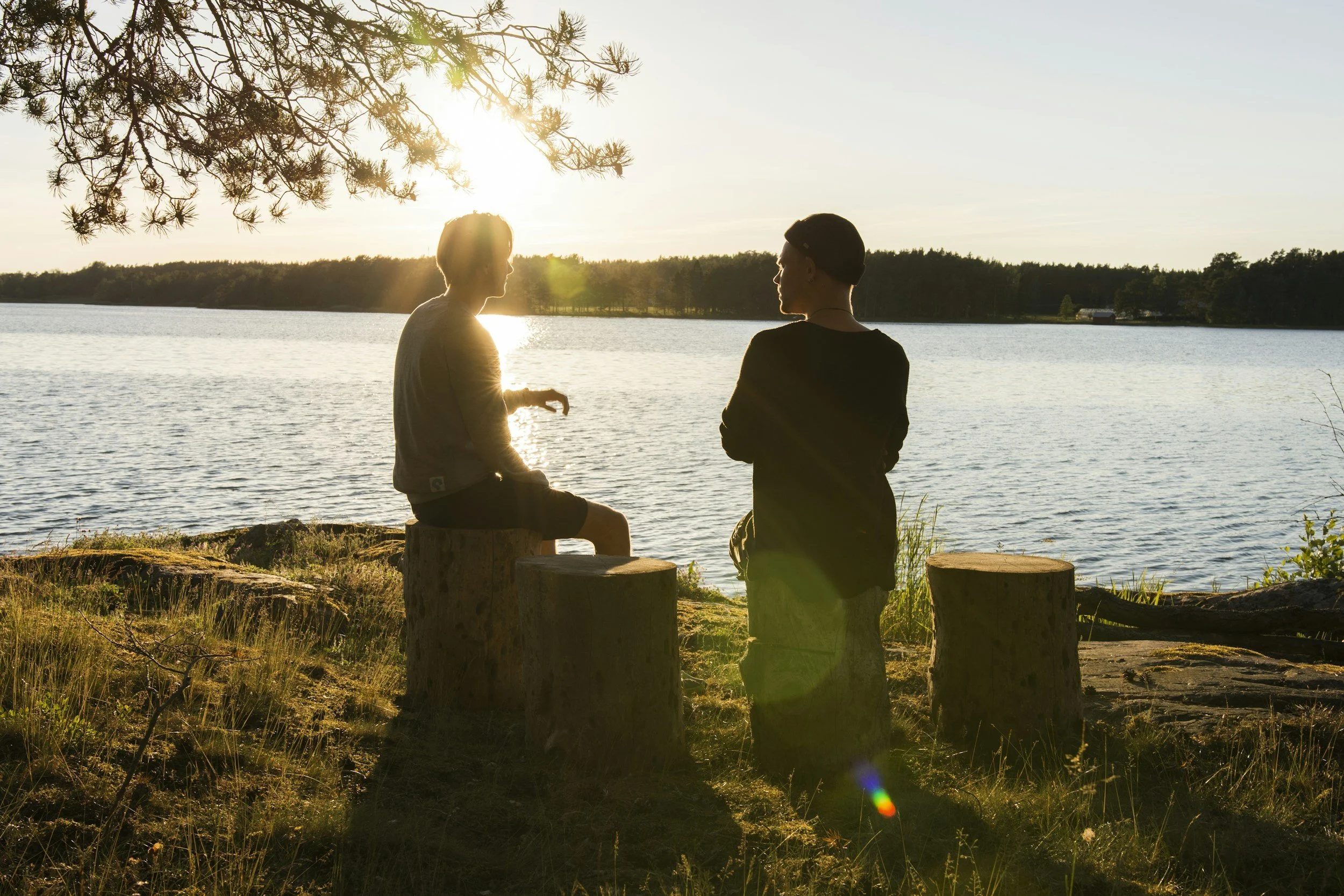
5 Reasons to go on a Burnout Prevention Retreat
If you're anything like many of my clients, you're probably really invested in personal development and wellbeing, but a bit fed up with wading through busy online spaces full of quick fixes and wonder cures. You might be feeling the weight of supporting others while struggling to maintain your own work-life balance, or noticing the early signs of burnout creeping in. This is a good time to take action - before overwhelm sets in and you’re stuck in a freeze response. I’m offering a burnout prevention retreat for people who support people, and anyone who needs some time and space to reflect, recharge and hit the reset button.
If you're anything like many of my clients, you're probably really invested in personal development and wellbeing, but a bit fed up with wading through busy online spaces full of quick fixes and wonder cures. You might be feeling the weight of supporting others while struggling to maintain your own work-life balance, or noticing the early signs of burnout creeping in.
1. Deep Reflection Beats Quick Fixes
Let's be honest - there are no magic bullets when it comes to preventing burnout or reconnecting with your sense of purpose. What I've found has a much bigger impact is taking dedicated time out to do some in-depth personal work. Unlike trying to squeeze reflection and recovery into the gaps between meetings, a retreat offers the rare gift of uninterrupted time to tune into what you truly need at this stage of your life and career.
2. A Whole Person Approach to Burnout
While there are many valuable ways to address burnout - from counselling to medical support - most tend to treat specific issues in isolation. I approach burnout from a whole person perspective, recognising the connections between our emotions, thoughts, body sensations and behaviours. This retreat offers not just respite, but practical tools for recognizing early warning signs and establishing sustainable practices that work for you.
3. Embodied Learning That Actually Makes Sense
If you're new to embodied approaches or skeptical about some of the more magical claims sometimes made in the wellness world, you're not alone. I won't offer you unrealistic promises or pseudoscientific jargon. Instead, you'll learn practical, evidence-based techniques for tuning into your body's signals and re-regulating your nervous system. These tools can help you navigate challenging situations with more confidence and authenticity.
4. Small Group, Big Impact
Working in a small, carefully curated group creates something special. It's not about doing deep work in a large room full of strangers, but about building real connection and trust. Maybe you're used to being the supporter, the fixer, the one who holds space for others. Here's an opportunity to receive support yourself, benefit from outside perspectives, and remember that you don't have to figure everything out alone.
5. A Different Kind of Reset
Sometimes, making decisions from a place of exhaustion leads us to focus more on getting away from problems than moving towards what we need. This retreat offers something different - a chance to step back, breathe, and reconnect with your most up-to-date, wise Adult self in a beautiful, nurturing setting.
Is This Right for You?
I’m offering a burnout prevention retreat, specifically designed for people who:
Work in supporting roles (e.g. third sector leaders, coaches, facilitators, frontline support workers)
Value personal development but may be new to embodied approaches
May be feeling overwhelmed, exhausted, or disconnected from their sense of purpose
Want practical tools for preventing burnout and maintaining healthy boundaries
Need time and space to reflect and re-evaluate who they are and what they need now
I know it's a big step to take time away from your responsibilities to focus on your own wellbeing. But here's the thing - investing in your resilience isn't just about self-care. It's about ensuring you can continue to show up effectively for others and maintain the impact you want to have in your work and life.
Remember: taking time out isn't a luxury - it's essential for sustainable performance and wellbeing. Sometimes the most powerful step we can take is creating space to receive support in a setting designed for deep, transformative work.
Secure your space today - click here to book or contact me to find out more.
Preventing burnout: Coping Strategies for Witnessing Atrocities
If we’re deeply impacted by what we’re observing in the world and moved to try to be part of the change, we must have opportunities to pause, process and get back out there in any way we can. The same is true whether we’re campaigning against systemic violence, leading a project that poses a risk of vicarious trauma or considering how we engage with and communicate about the information we’re able to access round the clock via social and traditional media. Let’s explore how we might prevent burnout, overwhelm, normalising what may once have shocked us, and feeling frozen with guilt or shame.
Understanding the Impact of Witnessing Atrocities
The world feels like a scarily inhumane place to live right now. Just when I think I can’t be any more shocked by the cruelty of another act of internationally sanctioned violence, a heartless national policy closer to home or a story I’m told by a client, friend or stranger, something new appears and ups the ante. I was hesitant to write about how those of us fortunate enough to be observing tragedy and brutality from a safe distance might be feeling. But, if we’re deeply impacted by what we’re observing in the world and moved to try to be part of the change, we must have opportunities to pause, process and get back out there in any way we can. The same is true whether we’re campaigning against systemic violence, leading a project that poses a risk of vicarious trauma or considering how we engage with and communicate about the information we’re able to access round the clock via social and traditional media. Let’s explore how we might prevent burnout, overwhelm, normalising what may once have shocked us, and feeling frozen with guilt or shame.
The most pertinent example of this for me right now is my response to witnessing seven months of genocide. I feel a sense of obscenity about the fact that, for me, life goes on more or less as normal when I’m not engaging with this horror. Many professionals working in frontline services and people who have lived through ongoing traumatic events can attest to how quickly the unthinkable can start to feel normal. We’re an incredibly adaptable species, with a need to make sense of our environments and the capacity to do what needs to be done in order to survive. Our brains are wired for energy saving wherever possible, and there’s a finite amount of energy available to stay in a place of shock, fear, anger, disgust and so on. And so, we may start to become numb, to distance ourselves from the costly business of feeling. If we’re very lucky, we may also be able to look away, and to avoid engaging with things that are happening to ‘others’. It’s an understandable response, and none of us should be put in a situation where we’re forced to reckon with the horrific choices made by fellow humans on a day to day basis. But something I look out for in my emotional world is a sense that the unfathomably awful images I’m seeing each day online might be starting to feel normal. It’s a sign that I’m reaching capacity and need to clear some space to process my emotions before I re-engage. Yes, that’s a privilege in itself – for anyone in literal survival mode, this is not an available luxury. But as allies, we’re of limited use to those we want to support if we’re burned out, numb or stuck. Using the resources we have and leaning on community to step in when we need to step away is crucial.
Compassion fatigue and vicarious trauma can be rife in systems that are under-funded, under-appreciated and over-subscribed. Taking on responsibility for too many people and too many projects can mean dangerously high stress levels for all, and a sense of distancing that starts to threaten empathy, mentalisation[1] and the capacity to see others as fellow, flawed humans who are probably doing their best. There are obvious structural solutions to this problem in the form of well funded public services including high quality training and support. So, when we’re not applying political pressure on this issue, what can we do about burnout and vicarious trauma prevention for leaders, campaigners and anyone who feels called to do something about the horrific events they’re witnessing?
COPING STRATEGIES for change and resilience
Firstly, some form of pressure valve can be invaluable. This can take many forms, from reflective practice spaces, to grief circles, embodied practices and space to share our thoughts, feelings and experiences with others who ‘get it’. It’s also important that these opportunities to let go, feel, express and reflect are contained and limited. We can’t get stuck in grief, despair, hopelessness, fear or anger, though it’s important to acknowledge, rather than suppress them. Knowing that there’s a specific time and space to let off some steam can help us to get through the day. In my experience, a well held space with a managed transition back into day-to-day activities is very much worth the required resources. That transition from engaging and expressing back to a more contained place might involve activities and tools that intentionally change the energy in the space and reconnect us with our capable, Adult selves before we dive back into whatever needs to be done. The timing, frequency and format of pressure valve activities deserve some careful consideration. And crucially (especially in a workplace environment), all involved need to feel safe enough to show up authentically and express what they need to express. If this doesn’t feel possible, there may be wider cultural issues to address within the team or group.
Perhaps that sounds easier said than done, especially if what people are processing involves deeply divisive and potentially traumatic themes. What do we do about competing needs? There are no magic wands here, sadly. It’s crucial that people are able to set and maintain their own boundaries, rather than feeling coerced into participating in something that doesn’t feel right for them – feeling ‘done to’ can often be a contributing aspect to the onset of burnout. One organisation that I work with offers separate (optional) reflective spaces for people of different identities, as well as spaces open to all – this may be a helpful approach to potential divisions and concerns about psychological safety in some cases. In any situation where discussions of sensitive topics might be encouraged, it’s advisable to have a strong and compassionate group agreement or shared set of values that everyone signs up to. How challenge and conflict might be met is a helpful consideration here.
‘We fight, we rest and we rise’ - taking breaks and re-engaging
(Jenny Moore)
When it comes to engaging with disturbing news, images and first hand accounts of violent and traumatic events, what’s the ‘right’ level of engagement? The potentially negative impact of excessively consuming social media isn’t a new or radical concept. I believe it might often be oversimplified or overstated, but I’m also aware of what my own experience tells me. It’s important to step away, to try to avoid the ubiquitous doomscrolling habit, and to give our eyes and brains a break from the never ending stream of new information and artificial blue light. We must apply the usual ‘put your own oxygen mask on first’ advice and look after our own health, listen to our bodies and let our minds rest. And yet, this is balanced with regular calls on those of us watching atrocities from a distance to ‘not look away’. Daily access to video footage, pictures and first hand accounts of horrific cruelty is a new concept, and brings an additional sense of responsibility, since we can’t claim to have been unaware. We’re being asked to witness, to mobilise, to see people’s humanity and recognise the value of their lives. For many of us, what we witness will feel like too much to bear or believe, and what we can offer will feel woefully inadequate. But we can witness to the best of our ability and capacity, taking space to re-energise where we need to and then re-engaging. Sometimes we need to look away for a moment, while perhaps connecting with gratitude that we are fortunate enough to do so. There’s an important distinction here between gratitude and guilt or shame. Sometimes, what we feel grateful for is an unearned privilege – something we’re lucky to experience or avoid due to the accidents of birth, time and place. Acknowledging that luck doesn’t necessarily have to lead to feeling guilty about it, though that’s an obvious next step (as is defensiveness, at times). The thing that’s so difficult to face is that occupation, war, famine, pandemics and so on could happen to any of us at any time. We may hope that, if it happened to us, that those not directly affected might step in and help. We’d probably want them to be as well resourced as possible, to be compassionate, informed and ready to roll up their sleeves and take any action, big or small, that might contribute to our survival and eventual return to thriving. We probably wouldn’t want them to be burned out, numb, paralysed with guilt or fear of doing the wrong thing or so overwhelmed and in denial that they refuse to acknowledge what they’re seeing.
building community support networks
When we’re feeling powerless, one of the solutions may once again be found in community. Creating spaces to decompress and share our experiences with others can help to relieve some of the heaviness of witnessing trauma, and in turn, can re-energise us for the onward journey. And when we’re feeling powerless, we can celebrate the small moments of shared humanity where we find them. We can remind each other of times that unbearable cruelty and oppression were forced to come to an end through political and financial pressure that millions of people came together to contribute to in their own ways, however small.
Resources & references
If you are feeling overwhelmed or experiencing burnout/vicarious trauma, please seek support:
Contact me to find out if I can help
Visit https://www.mind.org.uk/
Support for Palestine:
‘We Fight, We Rest, We Rise’ (Jenny Moore/F Choir)
[1] Mentalisation is the ability to imagine what another person may be thinking and feeling

How we care for ourselves is political
The concept of self-care may bring to mind images of inspirational quotes typed in a flowing font, aimed at over-stretched, harassed working mums who desperately need and deserve to ‘take some me time’ and wash their troubles away in a fragrant bubble bath, chased by either a superfood smoothie or a ‘cheeky’ glass of wine. If I sound a little cynical here, I’ll admit that I am a little, and I’ll outline why. Rest assured, I am a lover of baths, smoothies, wine, relaxation and relief from the often-gendered work of caring for others. It is absolutely not my intention to shame those who practice specific ways of looking after themselves or the professionals who support them. I do want to unpack notions of self-care, emotional literacy and wellness, because I believe it’s in all of our interests to examine the industry built around them, the practices and products we’re sold and the voices that are centred or silenced. As Skunk Anansie proclaimed in the nineties (to the delight of my teenage self), “Yes, it’s f*cking political, everything’s political!”
The concept of self-care may bring to mind images of inspirational quotes typed in a flowing font, aimed at over-stretched, harassed working mums who desperately need and deserve to ‘take some me time’ and wash their troubles away in a fragrant bubble bath, chased by either a superfood smoothie or a ‘cheeky’ glass of wine. If I sound a little cynical here, I’ll admit that I am a little, and I’ll outline why. Rest assured, I am a lover of baths, smoothies, wine, relaxation and relief from the often-gendered work of caring for others. It is absolutely not my intention to shame those who practice specific ways of looking after themselves or the professionals who support them. I do want to unpack notions of self-care, emotional literacy and wellness, because I believe it’s in all of our interests to examine the industry built around them, the practices and products we’re sold and the voices that are centred or silenced. As Skunk Anansie proclaimed in the nineties (to the delight of my teenage self), “Yes, it’s f*cking political, everything’s political!”
“Who is self-care for?”
As mentioned, the most obvious and prolific presentation of self-care content often tends to invoke either soft, fluffy or expansive, spiritual imagery. Often, this is coded or read as “feminine”. I’ve spoken to numerous people who note that men, boys and masculine-identified folks can feel excluded from the message that looking after their bodies (exercise and protein shakes notwithstanding) and their emotional health is important. This can further exacerbate toxic masculinity stereotypes that are so harmful to boys and men, who so often come to harm as a result of pressure to keep their feelings to themselves. We are starting to see change, as a new generation of young people are taught that their emotions are valid, but the work of chipping away at the small stuff (which makes up the big stuff) continues. Here’s to more gender-neutral content AND permission for us all to like what we like, be it “fluffy” or otherwise.
What else comes to mind when we think of typical self-care? Next on my list is money. In a world where there’s money to be made from everything, good health may be sold to the highest bidder (and I say this as someone who charges for my wellbeing related services, though always with an eye on balancing the value of my work with my ethics). People who are financially struggling tend not to have much disposable income for wellness products and programmes, or time to themselves. So, what could self-care look like for those who don’t fit the financial mould? Well, the big picture is tackling poverty at its root cause. But back here ‘on the ground’, it can be about promotion and permission of solid boundaries to avoid burnout, quick and cheap wins (grounding techniques you can use on the bus, while boiling the kettle or walking the dog) and more subsidised places in therapy.
Who else do we picture when we think about self-care? Typically in the west, we may think of yoga classes run and attended by flexible white women, or mostly white, middle aged “spiritual seekers” attending packed conferences run by charismatic, inspirational leaders claiming to have all the answers. Clearly, these are sweeping generalisations, but the world of marketing is built on “ideal client” profiles that spell out the age, ethnicity, occupation and income of the people on the receiving end of advertising.
“We need to talk about cultural appropriation”
Deep breath – it’s a sticky subject, but all the more reason to lift the lid on it. The concept of taking aspects of a marginalised culture out of their original context and consuming or recreating them for fun, profit or wellbeing is not a new one. It’s not my story to tell as a white person, nor my right to define where the line between cultural appreciation and appropriation is (if indeed there is a neat line, which I suspect there isn’t). Let me be clear - I’m absolutely not saying it’s wrong to practice yoga if we’re not of Indian origin, or to learn meditation practices from ancient traditions other than our own. But I believe that it’s crucial to listen to the people with a claim to stake in specific practices, whose voices and incomes have so often been swept to the side in favour of a booming industry selling sacred symbols, medicines and practices to those of us who can see their value but know little of their history. Practising in awareness is and self-reflection is key (and for me, that goes hand in hand with self-care). So, I’m advocating for all of us who use or practice other cultures’ traditions to do our homework first (resource list below).
“Spiritual bypassing and toxic positivity”
If you’ve been going through a painful experience and sought solace in a community or content that suggests that all your troubles would be cured if only you had a positive attitude, the right diet or enough meditation, you may well know how dismissive and lonely an experience it can be. Humans often need to feel in control of our own destinies. Staring down the prospect of bad experiences and, ultimately, death, regardless of our best efforts can be a very scary experience. So, at times, we’d rather believe that if we smile more, take our supplements and attempt to avoid all known carcinogens, we’ll be just fine. I know that not all wellbeing and spiritual practitioners take this to its logical extreme (i.e. “all your suffering is your own fault”) - in general, we’re all just doing our best to survive and thrive. And there is a grain of truth in many of the encouragements to practice “mind over matter” or to foster a sense of perspective. But where reflection and the development of emotional regulation start to morph into “good vibes only” and “you just need to practice more gratitude”, we’re in the realm of toxic positivity and spiritual bypassing. Building a practice of noticing and honouring our physical and emotional cues in order to take better care of ourselves cannot and must not exclude uncomfortable emotions. Much like the aforementioned pressure on boys and men to suppress vulnerability, the discounting and banning of less socially acceptable feelings from any environment can be deadly. Our work here is to learn how to recognise, regulate and process. Sometimes emotional work is quite the opposite of sunshine and joy, and that’s ok. I will add an important caveat here, however – in a safe enough space for doing personal work, all emotions are welcome, but they are not forced out. We don’t get prizes for having the biggest breakthrough or the most dramatic catharsis. I’ve seen (and experienced) some truly transformative moments that have been loud, ugly and even a little scary… and I’ve seen people re-traumatised by well-meaning practitioners who lacked an awareness of how to spot signs that the Autonomic Nervous System is in overdrive and needs to be calmed, not pushed over the edge in order to get a gratifying “big finish” to a session. So, my suggestion here is to notice and work against internalising messages that imply that your feelings are unacceptable, and to check out the credentials of any practitioners you work with to ensure they have an understanding of trauma and psychological safety.
“Emotional literacy as a radical act, and how it can protect us”
Getting to know ourselves to the point of fine detail is a political and protective act in a number of ways. Let me give you an example… I remember learning what it means when the base of my skull sort of vibrates – for me, it’s an early warning sign that my nervous system has perceived a threat. It happens most in specific situations when I feel a conflict or a rejection may be imminent, but occasionally, I feel this sensation in a situation where the danger is more significant. This reaction takes place before my conscious mind has had a chance to catch up, so it’s a good barometer that says “hold on, let’s take stock – is this situation dangerous?” That knowledge has been really useful ever since. Another example – recently, I did some work with a group of young musicians who work in a genre I’ve never really connected with. When we first worked together, my initial response to the style of the music felt odd to me – a slight tensing of the muscles; perhaps out of defensiveness, or even disgust. I liked the young men and appreciated their art and their talent, so why was my body reacting like this? Thinking about it, I realised I’ve always considered this genre and the culture it comes from to be homophobic, and as a queer person, that makes me wary. While I stand by my condemnation of bigotry in any cultural context, I was surprised at myself. So many cultures and traditions have (I believe) been tainted by ultra conservative attitudes towards gender and sexual orientation, but I’m not sure I’d have been so quick to completely write them off, especially since these cultural contexts often necessitate and are home to incredible activists leading the struggle for change. It was my physical reaction and desire to interrogate its meaning that alerted me to the need to unpack and challenge my over-generalised assumptions. These signs and signals of something needing attention can also be crucial in protecting us from abuse and others’ narcissism. This is not to say that it’s incumbent on us as potential victims/survivors to stop it from happening, but I’m pretty sure we could all benefit from seeing the signs and connecting with our internal warnings.
“And speaking of narcissists…”
Listening to this slightly sensationalist account of a charismatic personal development “guru” whose extreme retreat courses saw several participants die on his watch, I thought about how two areas I have a special interest in are often rife with narcissistic process – namely, the performance and wellness industries. People in states of vulnerability who are seeking connection, escape, expression or fulfilment can offer rich pickings to a person intent on gaining power, wealth or notoriety at any expense. I think back to ‘artistically tempered’ artistic directors I encountered as a budding musician, and to coming across charismatic leaders of successful wellbeing companies and movements whose followers hung on their every word, even (or especially) when they were making impossible claims. While it’s true that a certain amount of passion, artistic flair and charm can be an asset to those who wish to share their craft and the tools that have worked for them, there is a line between this and more problematic narcissism that is often crossed in the pursuit of guru-like status. In Transactional Analysis terms, this state of mind says ‘I’m OK, you’re not OK’. I have the answers and you must listen to them without question. I lead and you follow. My pursuit of happiness is more important than yours, and you are a step on my ladder to the top. It is precisely the emotional literacy, curiosity and honouring of warning signs that can help to guard against being misled or mistreated by those who are in this position. And in an industry that people often seek out during their most vulnerable moments, we must demand ethics and regulation. It is the responsibility of those making claims to have life-changing products and resources to back them up with some kind of evidence and reference. If it sounds too good to be true, it may well be. I’m a big believer in seeking out practitioners who appear secure in their skills and knowledge base, yet are happy to acknowledge their humanity, their vulnerability and their capacity to get it wrong, learn and grow. I encourage us all to look for these qualities.
Now, go out there and take radical, political and compassionate care of yourself!
If you are worried about any of the issues mentioned in this post, please see the resource list below for (UK based) support & advice lines, or contact me.
Resource List:
The Guilty Feminist podcast episode 216, ‘Wellness’: https://guiltyfeminist.com/episode/?episode=271
‘Guru’ podcast (Wondery): https://wondery.com/shows/guru/
Unblocking White Supremacy and Fragility in the Wellness Industry - Maryam Ajayi: https://medium.com/@maryam.ajayi/https-medium-com-maryam-ajayi-unblocking-white-supremacy-and-fragility-in-the-wellness-industry-b7f312e33179
Cultural appropriation in the wellness industry – Lilidonia Lawrence: https://byp-network.com/news/267021
What is Spiritual Bypassing? Avoiding life and other dangerous games: https://www.insightstate.com/spirituality/spiritual-bypassing/
What is Toxic Positivity? Why It's OK not to be OK right now – Brittany Wong: https://www.huffingtonpost.co.uk/entry/what-is-toxic-positivity-coronavirus_l_5f04bca0c5b67a80bbff7cd3?guccounter=1&guce_referrer=aHR0cHM6Ly9jb25zZW50LnlhaG9vLmNvbS8&guce_referrer_sig=AQAAAIr5dlvYWdYLD45MxFwivtZKH5CAp9XePI0eecea-VCN8rXPqd6EWIKhAggZL04kxcPiz1hwlNRwMNtoujc1FBUT_8A_S-mMtny04gH9dWL5GnnwXcs8vMigJEyOKMJRzaCkLS9U-4Wq93CP7nCVEGLXlyO4O57n02Drpo8GjprF
Narcissism: How to Find Strength to Survive and Prosper After Narcissistic Abuse. Disarm the Narcissist, Take Control of Your Life and Learn How to Recover from a Toxic Relationship – Dr Keith Sam (Audiobook): https://www.audible.co.uk/pd/Narcissism-Audiobook/B086CBLJMK?msclkid=9431245897b119dc18ea7b17cd1e9eff&source_code=M2M30DFT1Bk12807021801O6
How to improve emotional intelligence: 10 tips for increasing self-awareness – Six Seconds: https://www.6seconds.org/2018/02/27/emotional-intelligence-tips-awareness/
Useful contacts from Mind, the mental health charity: https://www.mind.org.uk/information-support/guides-to-support-and-services/crisis-services/useful-contacts/
Transactional Analysis online course – I'm OK, you’re OK: how to develop your attitude: https://ta-course.com/im-ok-youre-ok/

Collective Psyche, Myth and Ritual
Exploring national myth making, rituals and our collective psyche. Might we have an opportunity to re-think these?
(Content warning: suicide, Holocaust)
It’s a well-rehearsed argument that humans are hard wired for connection. Ultimately, we are pack animals who historically relied upon safety in numbers. Much has been made already of the possible mental and emotional impacts of existing in a state of relative social isolation during this pandemic. And while it can sometimes be weird, frustrating and exhausting to engage in a barrage of video calls and online chats, those of us who have the luxury of being able to do so may manage to stave off the worst effects of being locked down away from our social networks. As well as being pack animals, we’re meaning-making beings, and when things don’t make sense, it impacts us. So, what sense can we collectively make of who we feel we are in the midst of a crisis?
I’ve alluded before to the collectivism that there can be in a global situation like Covid-19, even in our separateness and our different levels of comfort and privilege. Around the UK, there have been acts of kindness and solidarity springing up to replace (for now) the old norms of politely ignoring each other. Rainbows on windows and ‘low skilled workers’ becoming ‘key workers’: symbols and narratives agreed upon collectively. Throughout human history, stories around the campfire, told to warn of the consequences of actions, to create and stay connected to a shared identity and to honour ancestors, grew into religion and ideology. Our unique human ability to think conceptually helped us to collectively imagine – to strengthen our safety in numbers by imagining stories, symbols, tribal identities and rules. This would establish an insider/outsider structure – once myths, symbols and rules were in place, there were consequences for stepping outside of them. Being ousted from your group would, at one time, have meant certain death – this is not necessarily true in the modern world, though the deaths of those who have taken their own lives after being shamed on social media platforms might suggest otherwise.
We have come a long way in material terms since all our stories were told around campfires (I’m still very partial to a campfire story). And yet, we still participate in collective meaning making as we yell into a curated online bubble and pin our colours to the mast, be they rainbow flag, Union Jack, stars and stripes, Saltire, anarchy symbol... I shout loudly about the causes I care about, and while I do my best to build bridges and find our common humanity, I admit that it’s tough at times. Especially when those I disagree with appear to be invested in stripping people unlike themselves of their rights and their humanity. I’m sure they feel the same way about me. Each of us has decided that the other is on the wrong side of the tribal rules.
What scares me right now is the use of myths, symbols and stories intended to create a collective narrative for the personal gain of those who are promoting them. This is propaganda. The Nazis used an incredibly slick, powerful campaign of oratory and visuals to convince the poor and disillusioned that putting and keeping them in power, and scapegoating Jews (along with Romany people, LGBT people and other groups) would be in their best interests. Referencing the Holocaust as a warning about sleepwalking into dangerous political action is nothing new. Yet, the VE Day celebrations that took place recently on the streets of England didn’t speak to me of quietly contemplating how the world became so broken that millions of lives were lost to a fight against fascism, or of considering how we can make the ‘never again’ story a reality. Instead, it spoke to me of a need for togetherness, shared identity and hope gone wrong. An attempt to celebrate the myth of a nation, built on empire, priding itself on stoicism, stiff upper lip and standing up to the ‘bad guys’. But when we break out the bunting to celebrate those purported shared values and do the conga while thousands die alone, and carers are sent into perilous situations, I feel we may have lost sight of this national concern for social justice and speaking truth to power, if indeed we ever had it.
What I take from all of this is that it is time to start creating new narratives. These stories need not be dictated by those who have power and guard it jealously. This requires some form of coming together to ask what kind of society we want to be. What are the needs of our collective psyche? When it comes down to it, we all need the same fundamentals. Belonging is a significant part of that picture, though belonging that exists at the expense of the rights of an ‘other’ cannot be healthy for the psyche of either the ‘in’ our ‘out’ group. We all need those bottom lines of food and shelter, safety and security (a la Maslow’s Hierarchy of Needs). Needing to protect our own resources can lead us to believe that the existence and behaviour of others is a threat to our safety, especially in times of scarcity. I suppose that’s the next building block for ‘othering’ and drawing lines in the sand. But assuming that there’s enough food, shelter and security to go round (which there is, it’s just that some people have a lot more of it than others), our next needs in line are social. Some of the powerful people who would have us believe that a national myth of heroic stoicism is more important than our common humanity or safety seem to be abundant in resources and pretty starved of real love and belonging. So, while they may (rightly or wrongly) have been given the job of steering this ship through a storm and ensuring our survival, I hope that we don’t also let them steer us into believing jingoistic national myths. Or, if I’m now dealing in lost causes, that the rest of us will find our collective voice and use it powerfully.
I’m curious about what rituals may be created and what will endure beyond this crisis. I’ve spoken with people a lot recently about the importance of ritual, be it the first coffee of the morning, the lighting of commemorative candles, the lunch time jog, daily meditation or coming together with friends (virtually or otherwise) to connect and blow off some steam. The rituals we choose both demonstrate and shape the stories we tell ourselves. They say things like ‘it’s important to remember those gone before us’, ‘mental and physical health are important’ or ‘in this time of chaos, there are some things I can predict and control, and that makes me feel safe’. For me, intention is important here. It doesn’t really matter whether the ritual is a prayer or a double shot espresso – it’s the meaning that we ascribe to it that gives it significance. So, if we’re up for the challenge of creating new shared stories and rituals, how might that look? Could the VE Day conga lines be replaced with action that really stands up for the little guy? Don’t get me wrong, one of my favourite things is coming together with people to celebrate – to dance up a storm, to sing together, to let go, be silly and be human. This is a bit like my annual pilgrimage and I’m missing this summer’s cancelled festival season already. But much like the importance of the meaning we ascribe to rituals, context is key too. Coming together in defiance of something scary and unjust is a remarkable human trait... though a virus isn’t to be stood up to as if it were some kind of terrorist, so in this case, best to stay at home. It’s hard not to be able to gather in the way we’ve evolved to, but it will happen again before too long. I look forward to being able to come together to connect, analyse, plan and celebrate. In the meantime, we’ve been offered a chance to reflect on who and how we collectively want to be.
For support around self-care and building helpful rituals during a chaotic time, contact me. If you’re experiencing mental health crisis, contact The Samaritans or your GP.