
Navigating personal and political grief in a time of chaos and change
‘I don’t know if we were meant to carry so much grief in one body… Yet, we are not alone’ (Alexandra/Ahlay Blakely)
-These are the lyrics of a song that I’ve sung with others at song circles, protests and other events where groups have assembled to process and express grief (alongside other emotions) and to share the experience of trying to make sense of things that feel big, scary and unfathomable. The song also contains a part that is essentially a tuneful wail, in a bid to reconnect us to the embodied, messy, loud and cathartic nature of expressing grief. Right now, I’m struck ‘I don’t know if we were meant to carry so much grief in one body… Yet, we are not alone’ (Alexandra/Ahlay Blakely)
-These are the lyrics of a song that I’ve sung with others at song circles, protests and other events where groups have assembled to process and express grief (alongside other emotions) and to share the experience of trying to make sense of things that feel big, scary and unfathomable. The song also contains a part that is essentially a tuneful wail, in a bid to reconnect us to the embodied, messy, loud and cathartic nature of expressing grief. Right now, I’m struck by the ways in which reclaiming ritual, authentic expression and communal grieving can be forms of resistance to the legacy of colonial, Victorian Britain, where emotional repression and sanitised grief processes became the only socially acceptable options.by the ways in which reclaiming ritual, authentic expression and communal grieving can be forms of resistance to the legacy of colonial, Victorian Britain, where emotional repression and sanitised grief processes became the only socially acceptable options.
‘I don’t know if we were meant to carry so much grief in one body… Yet, we are not alone’ (Alexandra/Ahlay Blakely)
-These are the lyrics of a song that I’ve sung with others at song circles, protests and other events where groups have assembled to process and express grief (alongside other emotions) and to share the experience of trying to make sense of things that feel big, scary and unfathomable. The song also contains a part that is essentially a tuneful wail, in a bid to reconnect us to the embodied, messy, loud and cathartic nature of expressing grief. Right now, I’m struck by the ways in which reclaiming ritual, authentic expression and communal grieving can be forms of resistance to the legacy of colonial, Victorian Britain, where emotional repression and sanitised grief processes became the only socially acceptable options.
I’m thinking – and feeling – a lot about grief at the moment for two reasons. Firstly, because I recently experienced an important loss in my own life. My family has always been small and very well versed in grief and generational trauma. For the last twenty years, my Gran was my last living close relative. She died two weeks ago, at the age of ninety five. The loss process was a slow one, with so many of our ‘lasts’ taking place over a period of months, years and even decades. It’s been a long time since the last of our trips to the garden centre for coffee, cake and unnecessary purchases of hand cream and silly ornaments. It’s been a few months since we had a real, two-way conversation that I could be fairly sure was understood. It’s been six years since I cleared out the last of my childhood homes, which contained three generations worth of photo albums, favourite mugs, books, school reports and the like. And so, this particular grief process has been less of a crash landing and more of a slow glide than others I’ve experienced, although it also feels even more significant in some ways. My main regret is that she died while I was on my way to say goodbye and support her transition. But I’m relieved that she was not alone at the end, and that we’d had a conversation about dying while she was still able to communicate. When I finally made it to the nursing home, I had a first experience of witnessing death up close, and I reflected on how odd it was to have never done this before. I sat beside Gran, still in her bed, and chatted with a relative and the local minister in a way that felt strange and surreal, yet somehow, also normal and natural. We played one of her favourite songs as she was taken to the funeral home, and the nursing home staff lined up to say goodbye and send her on her way. At the funeral, although I felt safe, held and not especially overwhelmed, I was struck by a familiar sense of disconnect between what my body wanted and what felt possible and acceptable in the relatively formal environment of a crematorium and church service. I feel sure that I wouldn’t have been judged for a loud or physical expression of grief, and I didn’t especially feel the need to wail or collapse in that moment; and yet, something in my body said ‘this feels too distant and mysterious – how am I supposed to be present in this space?’
All of this has made me think about the need for more open conversation, ritual and encouragement of authentic emotional expression in the culture I’m part of. Social media and public health campaigns are awash with messaging about the importance of sharing our feelings through talking and other forms of expression. That’s a step in the right direction, though it might sometimes feel like a bit of a platitude. But what about the impact of bracing against and repressing our expressions of grief in order to stay acceptable and ‘sane’? And what might happen when a person’s expression of grief becomes too noisy, inconvenient or disturbing to be considered healthy? Like most people I know, I’m a passionate advocate for accessible, free and de-stigmatised mental health care, but I also feel I need to acknowledge the ways that psychology and psychiatry have been used as forms of social control, and have pathologised responses to grief and trauma that may be culturally specific or entirely rational in the face of irrational and intolerable circumstances. What might happen if we allowed ourselves and others to reconnect with the full experience of being human - the moments of irrationality and madness; going through and holding each other in moments of despair, rage, exhaustion, guilt, hope and new growth; witnessing the full cycle of life in all of its magical and sometimes horrifying glory? It feels like something that we need to explore further if we want to stay well both individually and societally. And I say this as someone who often has a hard time expressing vulnerability and big emotions. I feel things deeply, but I’ve always tended to save them up and channel them through singing and other forms of creative expression. Embodied practices, especially if they involve music, have always cut right through my defences, and I find them incredibly powerful when I need to process big or sticky emotions (hence why I coach others in finding embodied tools that work for them). I’m hopeful in general about change in relation to how we sit with, process and express difficult feelings. But a move towards widespread emotional intelligence is in direct opposition to the global rise of the far right and backslide on gender equity – fascism venerates the ‘strong man’ and seeks to shut down forms of self-awareness and communication that might lead to cooperation, inclusion and collective power. And so, we’re seeing disenfranchised communities and lost young people being encouraged to shut down any expressions of vulnerability, grief or fear in favour of turning the discomfort outwards into rage at women, at refugees, at trans people, or whoever the latest scapegoat might be. It’s depressingly familiar, in that we all learned about a similar political climate in the run up to the war that was supposed to remind us to never let this happen again. That took place in living memory for some people – it’s certainly something that profoundly affected my Jewish immigrant Gran, who was brought to Scotland at the age of four in the 1930s. She was an avid follower of world news, and I’m glad that she wasn’t able to see and understand the direction things seem to be heading in the final part of her life.
This leads me to the second reason I’ve been thinking about grief, which is the experience of collective grief over witnessing a genocide that seems to be never ending, and the criminalising of that grief in several countries, including the UK. This also feels consistent with the colonial project of shutting down communities’ own forms of expression in favour of whatever presents the least threat to the people in power. I think it’s fair to say that protesting genocide is an expression of grief. I’ve cried at almost every national march I’ve attended in the last nearly-two-years, and each time felt disbelief about needing to ask for our elected representatives to stop participating in acts that contribute to an unfathomable number of deaths. I’ve also bowed out of protests at times when it’s been too much for various reasons, and felt guilty, since showing up seems to be the very least I could do in the face of such atrocity. But this is where community becomes important – we let each other take breaks and remind ourselves that our power is in being in it together. This is something that we can apply to grief more generally too, since it can feel like such an intensely isolating experience. At this point in ‘late stage capitalism’, division is lucrative, because we’re more vulnerable and malleable when we’re isolated, and because rage creates engagement, which turns into profit. So, our resistance and our healing needs to happen in community. That’s not a particularly new or radical idea, but it feels like the sort of thing I need to remind myself of frequently in this time of chaos. And while nobody can process my grief for me, the power of being witnessed in a moment of full, messy humanity feels like it could be pretty transformative.

Collective Psyche, Myth and Ritual
Exploring national myth making, rituals and our collective psyche. Might we have an opportunity to re-think these?
(Content warning: suicide, Holocaust)
It’s a well-rehearsed argument that humans are hard wired for connection. Ultimately, we are pack animals who historically relied upon safety in numbers. Much has been made already of the possible mental and emotional impacts of existing in a state of relative social isolation during this pandemic. And while it can sometimes be weird, frustrating and exhausting to engage in a barrage of video calls and online chats, those of us who have the luxury of being able to do so may manage to stave off the worst effects of being locked down away from our social networks. As well as being pack animals, we’re meaning-making beings, and when things don’t make sense, it impacts us. So, what sense can we collectively make of who we feel we are in the midst of a crisis?
I’ve alluded before to the collectivism that there can be in a global situation like Covid-19, even in our separateness and our different levels of comfort and privilege. Around the UK, there have been acts of kindness and solidarity springing up to replace (for now) the old norms of politely ignoring each other. Rainbows on windows and ‘low skilled workers’ becoming ‘key workers’: symbols and narratives agreed upon collectively. Throughout human history, stories around the campfire, told to warn of the consequences of actions, to create and stay connected to a shared identity and to honour ancestors, grew into religion and ideology. Our unique human ability to think conceptually helped us to collectively imagine – to strengthen our safety in numbers by imagining stories, symbols, tribal identities and rules. This would establish an insider/outsider structure – once myths, symbols and rules were in place, there were consequences for stepping outside of them. Being ousted from your group would, at one time, have meant certain death – this is not necessarily true in the modern world, though the deaths of those who have taken their own lives after being shamed on social media platforms might suggest otherwise.
We have come a long way in material terms since all our stories were told around campfires (I’m still very partial to a campfire story). And yet, we still participate in collective meaning making as we yell into a curated online bubble and pin our colours to the mast, be they rainbow flag, Union Jack, stars and stripes, Saltire, anarchy symbol... I shout loudly about the causes I care about, and while I do my best to build bridges and find our common humanity, I admit that it’s tough at times. Especially when those I disagree with appear to be invested in stripping people unlike themselves of their rights and their humanity. I’m sure they feel the same way about me. Each of us has decided that the other is on the wrong side of the tribal rules.
What scares me right now is the use of myths, symbols and stories intended to create a collective narrative for the personal gain of those who are promoting them. This is propaganda. The Nazis used an incredibly slick, powerful campaign of oratory and visuals to convince the poor and disillusioned that putting and keeping them in power, and scapegoating Jews (along with Romany people, LGBT people and other groups) would be in their best interests. Referencing the Holocaust as a warning about sleepwalking into dangerous political action is nothing new. Yet, the VE Day celebrations that took place recently on the streets of England didn’t speak to me of quietly contemplating how the world became so broken that millions of lives were lost to a fight against fascism, or of considering how we can make the ‘never again’ story a reality. Instead, it spoke to me of a need for togetherness, shared identity and hope gone wrong. An attempt to celebrate the myth of a nation, built on empire, priding itself on stoicism, stiff upper lip and standing up to the ‘bad guys’. But when we break out the bunting to celebrate those purported shared values and do the conga while thousands die alone, and carers are sent into perilous situations, I feel we may have lost sight of this national concern for social justice and speaking truth to power, if indeed we ever had it.
What I take from all of this is that it is time to start creating new narratives. These stories need not be dictated by those who have power and guard it jealously. This requires some form of coming together to ask what kind of society we want to be. What are the needs of our collective psyche? When it comes down to it, we all need the same fundamentals. Belonging is a significant part of that picture, though belonging that exists at the expense of the rights of an ‘other’ cannot be healthy for the psyche of either the ‘in’ our ‘out’ group. We all need those bottom lines of food and shelter, safety and security (a la Maslow’s Hierarchy of Needs). Needing to protect our own resources can lead us to believe that the existence and behaviour of others is a threat to our safety, especially in times of scarcity. I suppose that’s the next building block for ‘othering’ and drawing lines in the sand. But assuming that there’s enough food, shelter and security to go round (which there is, it’s just that some people have a lot more of it than others), our next needs in line are social. Some of the powerful people who would have us believe that a national myth of heroic stoicism is more important than our common humanity or safety seem to be abundant in resources and pretty starved of real love and belonging. So, while they may (rightly or wrongly) have been given the job of steering this ship through a storm and ensuring our survival, I hope that we don’t also let them steer us into believing jingoistic national myths. Or, if I’m now dealing in lost causes, that the rest of us will find our collective voice and use it powerfully.
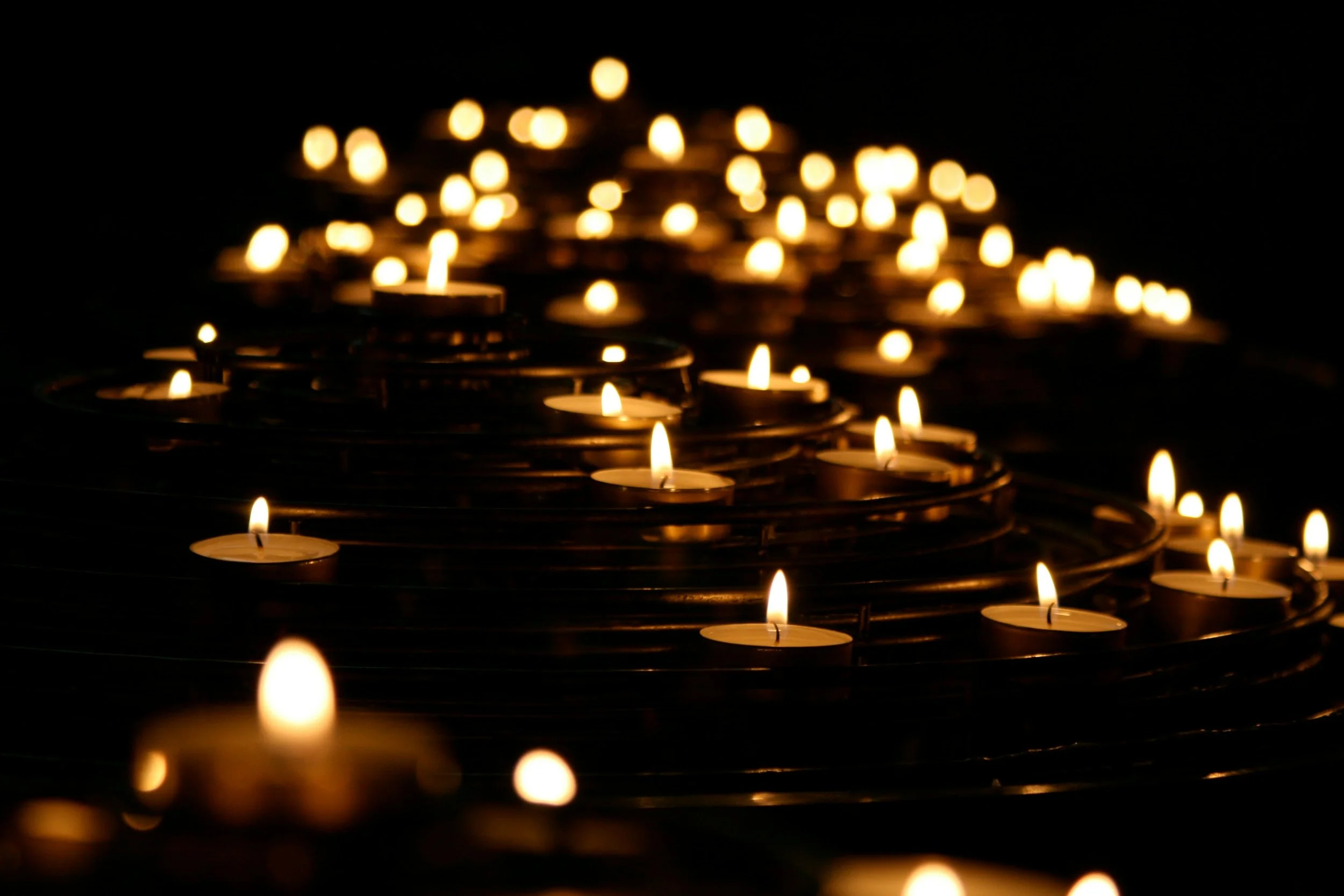
I’m curious about what rituals may be created and what will endure beyond this crisis. I’ve spoken with people a lot recently about the importance of ritual, be it the first coffee of the morning, the lighting of commemorative candles, the lunch time jog, daily meditation or coming together with friends (virtually or otherwise) to connect and blow off some steam. The rituals we choose both demonstrate and shape the stories we tell ourselves. They say things like ‘it’s important to remember those gone before us’, ‘mental and physical health are important’ or ‘in this time of chaos, there are some things I can predict and control, and that makes me feel safe’. For me, intention is important here. It doesn’t really matter whether the ritual is a prayer or a double shot espresso – it’s the meaning that we ascribe to it that gives it significance. So, if we’re up for the challenge of creating new shared stories and rituals, how might that look? Could the VE Day conga lines be replaced with action that really stands up for the little guy? Don’t get me wrong, one of my favourite things is coming together with people to celebrate – to dance up a storm, to sing together, to let go, be silly and be human. This is a bit like my annual pilgrimage and I’m missing this summer’s cancelled festival season already. But much like the importance of the meaning we ascribe to rituals, context is key too. Coming together in defiance of something scary and unjust is a remarkable human trait... though a virus isn’t to be stood up to as if it were some kind of terrorist, so in this case, best to stay at home. It’s hard not to be able to gather in the way we’ve evolved to, but it will happen again before too long. I look forward to being able to come together to connect, analyse, plan and celebrate. In the meantime, we’ve been offered a chance to reflect on who and how we collectively want to be.
For support around self-care and building helpful rituals during a chaotic time, contact me. If you’re experiencing mental health crisis, contact The Samaritans or your GP.