

‘Nothing about us without us’ – addressing tokenism, conflict and exploitative practice in work with experts by experience
Involving the people closest to a social issue in the design, delivery, evaluation and investigation of services that address the issue is a well-established and important concept. Across different social services, government initiatives, research bodies and charities, we hear an array of terms such as ‘experts by experience’, ‘co-production’ and ‘lived experience practitioners’ to describe and highlight the importance of collaborating with service users or people affected by a specific challenge. And yet, the same pitfalls I’ve seen in the field of participatory work over the last twenty years keep tripping us up in both new and familiar ways. That’s not to say we haven’t made progress – I’ve seen some incredible examples of meaningful co-production. But there are sticky challenges to address in the planning and delivery of participatory services, and it feels important to talk about and address them.
The recent news story about conflict within the survivors involved in the Rotherham grooming gangs investigation was one of the things that got me thinking about this (the other is being in the process of designing new services for young adults, but more on that later). One of the elements that seems to have led to chaos and conflict in this investigation is a lack of clarity around scope, boundaries and purpose. Concerns about transparency were shared as part of the reasoning behind the resignation of two panel members last month. This raises the issue of clear communication, expectation setting and support at the outset of a piece of work (as well as throughout). There are potentially significant consequences, both positive and negative, for people taking part in processes like this, and it’s essential that they know what they are getting involved with, what is expected of them and what the project hopes or may be able to achieve.
Involving the people closest to a social issue in the design, delivery, evaluation and investigation of services that address the issue is a well-established and important concept. Across different social services, government initiatives, research bodies and charities, we hear an array of terms such as ‘experts by experience’, ‘co-production’ and ‘lived experience practitioners’ to describe and highlight the importance of collaborating with service users or people affected by a specific challenge. And yet, the same pitfalls I’ve seen in the field of participatory work over the last twenty years keep tripping us up in both new and familiar ways. That’s not to say we haven’t made progress – I’ve seen some incredible examples of meaningful co-production. But there are sticky challenges to address in the planning and delivery of participatory services, and it feels important to talk about and address them.
The recent news story about conflict within the survivors involved in the Rotherham grooming gangs investigation was one of the things that got me thinking about this (the other is being in the process of designing new services for young adults, but more on that later). One of the elements that seems to have led to chaos and conflict in this investigation is a lack of clarity around scope, boundaries and purpose. Concerns about transparency were shared as part of the reasoning behind the resignation of two panel members last month. This raises the issue of clear communication, expectation setting and support at the outset of a piece of work (as well as throughout). There are potentially significant consequences, both positive and negative, for people taking part in processes like this, and it’s essential that they know what they are getting involved with, what is expected of them and what the project hopes or may be able to achieve.
Disagreements between survivors on the panel also highlight the fact that people with lived experience each bring their own views, needs and challenges to a process of addressing the issues they have faced, and that it’s likely that they will have a significant emotional investment in seeing them addressed in a specific way. Group decision making processes in this context are reasonably likely to yield disagreements, and this may look and feel different for people whose lives are being examined and affected by the subject at hand than for the professionals who will likely do their best to ‘unplug’ from it all at the end of the working day. Particularly when the service, research project or investigation involves discussions of traumatic and distressing experiences, every aspect of the planning process needs to be considered with harm minimisation and ethical practice in mind. It seems so obvious to say that working with survivors or experts by experience needs to be handled with a careful, compassionate and trauma informed approach. And yet, there are clearly still barriers to this approach being consistently carried out. Let’s consider some of the challenges, and how we might begin to address them.
‘Performers to the stage’
I’m working with young adults to develop some new services that seek to address gaps in their support provision. At one of the projects I’m involved with, I recently heard someone referring to being asked to ‘put on the show’, in reference to the request to share personal stories, talk about the impact of the support they’re receiving, or offer helpful insights to decision makers. Many of the people who have both lived experience and the time, motivation and confidence to do so are asked to share their stories and ideas over and over again. We’ll come back to the potential psychological impact of this, but for now, there’s something to consider about what it means to push the most confident people to the front in participatory processes. There will always be barriers to access to overcome, especially when working with populations who face complex challenges and disadvantages. Often, the people we most need to hear from are those who are most excluded from participation for many reasons, including some that are outside of our sphere of influence. But it’s important to consider ways to address barriers where possible, and to support those with less confidence and fewer resources to be heard.
What might help?
-Pay/reimburse people for their participation
-Provide tailored support and training to help experts by experience feel ready to take part in project planning, public speaking etc.
-Ensure access needs are responded to and spaces are as accessible as possible (this includes asking people to say what they need in order to participate)
-Structure group discussions, meetings etc. in ways that offer everyone a chance to share their views (using a range of methods to capture opinions, ideas and stories)
-Consider how you will assess a participant’s readiness for a specific role and how you will safeguard them
The Trauma Industrial Complex
This is a reference to the recent book of the same name by Darren McGarvey. He explores the ways in which the proliferation of traumatic stories shared in popular culture is driven by a cynical industry capitalising on distress regardless of the consequences, and may play a role in preventing people from recovering from traumatic experiences. There’s a lot of nuance to be explored in this discussion (I recommend reading the book for a deep dive into it), but the key question in this context is about balancing the potential harms and benefits if we are asking people to discuss traumatic experiences. In order to prevent exploitation or retraumatising, there needs to be sufficient support in place, alongside high levels of control and choice for those with lived experience.
What might help?
-Consider potential harms and how to reduce them in the planning and risk assessment process
-Offer access or signposting to appropriate support services
-Ensure informed consent by offering clear, comprehensive and transparent information ahead of sign up
-Build in choice points and explicit permission to decide how much to share, withdraw consent to take part, take breaks, say no etc.
The funding game – tokenism and competing for resources
Co-produced work can sometimes look great on paper but lack the necessary support structures to be successful and ethical. When charities, social enterprises and public sector bodies are competing for limited resources by demonstrating an approach aligned with funders’ priorities, we risk unintentional tokenism. There is an element of ‘saying the magic words’ in order to be in the running for any given funding pot, with trends and priority areas coming around in cycles. Participatory work is almost always a useful addition to a bid for resources, though some decision makers are more strict than others in requiring evidence that this is a meaningful aspect of the work, rather than an additional box to tick in order to stay afloat.
Sometimes, service user involvement is a great idea, but needs more resourcing to support key people to be ready to step into, and feel clear about their roles, and to protect enough capacity for successful delivery. This is a potential vicious cycle in circumstances where a participatory approach is needed in order to access enough funding and resources to sustain the work, but the resources required to carry this out well are lacking.
What might help?
-Realistic budgeting and setting aside enough resources for meaningful participation work
-Working with funders to share challenges and feed back what’s realistic in terms of resources required
-Be honest about the level of participation that’s required/being carried out
Space to slow down and reflect
Over-stretched services might find that the first things to be sacrificed in survival mode are those that are considered to be add-ons and ‘nice to have’, rather than foundational. The danger here is what I would consider to be a misunderstanding of the importance of what might traditionally be considered ‘soft skills’, ‘wellbeing activities’ and the like. I know from experience that building in space and time for reflective practice can make – it allows us to learn from experience and mistakes, to check for signs of bias and tokenism, to prevent burnout and to carry out good safeguarding practice. This may not always feel like a priority when services are stretched to breaking point, but they are likely to be much more brittle without the support of well held reflective practice spaces.
What might help?
-Create or use a framework for reflective practice sessions
-Protect weekly or monthly time for reflective practice groups
-Offer/access relevant training and CPD that incorporates reflective space
Transparency and trust building
Open and transparent communication is a key aspect of building the trust necessary for good collaboration and transformative work. It may be the case that key decisions and information have yet to emerge, but keeping communication channels open at each stage can help to prevent confusion about what’s possible and what’s expected of everyone. I’ve recently encountered a situation where the nature of professional, peer support and participant roles in a project I joined were unclear, leading to confusion, disappointment, and long delays to project delivery. There were potential reputational damage issues to address as a result of the lack of clarity at the outset. This was preventable, and in this case, a result of decisions being made by people who lacked connection with the project and the context it operated in – this, in itself, offers an argument in favour of keeping decision making as close to those with lived and professional experience of an issue as possible.
What might help?
-Communicate clearly about the scope and boundaries of the project, and each person’s role within it
-Be transparent about the level of participation you need and are able to support
-Check in with participants throughout to elicit feedback, check understanding and address any concerns
I hope that this doesn’t serve to make co-production and participatory work seem too daunting and risky to take on – while there are many considerations and situations to handle carefully and respectfully, it’s very much worth the effort for many reasons. For starters, it feels presumptuous to design services and solutions for people affected by a specific issue without putting them at the centre. It’s also less likely to yield the best possible results. And I’ve also found that supporting the efforts of experts by experience to overcome huge and complex challenges has been some of the most rewarding and hopeful work I’ve been lucky enough to take part in.
The Therapeutic Power of Singing
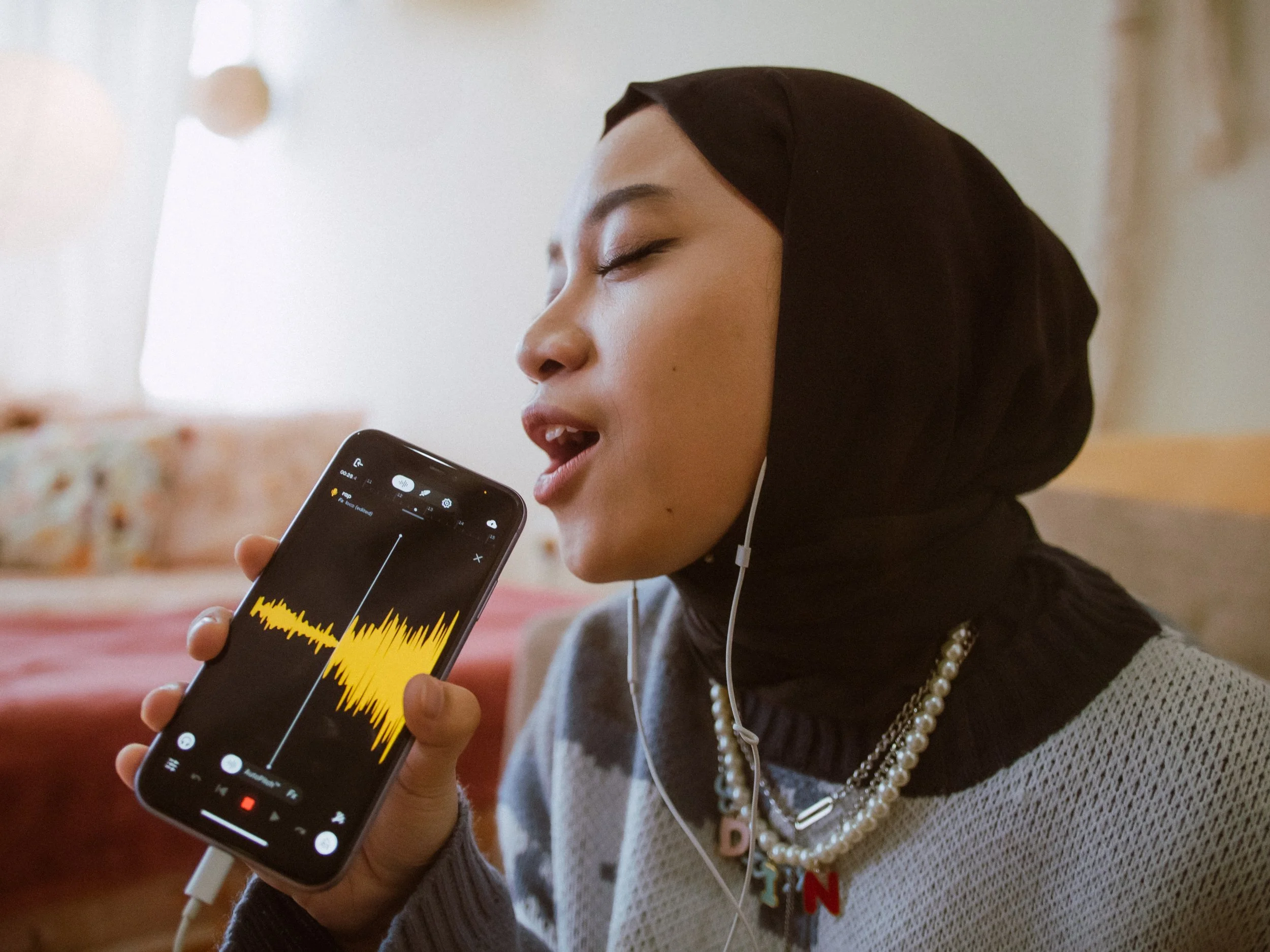
There’s something fundamentally human about singing. I’m not aware of any cultures in the world that don’t have music/singing (regimes that forbid music as a form of religious or political control notwithstanding). The variations in pitch and different voice qualities involved in singing tend to offer an opportunity to feel and express emotion more acutely than we might when we speak. The long, controlled exhale we tend to use when singing helps to re-regulate and soothe an over- or under-stimulated Autonomic Nervous System. And something in the predictability of melody helps to convey a message to our pattern-seeking brains in a way that’s especially memorable. The beauty of all of this is that it can work whether or not the singer is trained, can stay on pitch or feels confident in their abilities. In fact, a psychologically safe enough environment and an embodied approach to singing can support someone who is experiencing a ‘freeze’ response or veering wildly off pitch to make progress with these issues.
Lately, I’ve been reconnecting with the many reasons that singing is one of the most powerful resources in my toolkit. I’d like to share these reasons with you, in the hope of inspiring motivation, or at least curiosity about the power of song and voice.
I’m one of those stereotypical multi-hyphenates – an ‘elder millenial’ with a list of freelance job titles. As I’ve developed my business, I’ve sometimes found myself sidelining the voice related aspects of my work in favour of what seem like the more ‘serious’ things that I offer (consultancy and facilitation, executive coaching). It seems that there’s been a stubborn kernel of unconscious bias hanging around in my psyche. Perhaps at some point, I’ve swallowed a bit of someone else’s belief that singing is a nice, but frivolous thing to do. “It’s all very well holding hands and singing Kum Ba Yah, but now let’s get on with the real work…”
But I know that this view is completely at odds with my experience. I’ve been singing since I was a small child – many years of choirs, vocal coaching, competitions, recitals, song circles, pub gigs, festival gigs, protest blocs, tours, voice retreats, vocal rehab and the rest. Most of these experiences have helped me to express and process emotion, connect with myself and others and get calm and grounded. And knowing that these positive impacts are available to just about anyone motivates me to share them.
There’s something fundamentally human about singing. I’m not aware of any cultures in the world that don’t have music/singing (regimes that forbid music as a form of religious or political control notwithstanding). The variations in pitch and different voice qualities involved in singing tend to offer an opportunity to feel and express emotion more acutely than we might when we speak. The long, controlled exhale we tend to use when singing helps to re-regulate and soothe an over- or under-stimulated Autonomic Nervous System. And something in the predictability of melody helps to convey a message to our pattern-seeking brains in a way that’s especially memorable. The beauty of all of this is that it can work whether or not the singer is trained, can stay on pitch or feels confident in their abilities. In fact, a psychologically safe enough environment and an embodied approach to singing can support someone who is experiencing a ‘freeze’ response or veering wildly off pitch to make progress with these issues.
If that’s not enough to convince you to seek out your nearest community choir (or attend one of my workshops), here’s a breakdown of some of the specific ways that singing can be transformative.
1. Singing to express, process or shift emotions:
One of my supervisors wrote a PhD thesis on singers’ psychology, having noticed that her voice students would often sing what they couldn’t find a way to say. Many vocal coaches keep a box of tissues in their teaching room, ready to dry tears. In vulnerable, emotionally connected performances, we ideally want the singer to have shed any tears in advance and retained enough emotion on-stage to help the audience to connect to their own feelings. But of course, that’s not to say that singing is always heavy or painful. We might sing to express joy, love, anger, power or just about any other emotion imaginable. And we might use music to shift our mood or lift the energy in a space. Singing is a physical activity that requires muscular support, full diaphragmatic breathing and the release of unnecessary tension. This, combined with our connection to lyrics and certain voice qualities (such as the ‘sob’ sound) can help us to ‘shake loose’ emotions that might feel stuck or overwhelming.
2. Singing as a grounding or meditative practice:
Singing is a form of bodywork in itself. There are so many physical processes at play when we sing, and noticing what we’re feeling in our bodies can offer a sense of grounding in the here and now, as well as helping to train the voice. Noticing where we can feel the sound vibrating in the body can feel particularly soothing for many people – I like to imagine that it’s similar to cats purring to heal themselves (though I don’t intend for this to be read as scientific fact!) Something that does have a basis in scientific research, however, is the established impact of chanting as part of meditation practice. Using repetitive, sung words/phrases or humming as part of meditation has been shown to reduce stress, anxiety and hypertension. I am a big fan of using humming as a vocal warmup and grounding exercise ahead of potentially challenging meetings and presentations.
3. Singing as protest/political voice:
Like many others, I’ve often felt overwhelmed and powerless in the face of world events (most recently, the horrific situation in Gaza). But I’ve found it cathartic and powerful getting together with others at protests, rallies and private gatherings to sing songs that remind us of our common humanity and call for peace. I’m certain that, for as long as we’ve had language, people have sung songs to tell the stories of those who have been silenced, to express collective traumas and to call others to action. At a recent gathering, a contemplative song sung by a small group in a large crowd drew in a lot of attention and helped people to express their feelings. Meanwhile, world famous artists can use their platform to raise awareness and solidarity for the causes that matter to them.
4. Singing to connect with others:
When we sing, we’re potentially making ourselves vulnerable – it’s exposing. This is a large factor in many people’s horror at the idea of anyone hearing them sing. But it’s also part of the reason that it’s such a powerful way to connect with people and build community. When we sing together, we can share an experience of collectively creating a sound, potentially synchronising our breathing and tuning into each other. It’s a real bonding experience, and -as with the concept of singing as protest above – it can remind us of our collective power. I’ve often run ‘singing for wellbeing’ programmes for people who have found themselves in the most challenging situations (homelessness, seeking asylum, serious illness). And much of the feedback from participants has focused on the importance of the collective experience of singing – being witnessed as they took up space, made noise and expressed emotion. A 2013 study showed that choir members’ heartbeats could synchronise with each other as they sang (with more structured music showing more significant evidence of synchronisation). The feeling of being part of a huge wall of sound while singing in a large choir, and the feeling of instinctively harmonising in a small group are some of my favourite experiences – I can’t quite find a way to describe or compare them to anything else.
So, with all that in mind, I’m ready to throw out the last vestiges of discounting the importance of singing. And if you’re ready to find out more, drop me a message or check out my next embodied voice and breath workshop here.